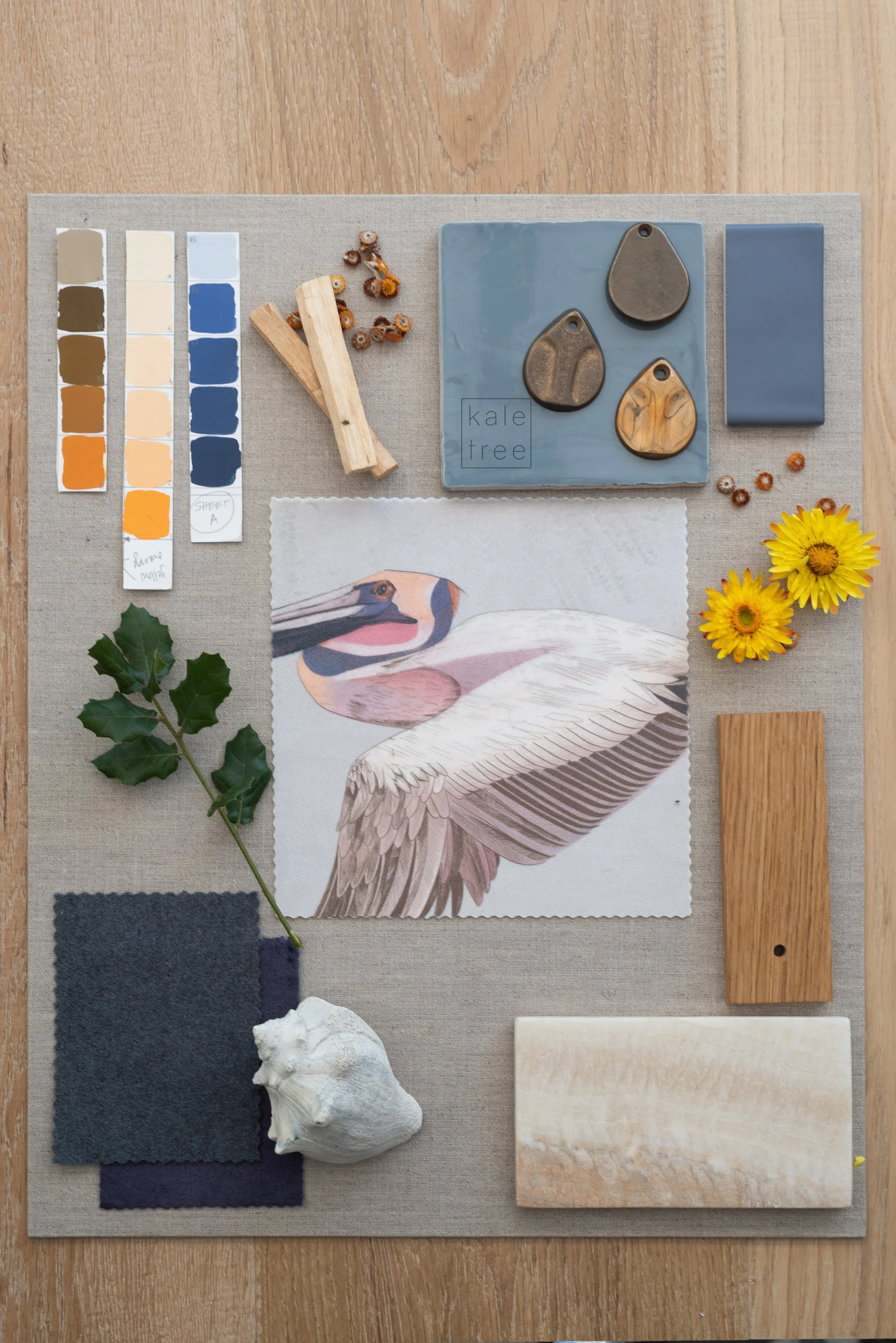
California Brown Pelican + Home Decor
California has long been defined by its coastline, which attracts many people and wildlife to the region. The distinctive conditions along the coast support a diverse ecosystem unique to the area, where many animals can be found in few other places. One of these beloved animals is the California Brown Pelican, a beautiful bird that, much like its namesake state, bridges the gap between land and sea.
Do California brown pelicans live only in California?
While California Brown Pelicans can be found along the coasts of the Americas from Vancouver to Nayarit, Mexico, their breeding range is even more limited, with the only breeding colonies in the United States found in Southern California, within the Channel Islands.
Why the California Brown Pelican?
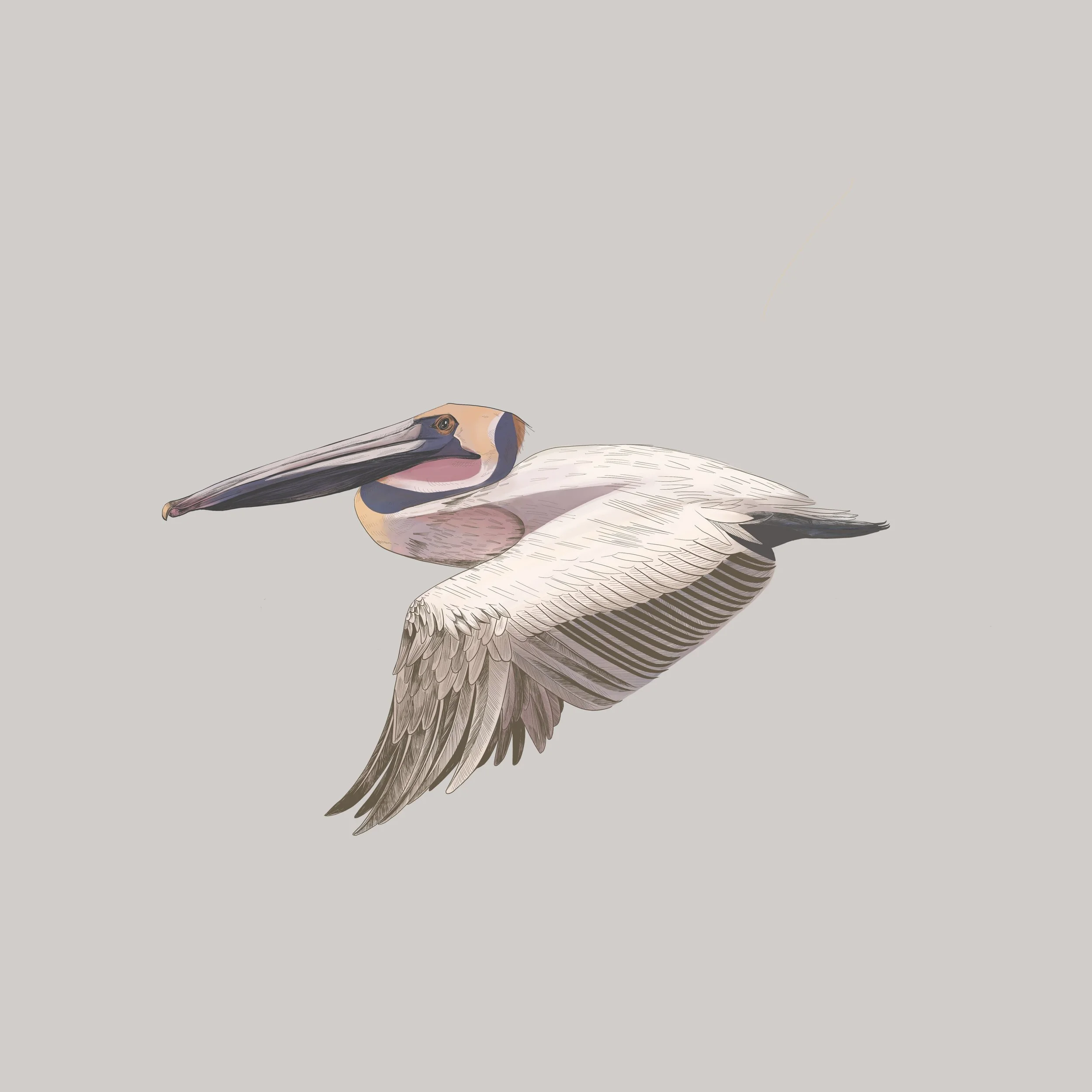
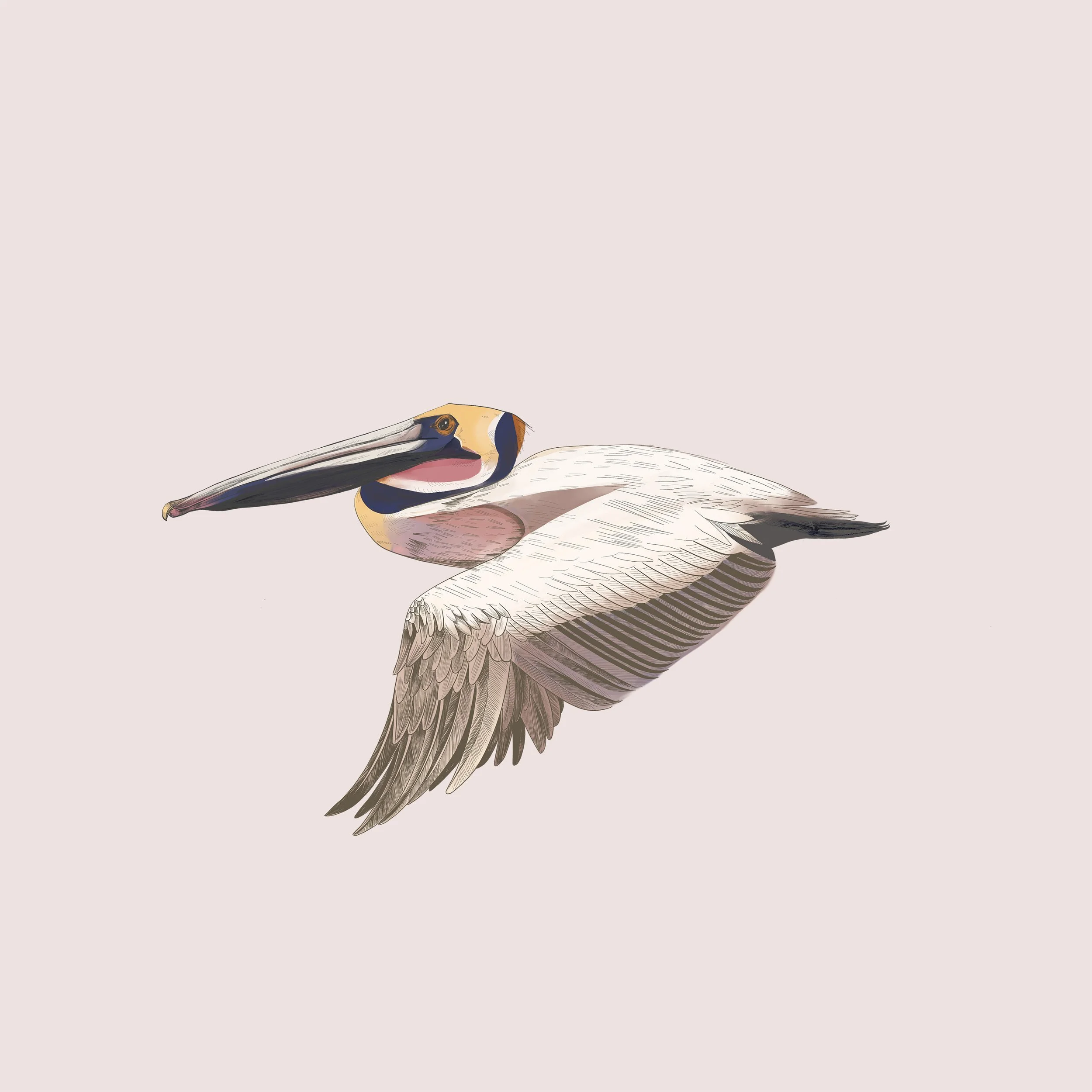
As Kale Tree® looks to nature that inspires us, the California Brown Pelican strongly represents what we find so remarkable about California's nature and wildlife. Our love for the ocean, birds, and the unique qualities of Southern California's environment is reflected in the Pelican. Because its connection to Southern California is particularly tied to its breeding colonies, the Pelican in our textiles and wallcoverings wears the bright seasonal colors the California Brown Pelican dons during breeding season.
What are the colors of a California Brown Pelican?
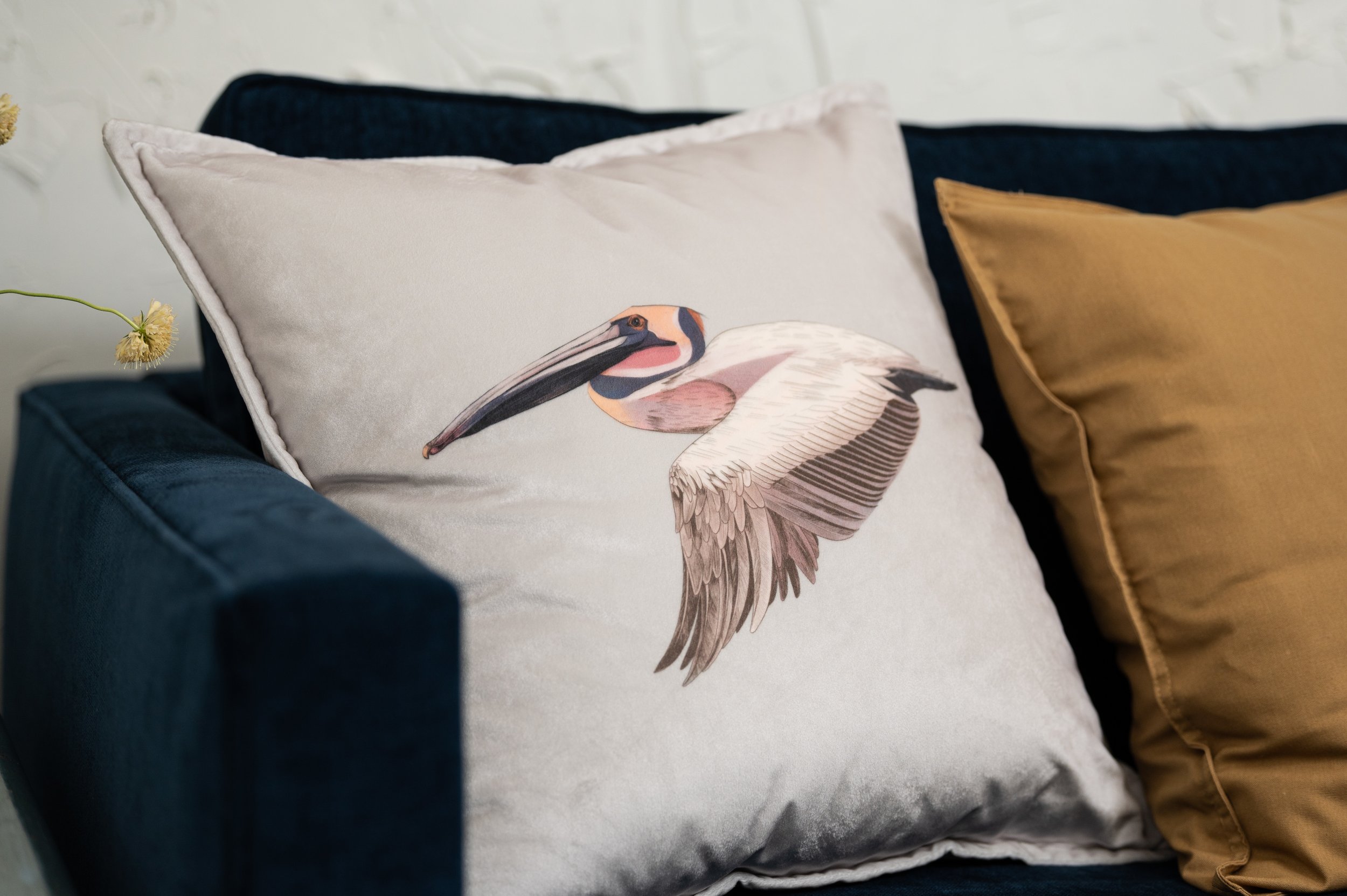
While most of the year, the Pelican typically has a primarily brown body, during mating season, "the distal end of the bill turns reddish, the proximal end of the throat pouch brightens to a poppy-red, the iris turns a yellowish white to light blue, and a white stripe runs down the pouch side of the neck". These bright, beautiful color changes celebrate the unique characteristics of the Pelican that drew us to the bird, as well as the calm and wonder it inspires.

The Pelican art is featured on wallcoverings, Belgian linen, and velvet textiles, reflecting the sense of comfort and peace of being beachside and the exceptional nature of California.
Should I use linen or velvet for pillows, furniture, and draperies?
Kale Tree's Belgian linen and velvet textiles both make excellent options for pillows, upholstery, and draperies. Linen can often contribute to a lighter, more traditional coastal aesthetic. With draperies, linen can also let in more light than velvet, while velvet may be preferable for temperature control. Many may also enjoy the sumptuous tactile nature of velvet for pillows and upholstery.
What are the best ways to decorate with bird motifs?
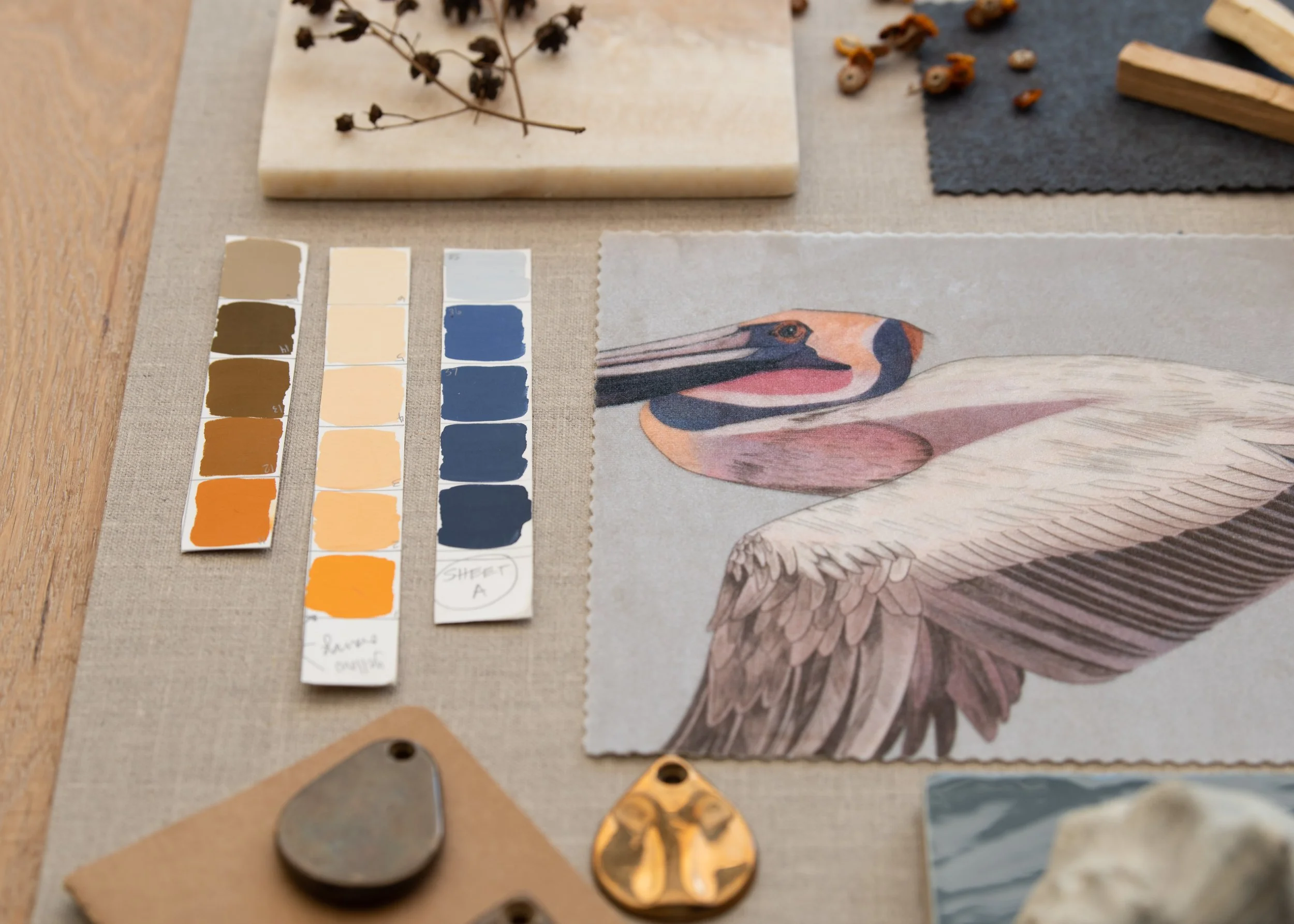
Bird motifs are excellent for creating visual interest and carrying or introducing color throughout a room. Bird motifs are wonderful when used on throw pillows or bedding, or to create a more dramatic statement on an accent chair or draperies. When used in a larger pattern, like wallcoverings, they can create movement that adds dynamism to a space. In the case of the pelican print, the larger swaths of pattern have a transportive quality, evoking the sight of a pod of pelicans flying above the ocean.
How can I decorate with coastal decor in the winter?
Coastal decor doesn't need to be limited to the summer months. Using softer, more neutral shades of beige or grey can take coastal themes beyond traditional beachy palettes and into more year-round aesthetics. Unexpected fabrics like velvet can add warmth and depth, making more coastal themes appropriate for year-round decor.
https://www.nps.gov/places/000/california-brown-pelican.htm
https://www.aquariumofpacific.org/reportcard/info/california_brown_pelican
Night Shift Pollinating: the Magic of Moths
Nature enthusiasts and scientists alike are well aware that pollination is crucial for environmental well-being. Insects such as bees and butterflies have experienced a well-deserved moment in the spotlight for being the primary sources of pollination for our environment. However, this could be a case of accidental bias on our part. New research has found that multiple species of magnificent yet harshly misunderstood moths are hard at work while we are asleep, picking up the pollination shift where bees, butterflies, and other daytime pollinators left off.

Megalograpga moth. Identified by inaturalist.org. Photo by Sarah Barnard.
Historically, moths and other nocturnal pollinating insects have not been included in mainstream research. Because of this accidental oversight, we knew very little about the extensive pollination efforts of these mysterious nocturnal creatures. However, new research on nocturnal pollination has allowed us to turn our attention and appreciation towards the moth, a beautiful and diverse insect species that we now know is part of the pollination team. The Royal Society conducted a study in which they swabbed pollen from 883 moths. The scientists found that 381 moths out of their sample contained pollen from more than one plant species on their fuzzy underbellies. These results suggest that moths visit and pollinate multiple plants at night and are highly influential in wild plant pollination. Moths pollinate some of the same plants visited by bees and other daytime pollinators. This new research shows that bees, butterflies, and moths work in a holistic combined effort towards pollination and environmental wellness.

Snout Moth. Identified by inaturalist.org. Photo by Sarah Barnard.
Moths tend to pollinate flowers with strong, sweet smells emitted at night. They are especially attracted to flowers that produce ample nectar that is easy to access through long, tubular flowers. They are most attracted to flowers with pale white and dull red colors, hues of pink and purple, and large petals with clusters.
The responsibility of pollinating our planet falls on the shoulders of many species, as well as Earth's natural elements of wind and water. Protecting our planet's natural pollinators improves the health of our ecosystem and, in turn, improves our well-being. Pollinators are not only crucial to our environment, but they are also incredibly essential for human life and function. The United States Environmental Protection Agency states, "pollinators provide humans with one in every three bites of food we eat, cotton to make clothing and other items we depend on, and habitats and food for countless other animals.
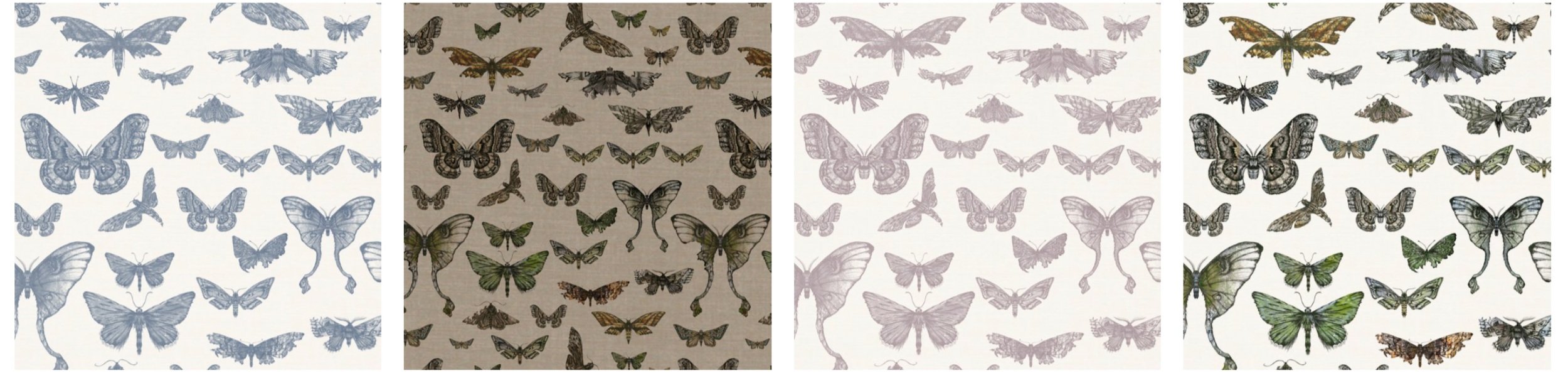
Entomology Moth Drawer by Tradescant & Son depicts tattered and delicate hand drawn moths, some showing their age to create a raw and honest depiction.
As we learn more about moths and their vital role in the holistic pollination of our planet, we become better equipped to protect them and Earth's pollination systems as a whole. There are many steps you can take to help protect moths and promote pollinator well-being:

Moth textile by Kale Tree celebrates the beauty of moths in a 100% linen fabric.
While most pollination-protecting efforts can help the wide variety of pollinating species, one hazard unique to pollinating moths is light pollution. Avoid the use of lighting in your garden as artificial lights can disorient moths, impairing their abilities to find mates, protect themselves from predators, and find flowers to pollinate.
Plant moth-approved flowers in your garden that bloom in a variety of seasons
Plant in "clusters" so that your nighttime pollinating visitors can easily access flowers to pollinate in your garden
Eliminate the use of pesticides and herbicides.

Kale Tree Studio gathers much inspiration from the natural scenery around us to create our products, and as such, our products are made with a commitment to sustainability and environmental wellness. For example, our moth rug is inspired by the neutral creams and toasted grey hues of a moth's wing, available in Bamboo Silk or 100% New Zealand Wool. As a studio with a mission to promote health and well-being, Kale Tree cares deeply about protecting all of Earth's natural pollinators. With newly available research, we can help moths achieve their much-deserved spotlight on the pollination stage, along with their daytime pollinating friends.

Damaged Lace by Tradescant and Son was inspired by the ethereal beauty of pre-loved antique lace combined with the raw honesty of the destruction of lace eating moths.
Resources
CNN Health. “Moths play a vital role in pollinating flowers and plants, new research suggests.”
The Royal Society Publishing. “Nocturnal pollinators strongly contribute to pollen transport of wild flowers in an agricultural landscape.”
U.S. Forest Service. “Pollinator Syndromes.”
Xerces Society. “The Night Shift: Moths As Nocturnal Pollinators.”
United States Environmental Protection Agency. “Protecting Pollinators.”
Pollinator Partnership. “About Pesticides.”