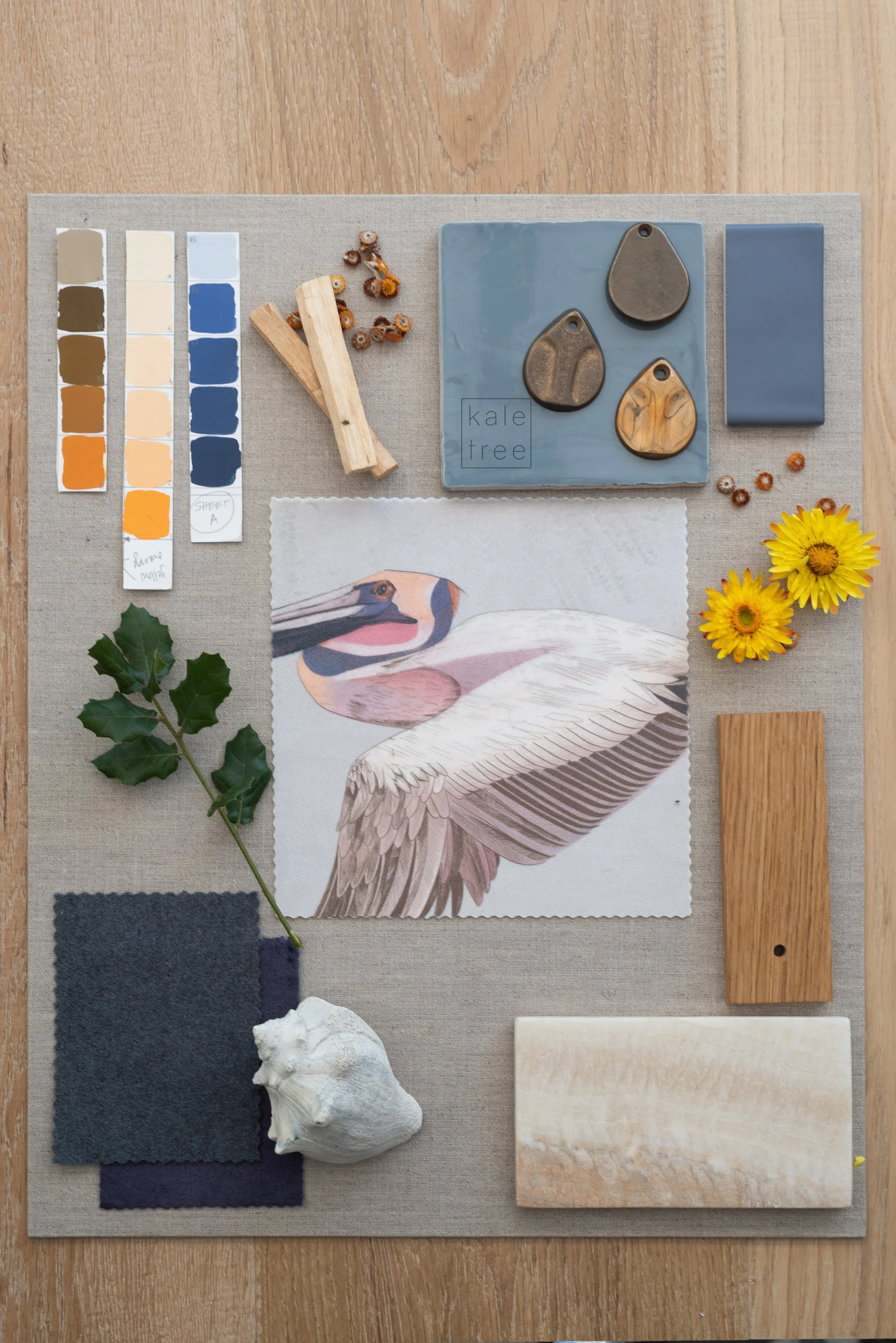
California Brown Pelican + Home Decor
California has long been defined by its coastline, which attracts many people and wildlife to the region. The distinctive conditions along the coast support a diverse ecosystem unique to the area, where many animals can be found in few other places. One of these beloved animals is the California Brown Pelican, a beautiful bird that, much like its namesake state, bridges the gap between land and sea.
Do California brown pelicans live only in California?
While California Brown Pelicans can be found along the coasts of the Americas from Vancouver to Nayarit, Mexico, their breeding range is even more limited, with the only breeding colonies in the United States found in Southern California, within the Channel Islands.
Why the California Brown Pelican?
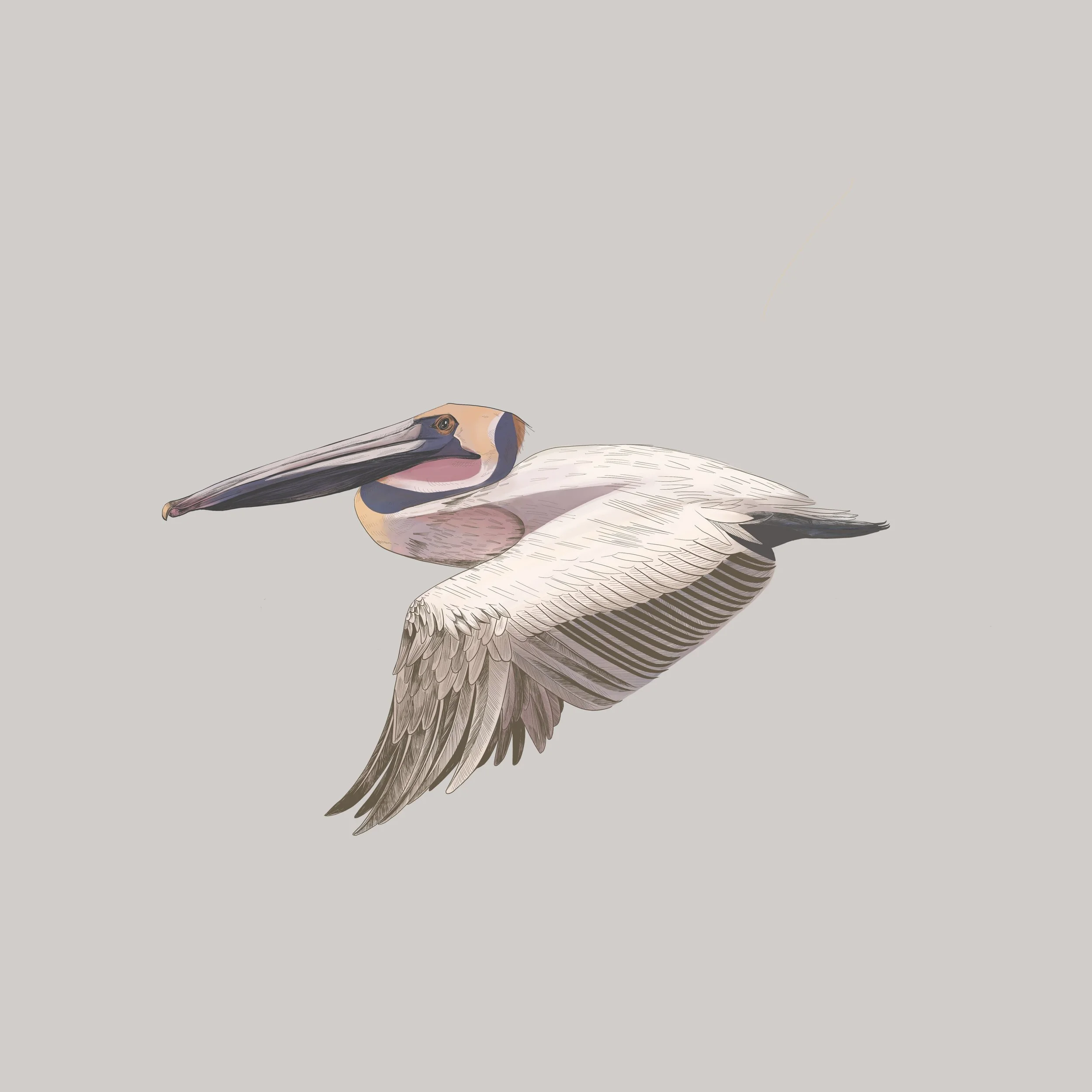
As Kale Tree® looks to nature that inspires us, the California Brown Pelican strongly represents what we find so remarkable about California's nature and wildlife. Our love for the ocean, birds, and the unique qualities of Southern California's environment is reflected in the Pelican. Because its connection to Southern California is particularly tied to its breeding colonies, the Pelican in our textiles and wallcoverings wears the bright seasonal colors the California Brown Pelican dons during breeding season.
What are the colors of a California Brown Pelican?
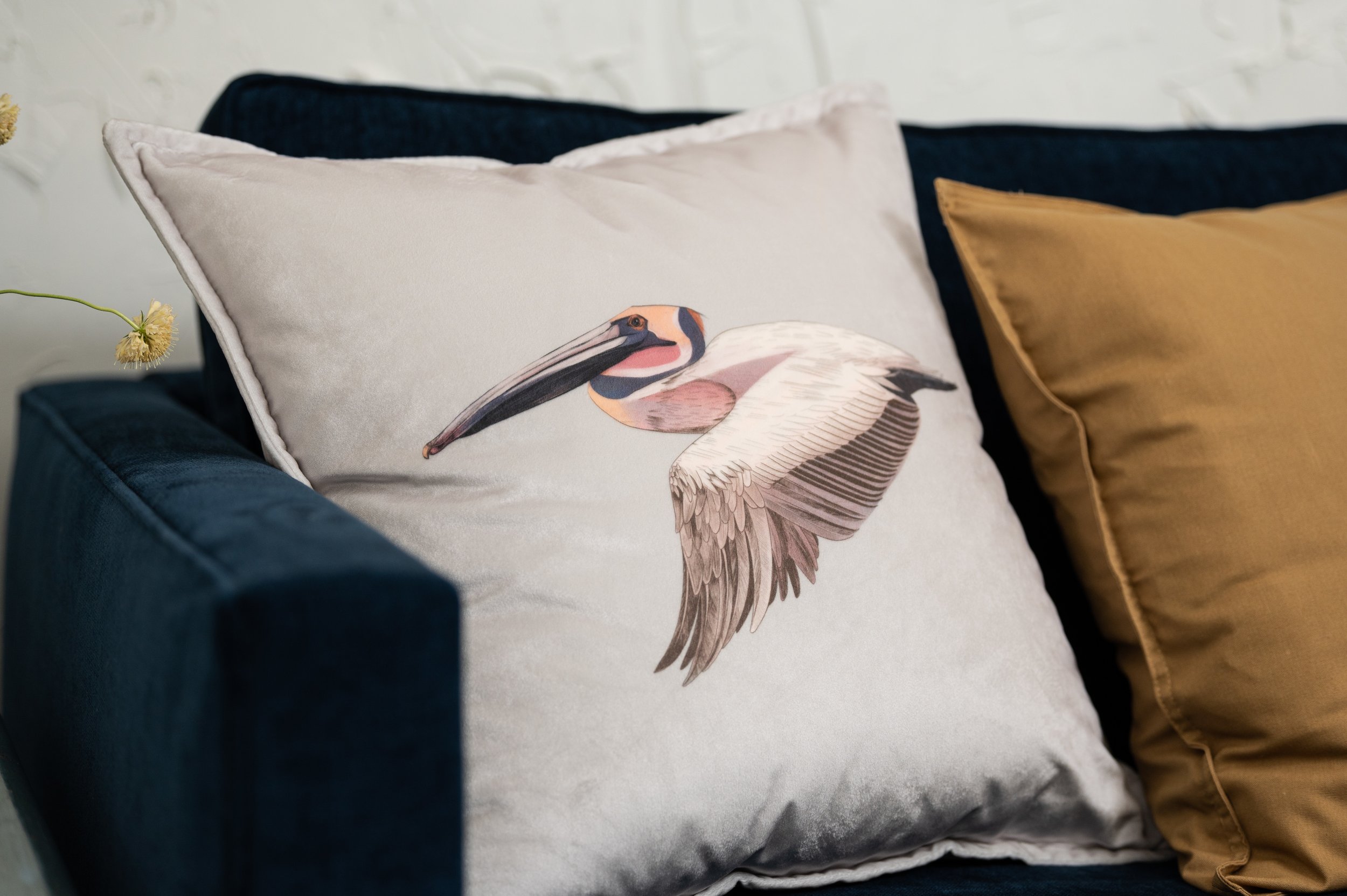
While most of the year, the Pelican typically has a primarily brown body, during mating season, "the distal end of the bill turns reddish, the proximal end of the throat pouch brightens to a poppy-red, the iris turns a yellowish white to light blue, and a white stripe runs down the pouch side of the neck". These bright, beautiful color changes celebrate the unique characteristics of the Pelican that drew us to the bird, as well as the calm and wonder it inspires.
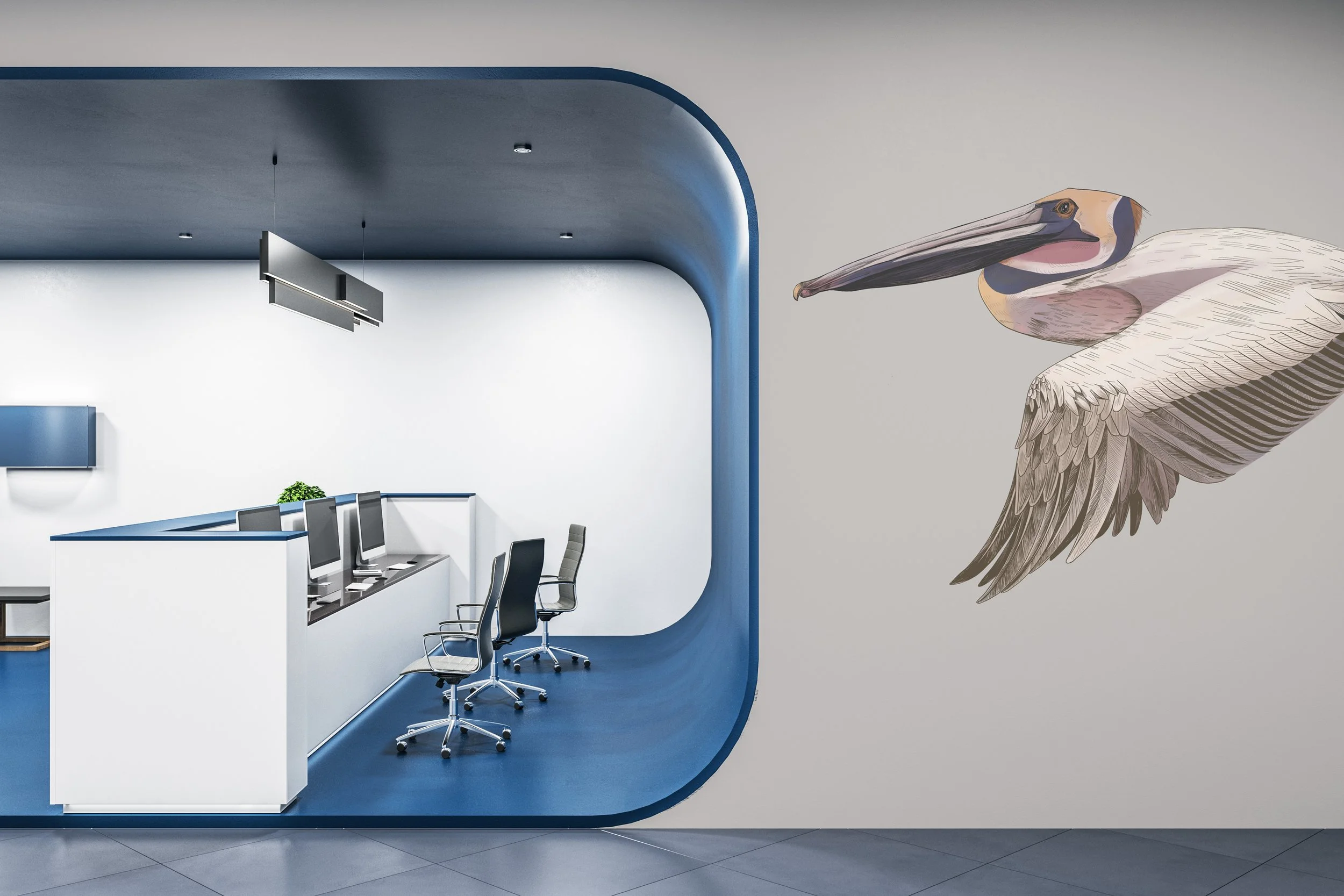
The Pelican art is featured on wallcoverings, Belgian linen, and velvet textiles, reflecting the sense of comfort and peace of being beachside and the exceptional nature of California.
Should I use linen or velvet for pillows, furniture, and draperies?
Kale Tree's Belgian linen and velvet textiles both make excellent options for pillows, upholstery, and draperies. Linen can often contribute to a lighter, more traditional coastal aesthetic. With draperies, linen can also let in more light than velvet, while velvet may be preferable for temperature control. Many may also enjoy the sumptuous tactile nature of velvet for pillows and upholstery.
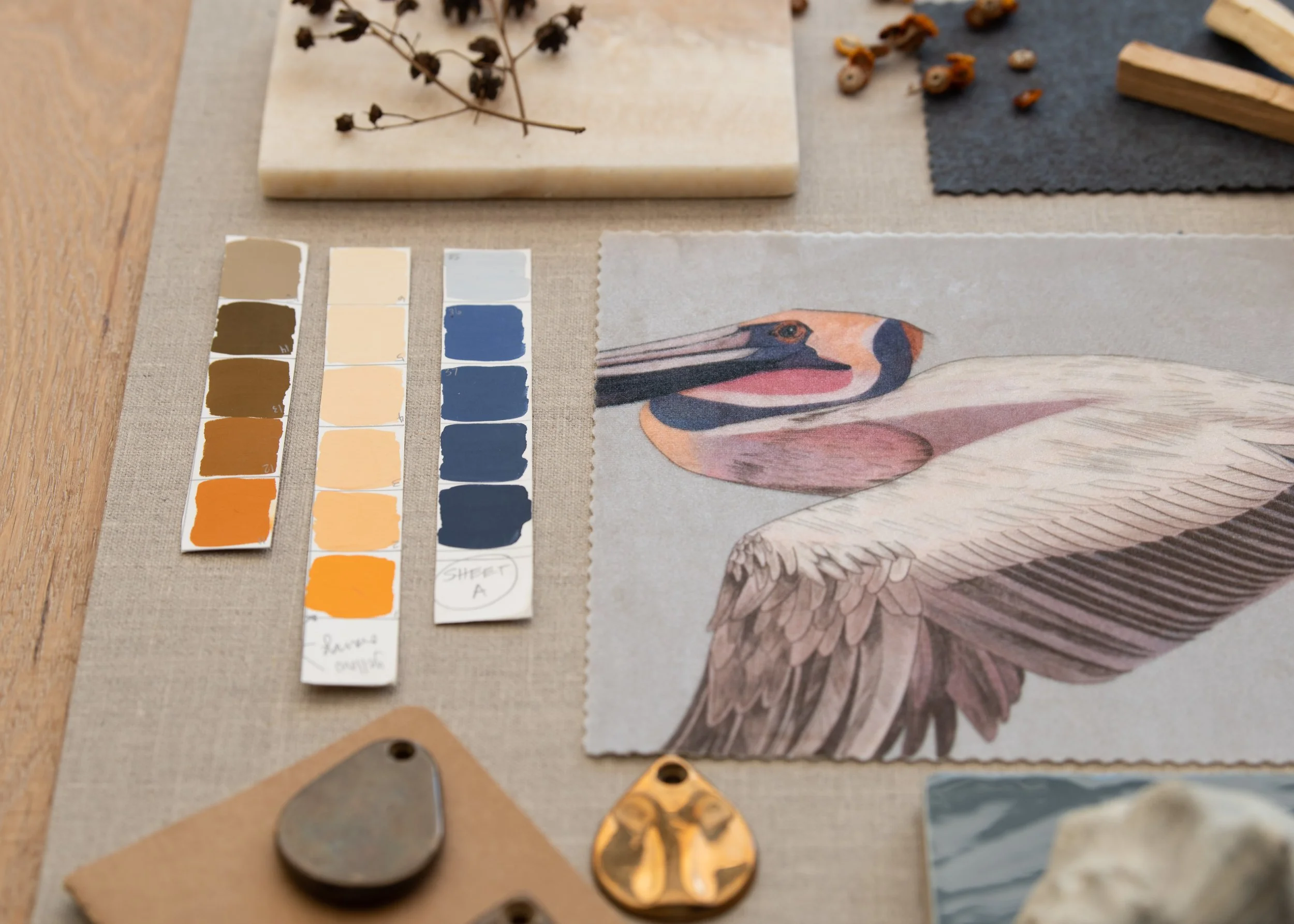
What are the best ways to decorate with bird motifs?
Bird motifs are excellent for creating visual interest and carrying or introducing color throughout a room. Bird motifs are wonderful when used on throw pillows or bedding, or to create a more dramatic statement on an accent chair or draperies. When used in a larger pattern, like wallcoverings, they can create movement that adds dynamism to a space. In the case of the pelican print, the larger swaths of pattern have a transportive quality, evoking the sight of a pod of pelicans flying above the ocean.
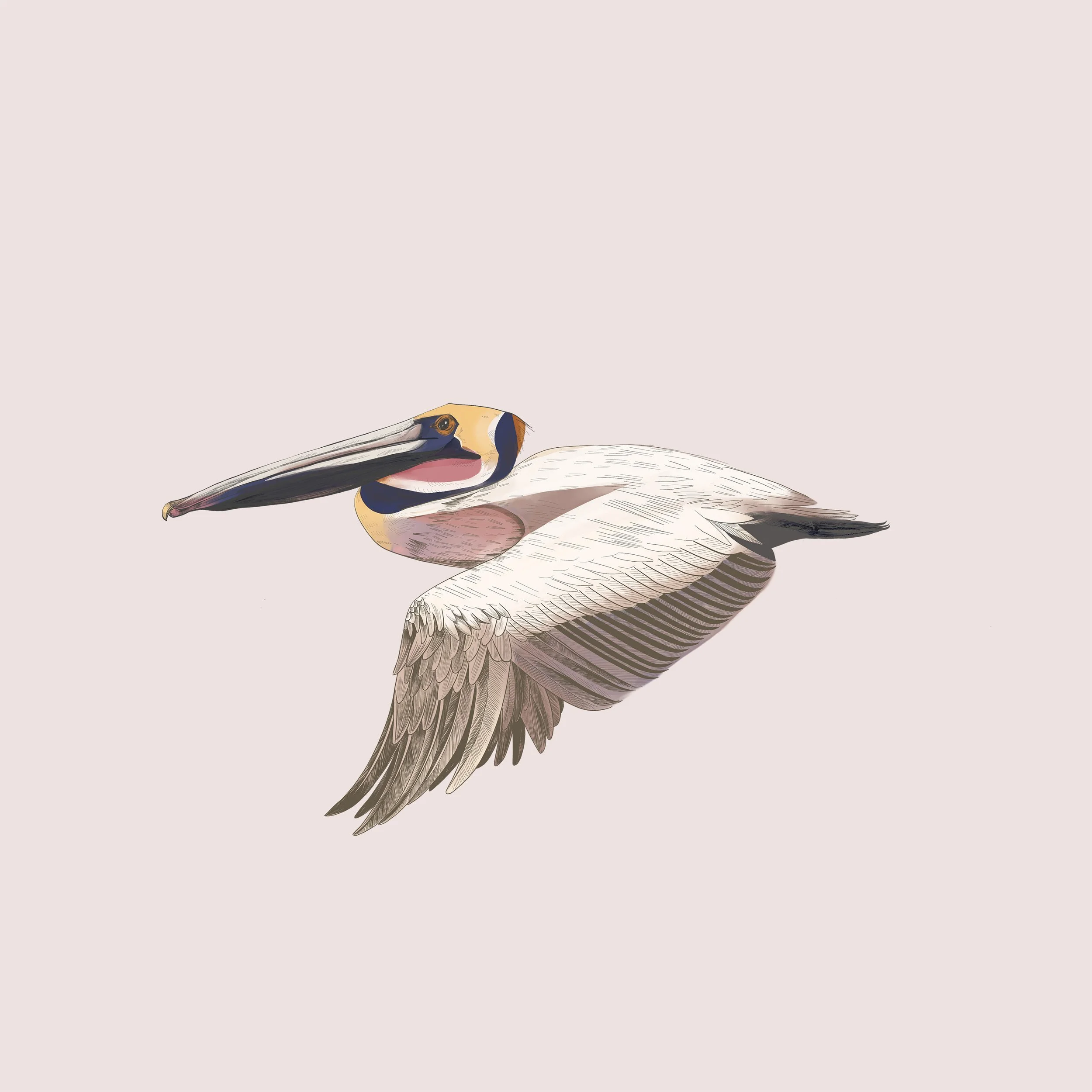
How can I decorate with coastal decor in the winter?
Coastal decor doesn't need to be limited to the summer months. Using softer, more neutral shades of beige or grey can take coastal themes beyond traditional beachy palettes and into more year-round aesthetics. Unexpected fabrics like velvet can add warmth and depth, making more coastal themes appropriate for year-round decor.
https://www.nps.gov/places/000/california-brown-pelican.htm
https://www.aquariumofpacific.org/reportcard/info/california_brown_pelican
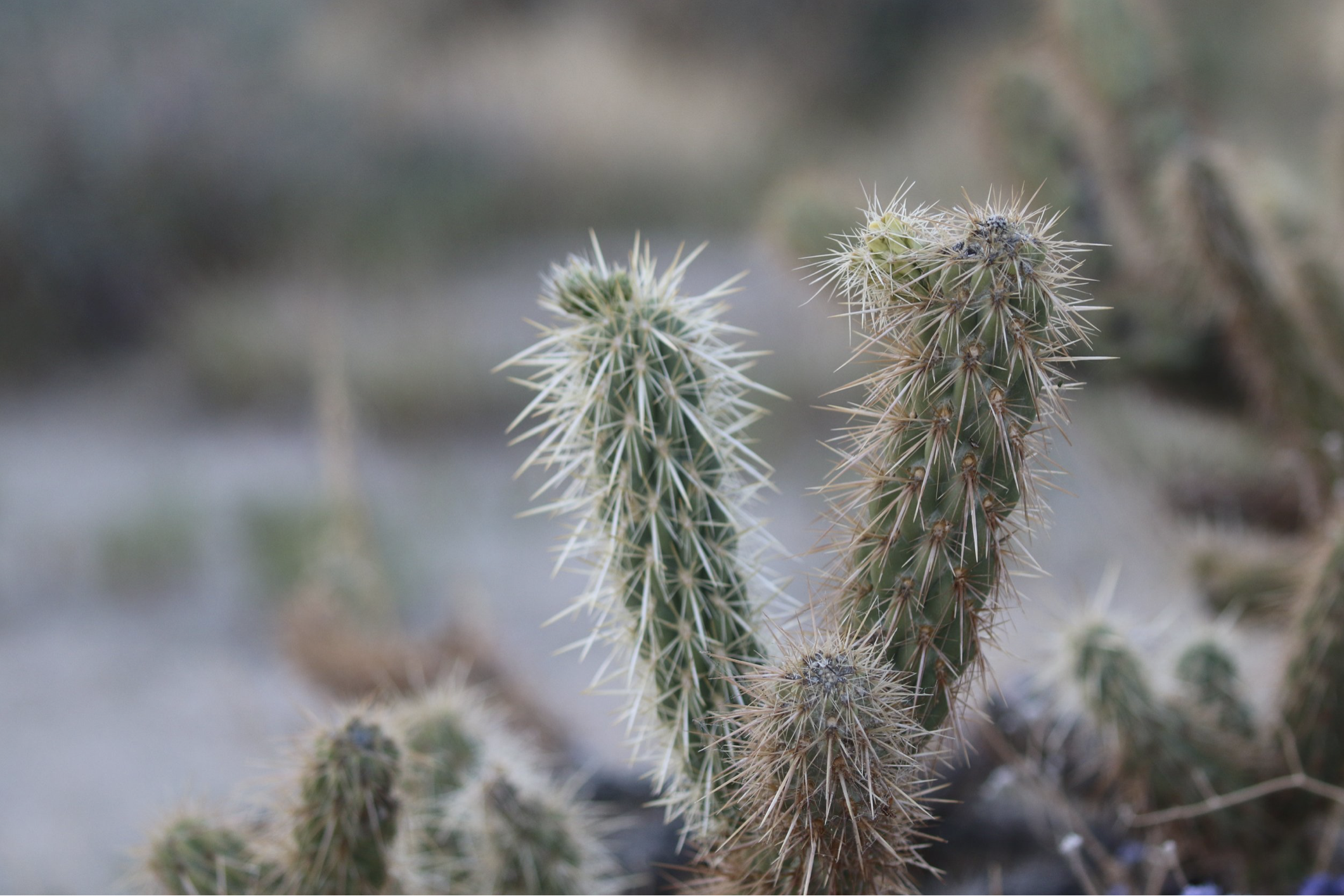
Desert Decor: The Unique Appeal of the Cholla Cactus
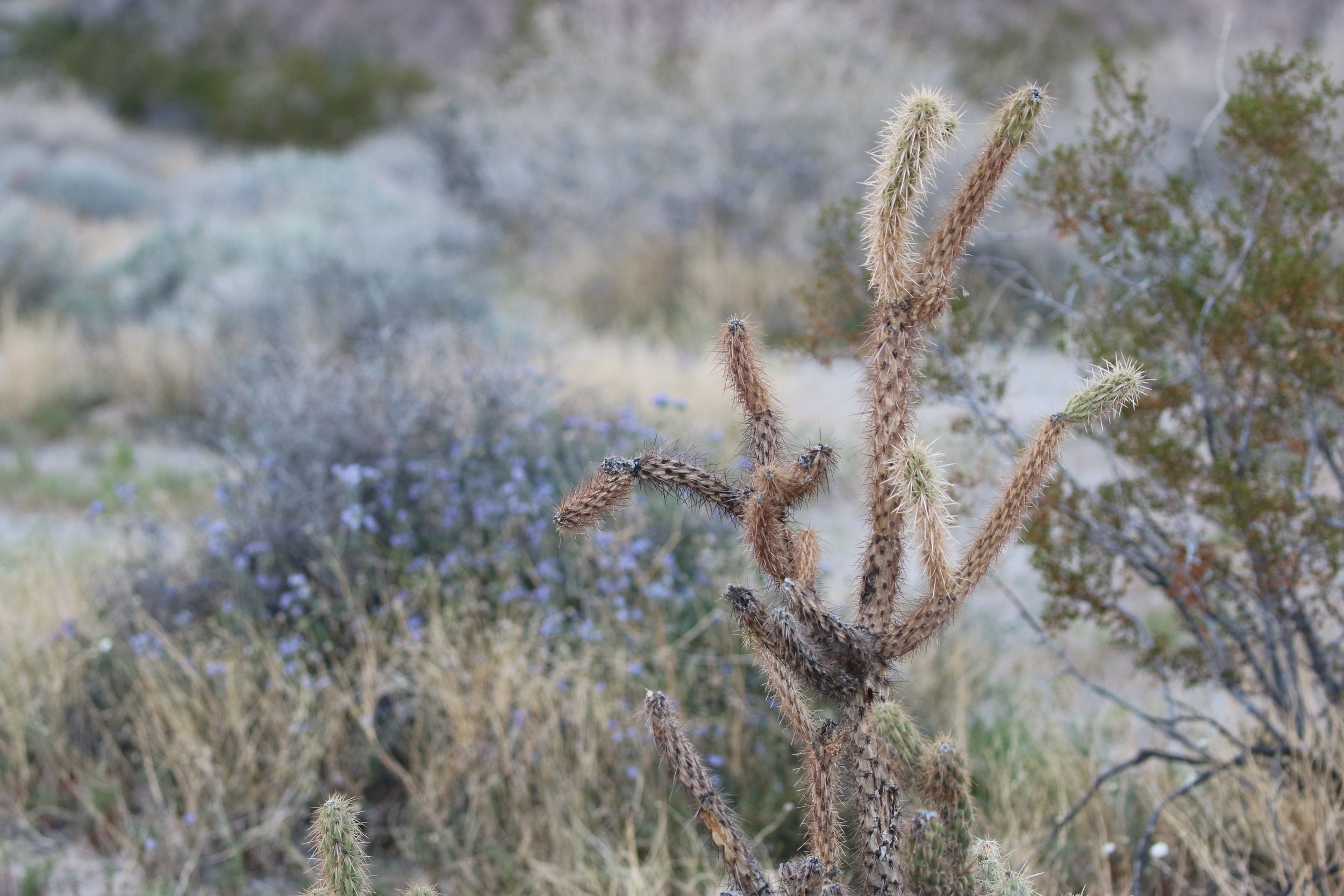
Cholla Cactus (Cylindropuntia) at Anza Borrego State Park
Southern California is known to house a wide range of natural environments, but none feel as quintessential to the landscape as its vast deserts. Many residents and visitors find solace in the state's desert environments, which host a rich variety of plant and animal life, and provide a stark contrast to more bustling urban city centers. Iconic to these landscapes are the wide variety of succulents and cacti, including the diversity of cholla cacti featured in many state deserts. The most notable collection may be the cholla cactus garden in Joshua tree. However, the plant is interspersed in many desert landscapes, including the shrubbery of Red Rock Canyon and the Mojave Desert.
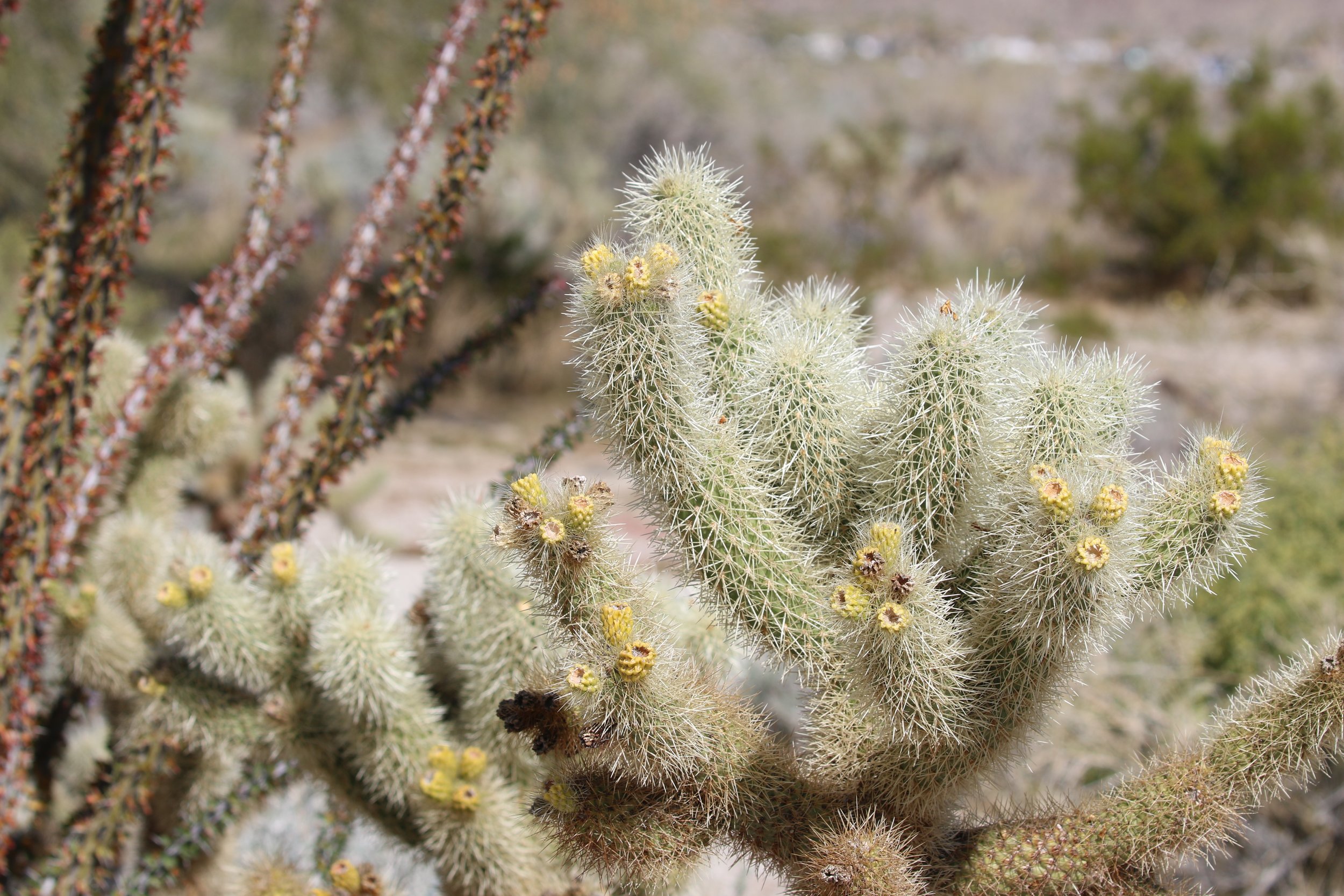
Cholla Cactus (Cylindropuntia) at Anza Borrego State Park
As a reflection of the unique wildlife beloved in the southern California region, our studio opted to use the cylindropuntia fulgida, or jumping cholla, at the Anza-Borrego Desert State Park as an inspiration for the print on our Cholla Tote. Anza-Borrego houses a cactus garden featuring a wide array of cacti, including several cholla varietals, from the cylindropuntia bigelovii cactaceae (coyly known as teddybear cholla) to cylindropuntia ramosissima, or diamond cholla. The cacti, including cylindropuntia echinocarpa (silver or golden cholla) and cylindropuntia ganderi cactaceae (gander's cholla), bear succulent flowers through the spring, providing a welcome contrast to their spiky texture and barbed spines, which often cling to visitors as unintended souvenirs.

Cholla Cactus (Cylindropuntia) at Anza Borrego State Park
A visit to the state park during a rare super bloom highlighted the surprising yet suitable pairing of soft romantic florals against the less hospitable-looking cacti, encompassing in one plant the variety of nature so unique and beloved to southern California.
Beyond their distinct beauty, Chollas can also serve as a nesting ground for birds like the cactus wren, who use the spikes as a protective barrier from predators, earning an extra layer of appreciation from our avian-adoring studio.

Cactus Wren (Campylorhynchus brunneicapillus)
The design for the tote was carefully hand drawn with emphasis on the plant's ruffled floral edges and spiky barbs, a contrast emphasized with the black and white design. Considerate of environmental impact, the tote bags are produced in small batches using certified organic cotton fabric printed to order and dyed with non-toxic, water-based inks.

Kale Tree® Cholla Tote
A suitable California alternative to spring florals, the tote features an open main compartment, perfect for storing an abundance of farmers market produce, hauling fresh cut florals, or quickly accessing water and well-worn nature journals during desert excursions.
Sarah Barnard, WELL AP + LEED AP, is a leading designer of personalized, sustainable spaces that support mental, physical, and emotional wellbeing. She creates highly personalized, restorative spaces that are deeply connected to art and the preservation of the environment. An advocate for consciousness, inclusivity, and compassion in the creative process, Sarah has appeared in Architectural Digest, Elle Décor, Vogue, HGTV, and many other publications. In 2017 Sarah was honored as a “Ones to Watch” Scholar by the American Society of Interior Designers (ASID).