The Night’s Architecture: A Study of California’s Sacred Datura
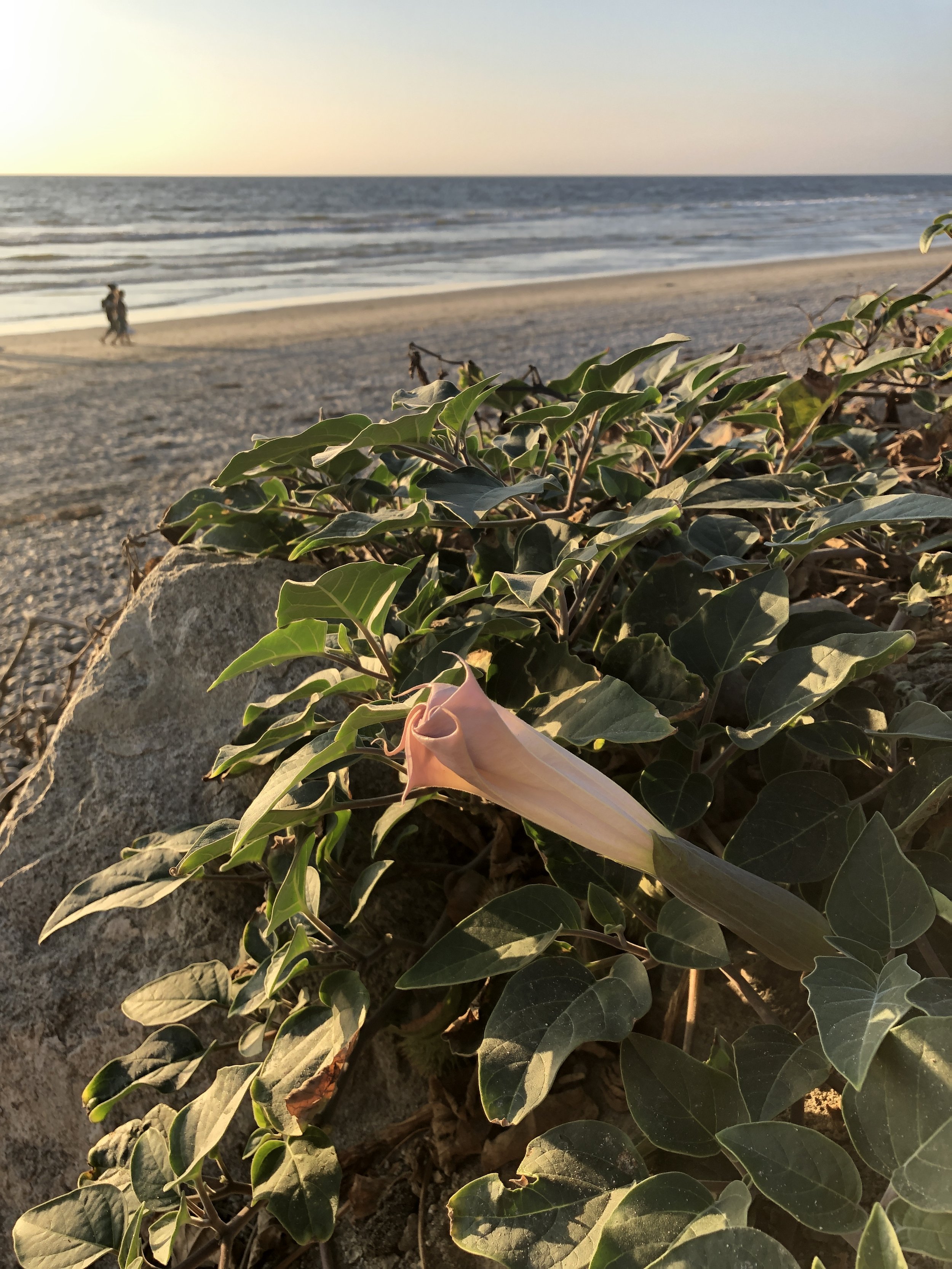
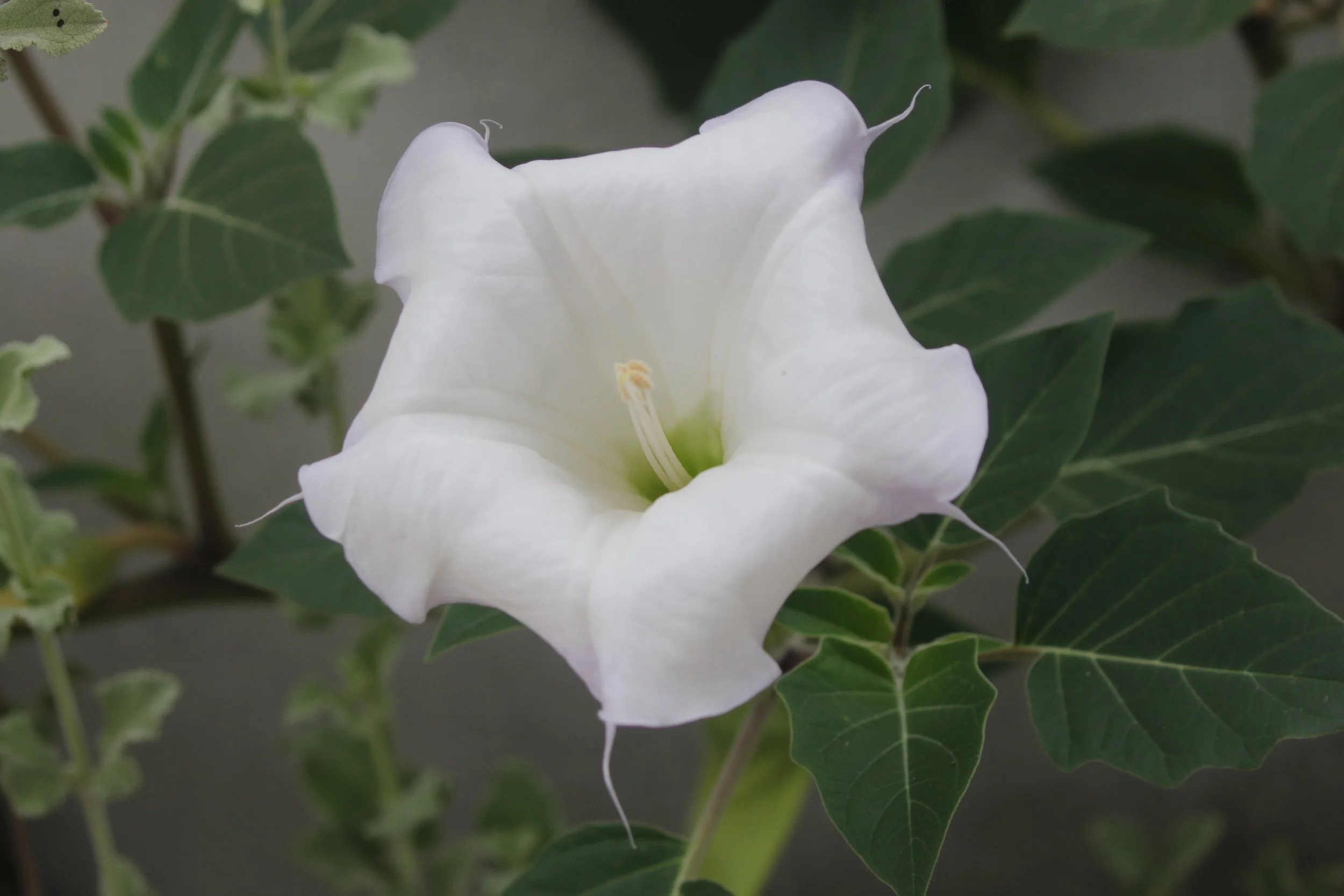
In the high heat of a California afternoon, Datura wrightii looks like a secret hidden in plain sight. Its low-slung, velvety gray foliage hugs the disturbed soil of roadsides and desert washes, appearing almost muted against the vibrant glare of the sun. But as the light fades and the temperature drops, the plant undergoes a structural transformation.
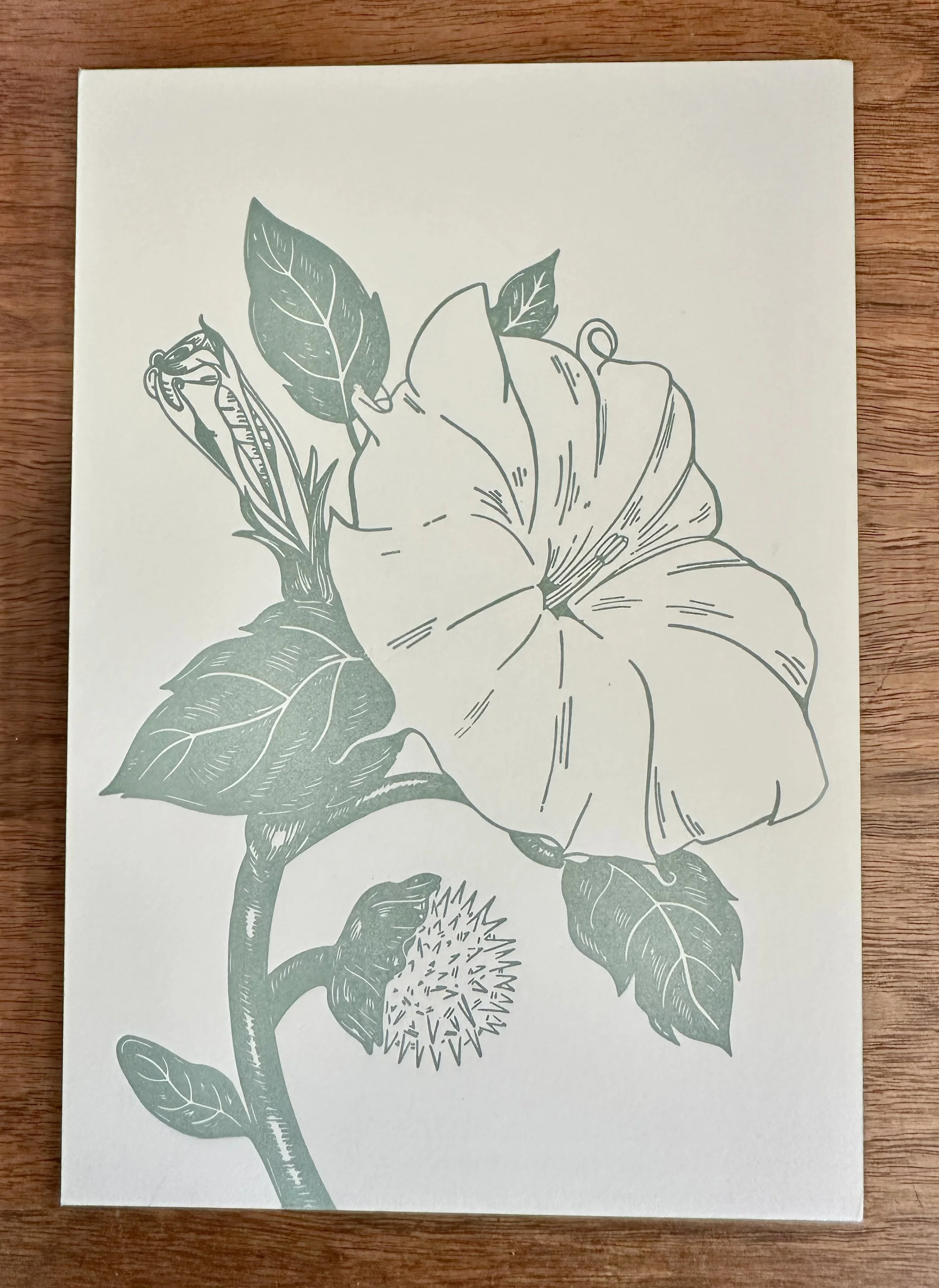
For our Kale Tree® studio, Datura is more than a botanical curiosity; it is a masterclass in organic geometry. We’ve long been drawn to its vespertine nature, the way its massive, pleated buds unfurl with mechanical precision at dusk. What began as a single illustration for a holiday card has become a permanent fixture in our creative vocabulary. We return to its silvered leaves and trumpet-shaped silhouettes not just for their beauty, but for their resilience. In this study, we look past the plant's reputation to explore its role as a cornerstone of the nocturnal ecosystem and a primary muse.
Nocturnal Synchronicity: The Hawkmoth and the Bloom
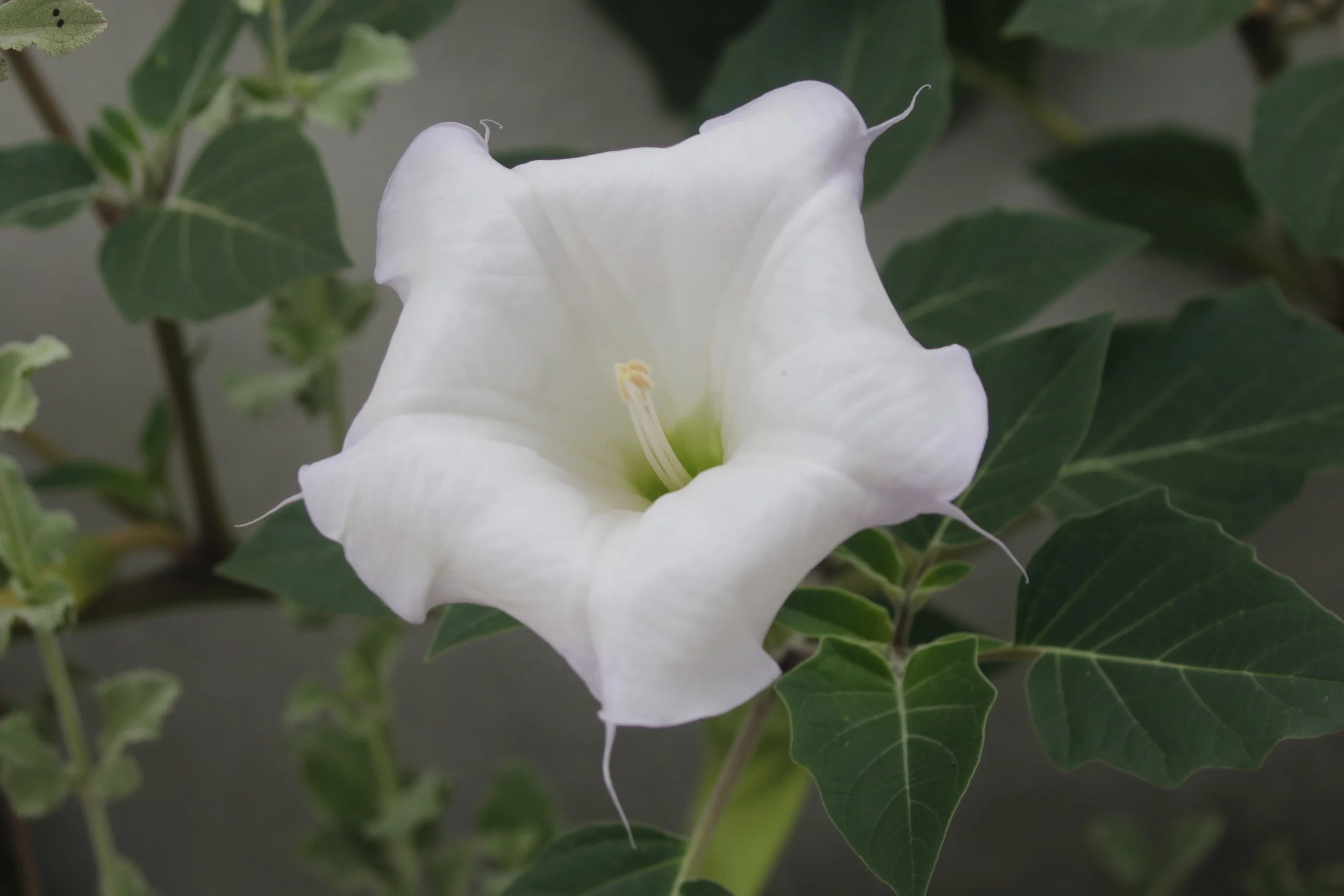
While much of the California landscape thrives under the sun, Datura wrightii operates on a different clock. As the heat of the day dissipates, the plant begins a coordinated sensory display. The massive white trumpets don't just open, they exhale. They release a heavy, intoxicating fragrance that serves as a GPS signal for the Sphinx Moth, or Hawkmoth (USDA Forest Service).
The relationship between the two is a marvel of biological engineering. To reach the nectar deep within the flower’s throat, the Hawkmoth unfurls a proboscis that matches the flower's depth almost perfectly. As the moth hovers, steady as a hummingbird, it becomes an accidental messenger, brushed with the pollen that will sustain the next generation of Datura. In the quiet of a desert or coastal evening, this interaction is one of the few movements in an otherwise still landscape, a silver-on-silver dance that has become a foundational reference for our studio's tonal palettes.
The Ephemeral Bloom
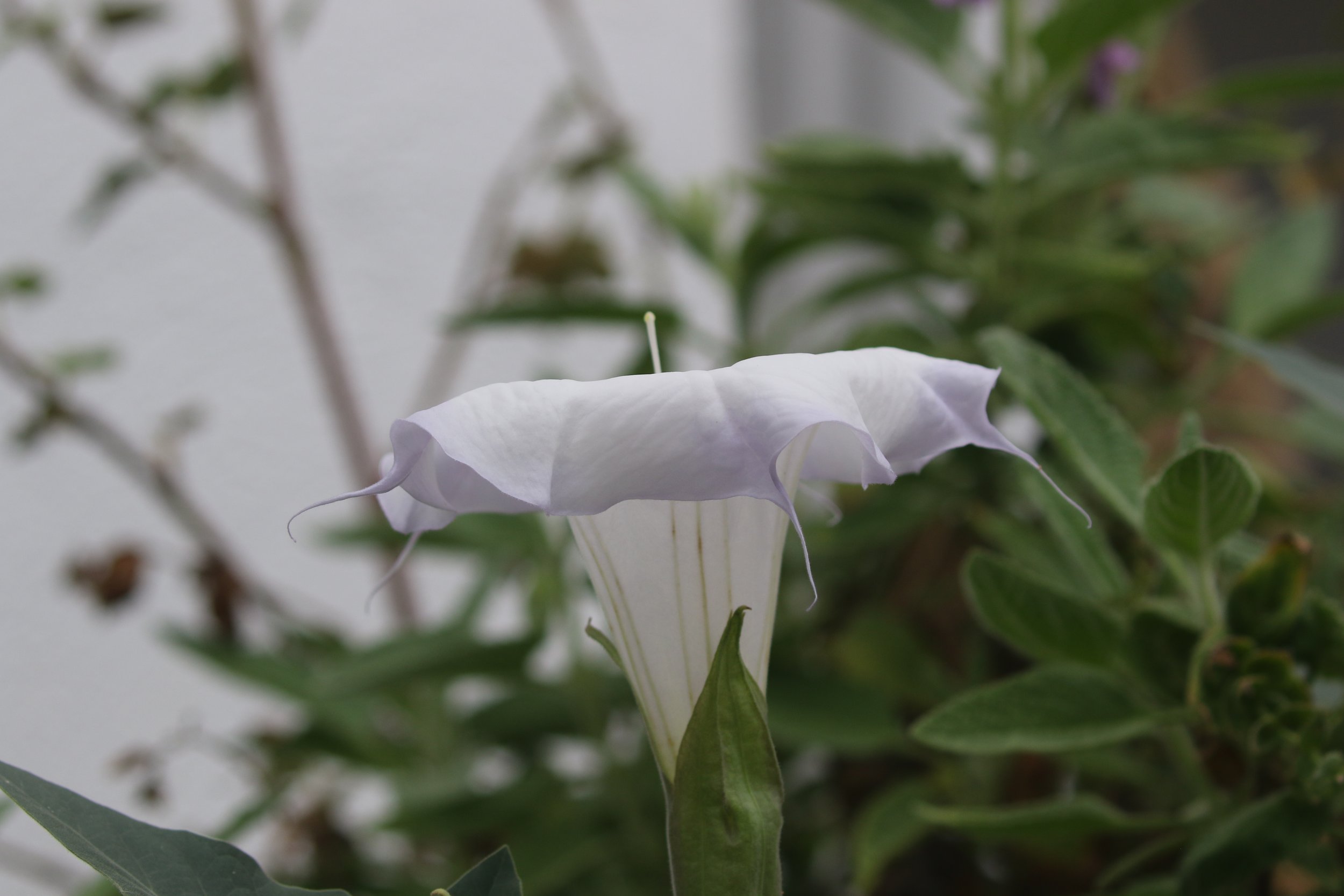
There is a quiet dignity in the plant’s timing. Each flower is a singular event, opening at sunset and offering its full splendor to the night. By the time the next morning’s sun reaches its peak, the bloom has already begun to retreat. This brief, intense window of beauty ensures the plant’s energy is focused on its nocturnal partners, creating a potent moment of connection that defines the rhythm of the desert night.
Deep Roots: A Legacy of Respect
In California, you cannot discuss Datura without acknowledging its profound cultural significance. For the Chumash and Tongva peoples, the plant, known as Momoy or Manit, is far more than a roadside wildflower. It is a sacred entity, historically integrated into rites of passage and sophisticated medicinal practices (Timbrook, 2007).
This history informs how we view the plant today. It isn't just ornamental; it carries a gravity that demands reverence. It is both beautiful and dangerous, as all parts of the plant are highly toxic if ingested (UC IPM). By respecting its boundaries, we can appreciate its role as a survivor. It thrives where other plants wither, providing a critical nectar source in arid environments and standing as a living link to California’s deep botanical and cultural history.
A Note for the Native Garden: The Rowntree Perspective
The pioneer horticulturist Lester Rowntree often spoke of the necessity of bringing the wild into the garden, provided we respect the plant's true nature (Rowntree, 1939). Of the Sacred Datura, she noted its paradoxical beauty and its ability to look lush and tropical while requiring almost nothing from the gardener.
To introduce this architectural giant into the landscape, there are a few considerations. In the wild, Datura wrightii can spread up to 15 feet. In a garden, it needs room to breathe and expand. It craves full sun and well-draining soil. It is drought-tolerant, often performing better with neglect than with over-care. Do not be alarmed if the plant disappears in winter; it is a perennial that retreats into its hardy root system, waiting for the warmth of spring to push it back through the soil. Finally, because of its high toxicity, it should be planted with care, taking into account its proximity to children and pets.
A Continuous Muse
Our work at the studio is an ongoing dialogue with plants like these, species that refuse to be ignored and offer a structural complexity we find endlessly inspiring. The Sacred Datura reminds us that the most profound beauty often reveals itself only when we are willing to wait for the sun to go down.
Works Cited
Rowntree, Lester. Hardy Californians. Macmillan, 1939.
Timbrook, Jan. Chumash Ethnobotany: Plant Knowledge Among the Chumash People of Southern California. Santa Barbara Museum of Natural History, 2007.
UC IPM. "Sacred Datura." University of California Statewide Integrated Pest Management Program.
USDA Forest Service. "Datura wrightii (Sacred Datura)." U.S. Forest Service Celebrating Wildflowers.
Happy World Bee Day!
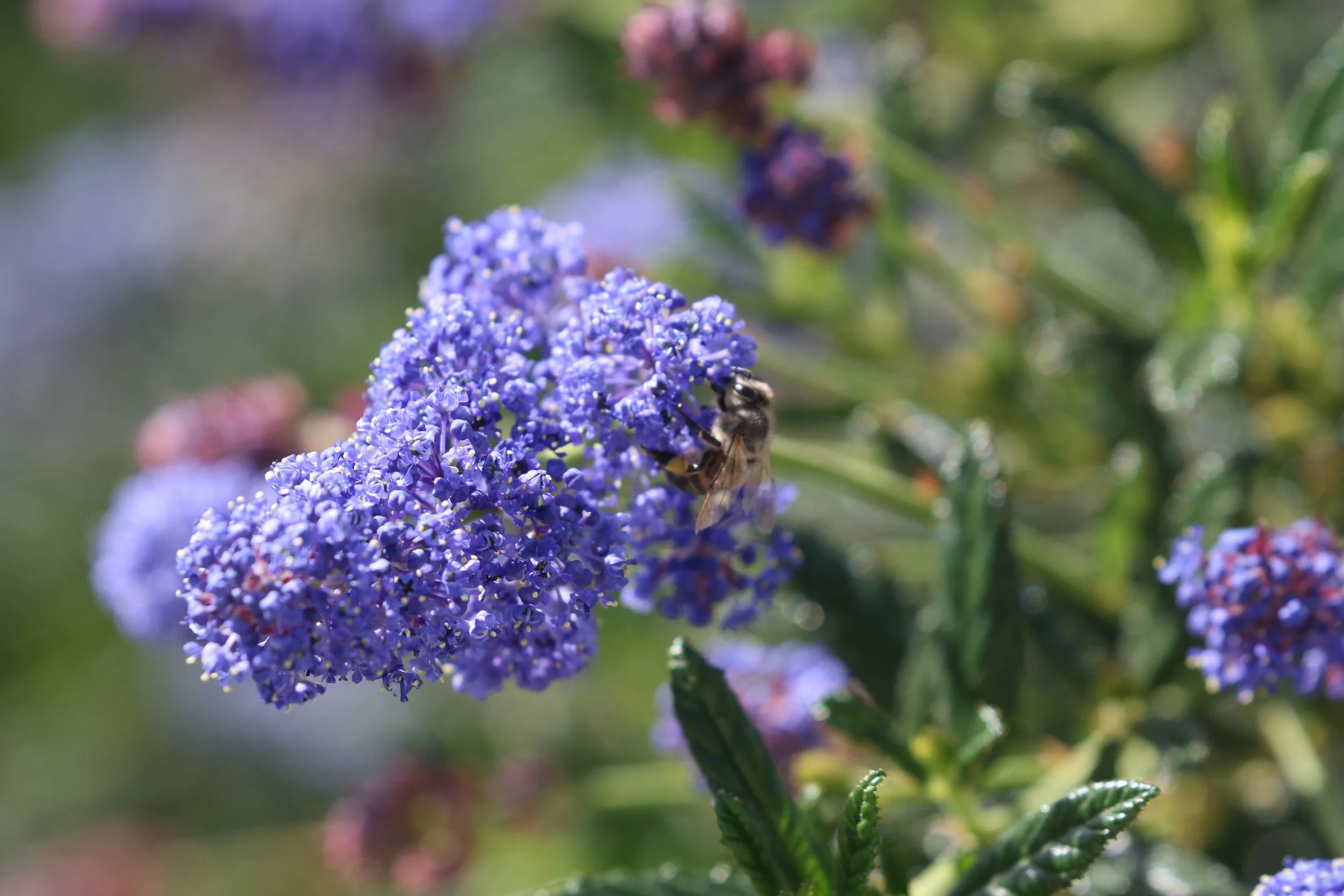
Western Honeybee (Apis mellifera) + California native Wild Lilac (Ceanothus thyrsiflorus, Blueblossom)
The UN has designated May 20th as World Bee Day to celebrate bees and highlight their essential work in the function of our ecosystem. Through pollination, bees work together with many species such as butterflies and hummingbirds to create a livable environment for all, contributing massive efforts to biodiversity and food security. Unfortunately, despite their critical role in maintaining a habitable ecosystem, the bee population is rapidly declining due to unsustainable farm practices and rising temperatures. As a team of nature enthusiasts and bee lovers, Kale Tree celebrates World Bee Day by sharing our appreciation of this incredibly hardworking and diverse insect.

Western Honeybee (Apis mellifera) + Pride of Madeira (Echium candicans)
Bees are an extraordinarily diverse species-- There are 30,000 different species of bee across the world, approximately 4,000 species in the United States, and over 1,500 identified bee species just in California! As such, California is home to some of the most diverse bee populations in the country, which is reflected by the state's equally large and diverse plant population.
One of the many bees you can find in California is the Apis mellifera, commonly known as a Honey Bee. Aptly named, Honey Bees are the only bee species that make enough honey to harvest. Honey Bees are highly social and are identifiable by their thick bodies and yellow or brown striped abdomens. Male Honey Bees do not have stingers, although they are typically larger than their female friends. Although Honey Bees can be found in California, they are native to Europe and pollinate in areas worldwide.

Female Valley Carpenter Bee (Xylocopa sonorina) + Popcorn Cassia (Senna didymobotrya)
Another bee commonly found in California is the gentle Xylocopa, also known as Carpenter Bees. Carpenter bees are shiny, large, and stout in appearance and have sparse hair covering their bodies. There are three different species of Carpenter bees in California, and they tend to nest in soft, decaying woods. Carpenter bees have small mouths and typically visit larger flowers as they are easier to derive nectar.

Male Valley Carpenter Bee (Xylocopa sonorina) + Tropical Hibiscus (Hibiscus rosa-sinensis, “Creole Lady”)

Black-tailed Bumblebee (Bombus melanopygus) + California Vervain (Verbena lasiostachys)
The ever-fuzzy, stout, and large Bombus, or Bumble Bee has black hair covering their bodies with yellow, white, or red bands. There have been 27 different Bumble Bees recorded in California, and the Bombus californicus or California Bumble Bee is native to the state. Bumble Bees tend to nest underground, but some species are known to nest in abandoned bird nests or birdhouses. Bumble Bees pollinate from a broad range of plants and food sources, including avocados, cherries, and blackberries. Bumble Bees are unique in their ability to engage in "buzz pollination," in which they vibrate at a frequency required for pollen to release from plants such as tomatoes, eggplants, and peppers.

Black-tailed Bumblebee (Bombus melanopygus) + California native, Vervain (Verbena lasiostachys)

A tiny Sweatbee (Family Halictidae) clings to California native, Tansy Leaved Phacelia (Phacelia tanacetifolia)
Many people think of bees as pests and take measures to deter them from gardens and outdoor activities to avoid being stung. However, bees are generally non-aggressive and can be easily identified by their compact, hairy bodies to distinguish against common stinging insects, such as wasps, who have long bodies with little to no hair. While there are thousands of bee species on Earth, many are identifiable through their branch-like hair, two pairs of wings, and "well-developed antennae."

Western Honeybee (Apis mellifera) + Champagne Bubbles Yellow Icelandic Poppy (Papaver nudicaule)
We can support bees and their pollination efforts by creating gardens that are attractive to many species of bees. With the right plants and a little research, your garden can attract up to fifty different bee species. Flowering California native plants can be beautiful additions to your garden while helping to support bees.
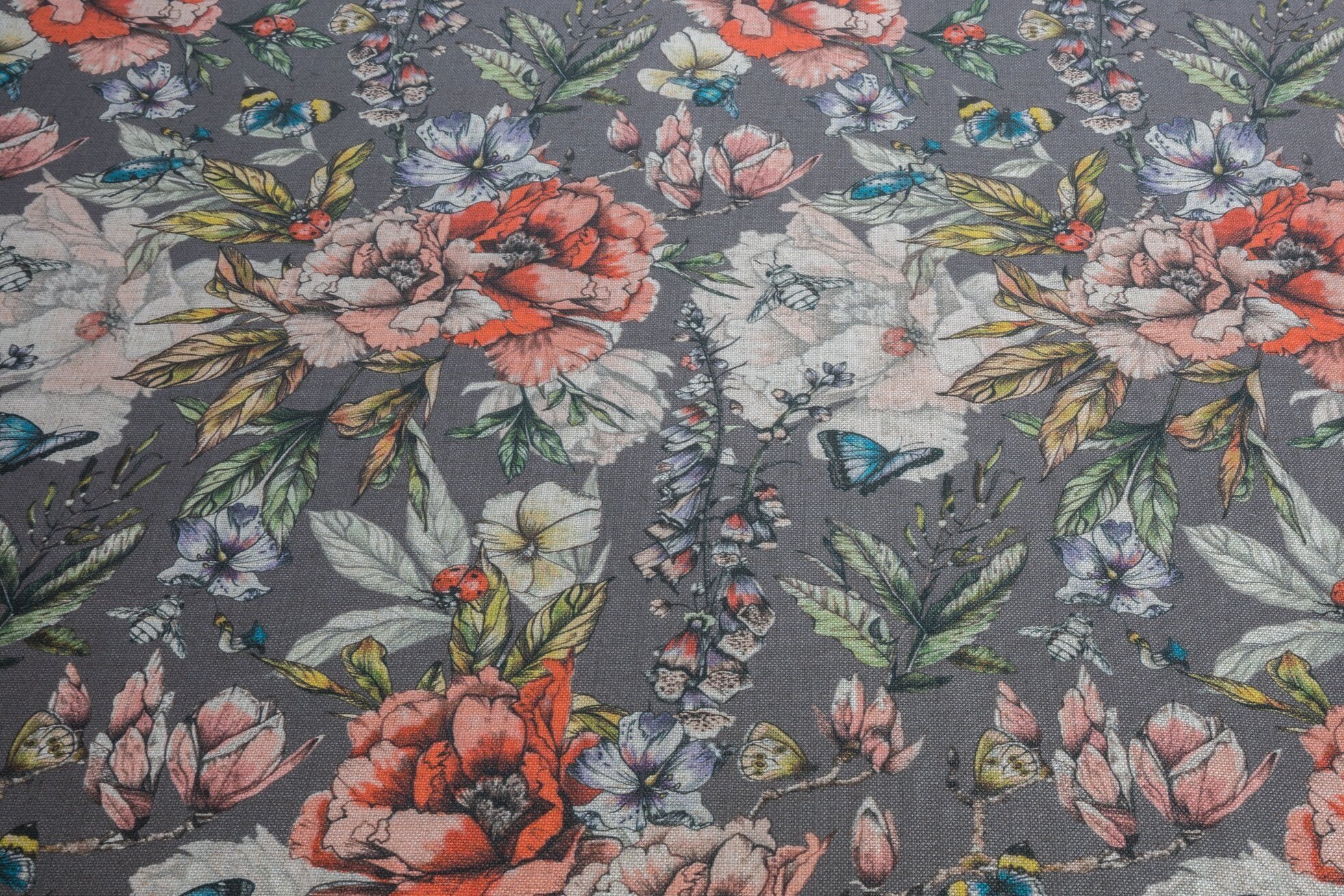
At Kale Tree, we celebrate bees every day through our nature-inspired, eco-friendly home decor.
Bibliography
Frankie, Gordon W., et al. California Bees and Gardens. Heyday, 2014.
Jadallah, Christopher, et al. Common Bees in California Gardens. University of California Agriculture and Natural Resources, 2015.
“World Bee Day.” United Nations, United Nations, 2022, https://www.un.org/en/observances/bee-day.
Crazy Plant Ladies: Radical Naturalists and Environmental Preservation
As a team comprised of plant collectors and nature lovers, many in the Kale Tree studio are no stranger to the phrase "crazy plant lady." Crazy plant lady has been re-contextualized among plant enthusiasts to describe some of the most influential and admirable environmentalists, naturalists, and plant lovers. Many adopt the term as a point of pride. In the design field, "crazy plant ladies" have paved the way for advances in sustainability with far-reaching effects, including an influence on biophilic and eco-friendly interior design practices. To celebrate a few of these historic figures, we hope to share some information and appreciation for a few notable women.

Diana Beresford-Kroeger
Diana Beresford-Kroger is a medical biochemist, botanist, and author, who uses her range of knowledge to educate and promote environmental preservation. Beresford-Kroeger has advocated for and educated around the medicinal benefits of trees and plant life, sharing information on the benefits and effects of various vegetation for health. To fight climate change, she developed a "bioplan" with tree planting at its foundation, aiming for everyone on earth to plant six native trees over six years in their communities.
Her home arboretum boasts a vast collection of various hardy and rare tree specimens. She is known for freely gifting seeds and saplings to help spread and replant these trees, many of which were used for a range of benefits by indigenous communities before being demolished through colonization.

Some of the more unique theories from her work have foundations in the Celtic belief system she was raised with, and many of the medicinal benefits of plants she has studied are rooted in Celtic traditions, which may also contribute to her profound respect and appreciation for trees. One of her more intriguing beliefs, while disputed, is that the healing benefits of trees are released through their aerosols, offering curative properties when inhaled. Beresford-Kroger often touts the healing benefits of time spent in forests, which she in part attributes to these aerosols. While some desire more support for these claims, many of the benefits of time among trees are widely documented. Her all-encompassing perspective, and impressive scientific research, have made her a widely celebrated figure, offering an expansive view of the power of nature.

Lorrie Otto
Lorrie Otto was an environmentalist, speaker, and author. She advocated against the use of pesticides after being alarmed by dead birds near her Milwaukee home, which paved the way for the nationwide ban on DDTA.
Otto was a proponent of natural landscaping and biodiversity, speaking against the water waste of lawns and encouraging people to transform their yard spaces that conserve wildlife and their natural habitats.
Her messaging inspired the organization "Wild Ones," a group that promotes sustainable and environmentally friendly landscaping. Nine people founded the group after they attended one of Otto's lectures. As a result, natural landscaping has seen a progressive increase in popularity, making its way to the rule and not the exception in many personal garden spaces. The widespread normalcy and embrace of natural landscaping and its far-reaching positive effects on the environment may often be attributed to Otto's advocacy efforts.

Beatrix Farrand
Beatrix Farrand was a founding member of the American Society of Landscape architects and the only woman in the original group. In addition to being the first female landscape architect in America, her renowned landscapes appeared in private residences, the White House, and a range of parks, botanic gardens, and campuses.
She advocated for the importance of nature to improve personal well-fare and spoke about the value of public garden spaces. Her work was known for considering the relationship between natural and built spaces, using landscaping techniques to improve aesthetics in architecture. In addition, she was known for her engineering ability, creating intricately designed gardens and often focused on native plantings. Farrand's visionary approach and widely celebrated landscapes helped pave the way for many women in the field.

While countless women have contributed to environmental preservation through their love of nature, these are a few who greatly inspire our studio. Their innovative approach to preserving, celebrating, and sharing nature encourages out-of-the-box thinking and emphasizes the importance of education. A common understanding between these and most "crazy plant ladies" is that we are participating members of our natural environments. Nature is something to be shared, cherished, and preserved. We hope to carry these themes in our studio and share our passion for nature throughout our designs.