The Night’s Architecture: A Study of California’s Sacred Datura
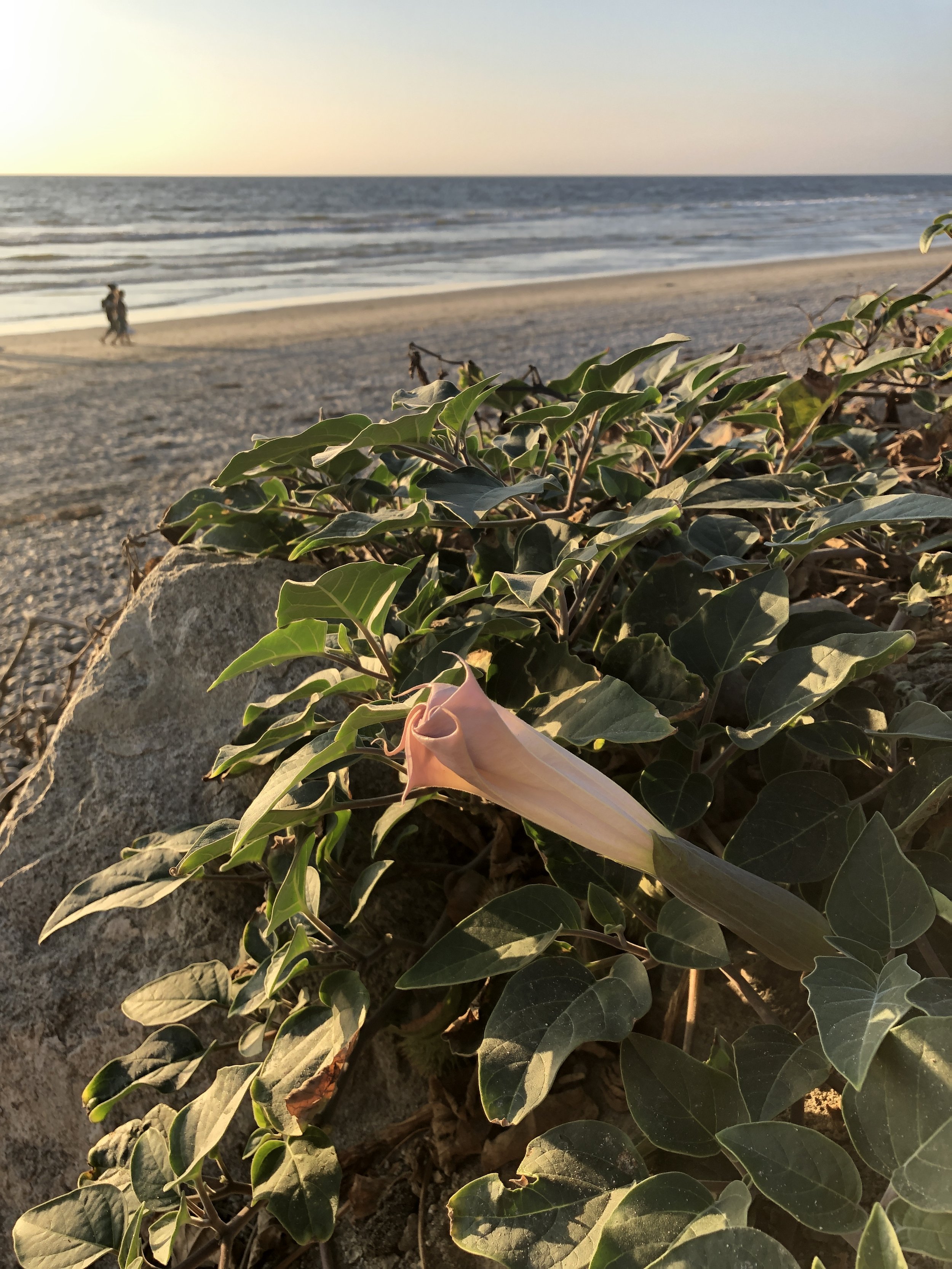
In the high heat of a California afternoon, Datura wrightii looks like a secret hidden in plain sight. Its low-slung, velvety gray foliage hugs the disturbed soil of roadsides and desert washes, appearing almost muted against the vibrant glare of the sun. But as the light fades and the temperature drops, the plant undergoes a structural transformation.
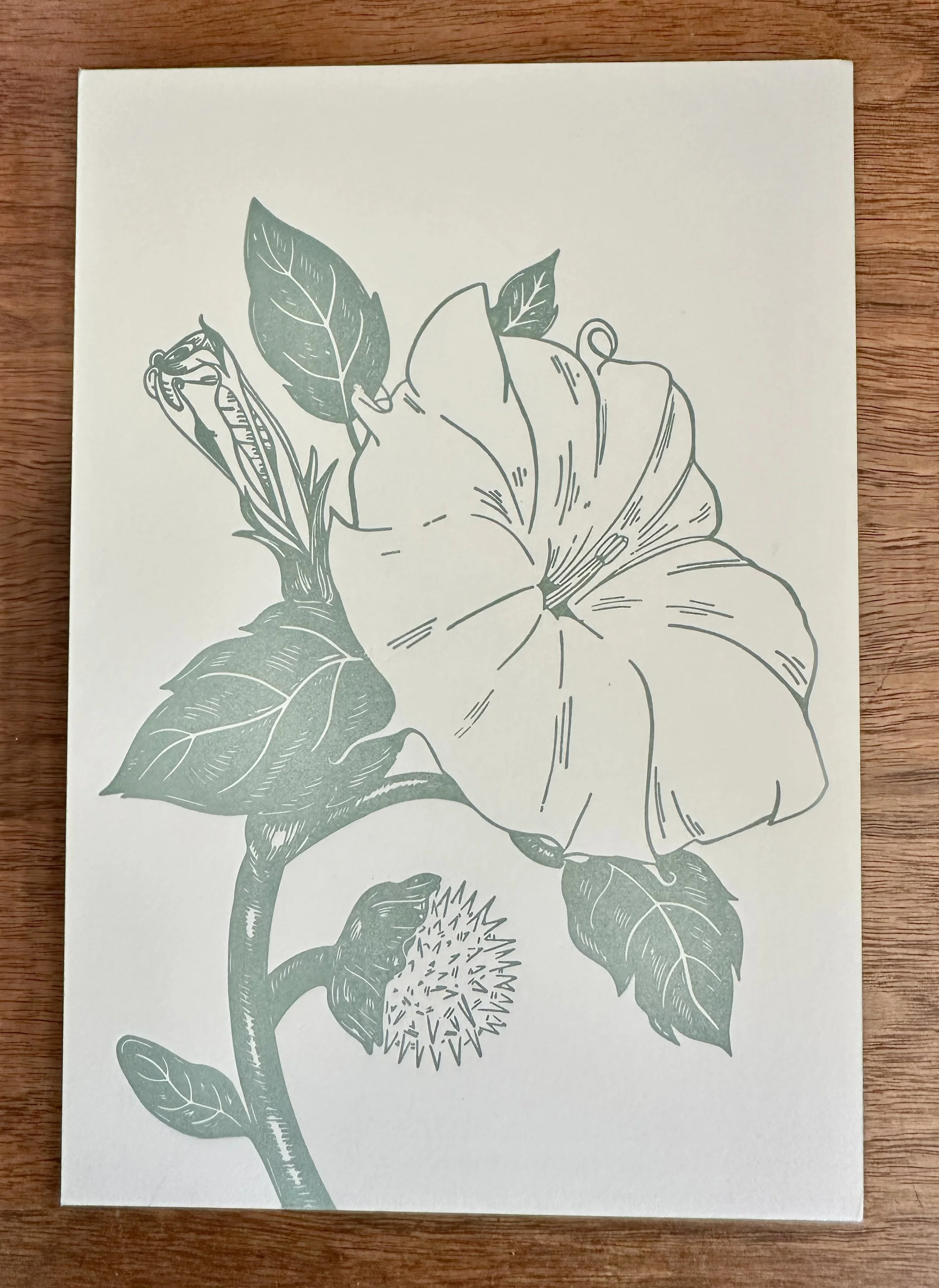
For our Kale Tree® studio, Datura is more than a botanical curiosity; it is a masterclass in organic geometry. We’ve long been drawn to its vespertine nature, the way its massive, pleated buds unfurl with mechanical precision at dusk. What began as a single illustration for a holiday card has become a permanent fixture in our creative vocabulary. We return to its silvered leaves and trumpet-shaped silhouettes not just for their beauty, but for their resilience. In this study, we look past the plant's reputation to explore its role as a cornerstone of the nocturnal ecosystem and a primary muse.
Nocturnal Synchronicity: The Hawkmoth and the Bloom
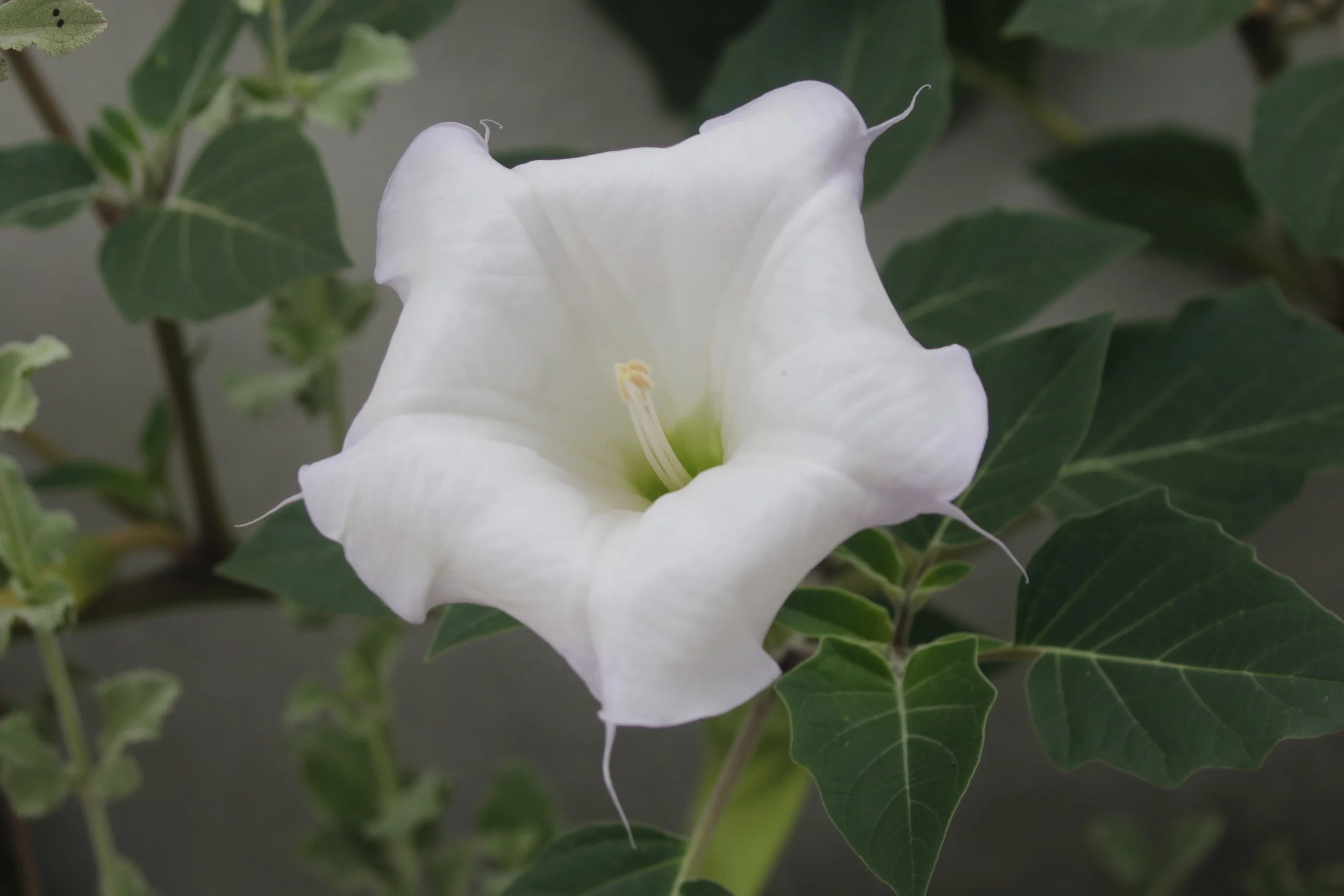
While much of the California landscape thrives under the sun, Datura wrightii operates on a different clock. As the heat of the day dissipates, the plant begins a coordinated sensory display. The massive white trumpets don't just open, they exhale. They release a heavy, intoxicating fragrance that serves as a GPS signal for the Sphinx Moth, or Hawkmoth (USDA Forest Service).
The relationship between the two is a marvel of biological engineering. To reach the nectar deep within the flower’s throat, the Hawkmoth unfurls a proboscis that matches the flower's depth almost perfectly. As the moth hovers, steady as a hummingbird, it becomes an accidental messenger, brushed with the pollen that will sustain the next generation of Datura. In the quiet of a desert or coastal evening, this interaction is one of the few movements in an otherwise still landscape, a silver-on-silver dance that has become a foundational reference for our studio's tonal palettes.
The Ephemeral Bloom
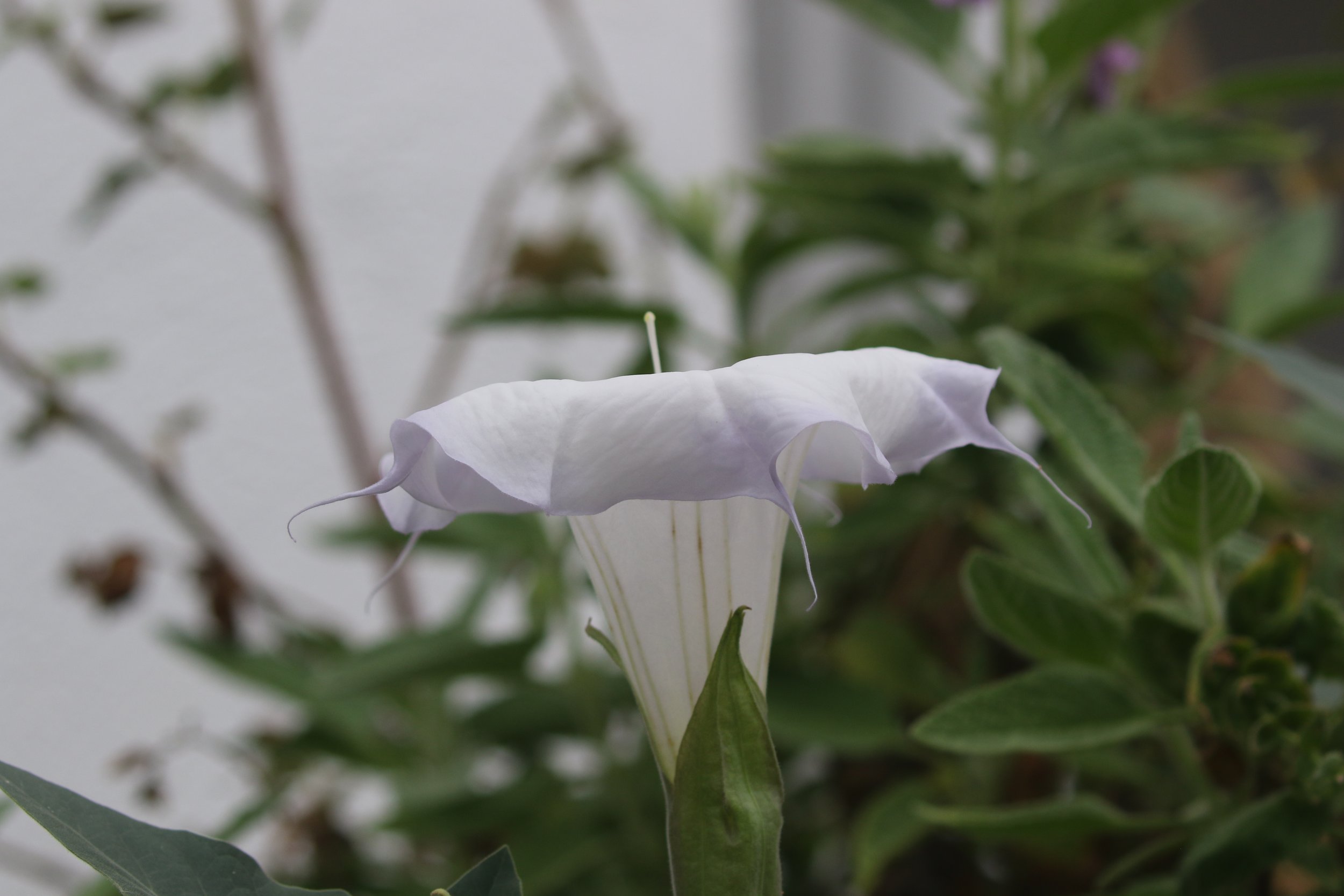
There is a quiet dignity in the plant’s timing. Each flower is a singular event, opening at sunset and offering its full splendor to the night. By the time the next morning’s sun reaches its peak, the bloom has already begun to retreat. This brief, intense window of beauty ensures the plant’s energy is focused on its nocturnal partners, creating a potent moment of connection that defines the rhythm of the desert night.
Deep Roots: A Legacy of Respect
In California, you cannot discuss Datura without acknowledging its profound cultural significance. For the Chumash and Tongva peoples, the plant, known as Momoy or Manit, is far more than a roadside wildflower. It is a sacred entity, historically integrated into rites of passage and sophisticated medicinal practices (Timbrook, 2007).
This history informs how we view the plant today. It isn't just ornamental; it carries a gravity that demands reverence. It is both beautiful and dangerous, as all parts of the plant are highly toxic if ingested (UC IPM). By respecting its boundaries, we can appreciate its role as a survivor. It thrives where other plants wither, providing a critical nectar source in arid environments and standing as a living link to California’s deep botanical and cultural history.
A Note for the Native Garden: The Rowntree Perspective
The pioneer horticulturist Lester Rowntree often spoke of the necessity of bringing the wild into the garden, provided we respect the plant's true nature (Rowntree, 1939). Of the Sacred Datura, she noted its paradoxical beauty and its ability to look lush and tropical while requiring almost nothing from the gardener.
To introduce this architectural giant into the landscape, there are a few considerations. In the wild, Datura wrightii can spread up to 15 feet. In a garden, it needs room to breathe and expand. It craves full sun and well-draining soil. It is drought-tolerant, often performing better with neglect than with over-care. Do not be alarmed if the plant disappears in winter; it is a perennial that retreats into its hardy root system, waiting for the warmth of spring to push it back through the soil. Finally, because of its high toxicity, it should be planted with care, taking into account its proximity to children and pets.
A Continuous Muse
Our work at the studio is an ongoing dialogue with plants like these, species that refuse to be ignored and offer a structural complexity we find endlessly inspiring. The Sacred Datura reminds us that the most profound beauty often reveals itself only when we are willing to wait for the sun to go down.
Works Cited
Rowntree, Lester. Hardy Californians. Macmillan, 1939.
Timbrook, Jan. Chumash Ethnobotany: Plant Knowledge Among the Chumash People of Southern California. Santa Barbara Museum of Natural History, 2007.
UC IPM. "Sacred Datura." University of California Statewide Integrated Pest Management Program.
USDA Forest Service. "Datura wrightii (Sacred Datura)." U.S. Forest Service Celebrating Wildflowers.