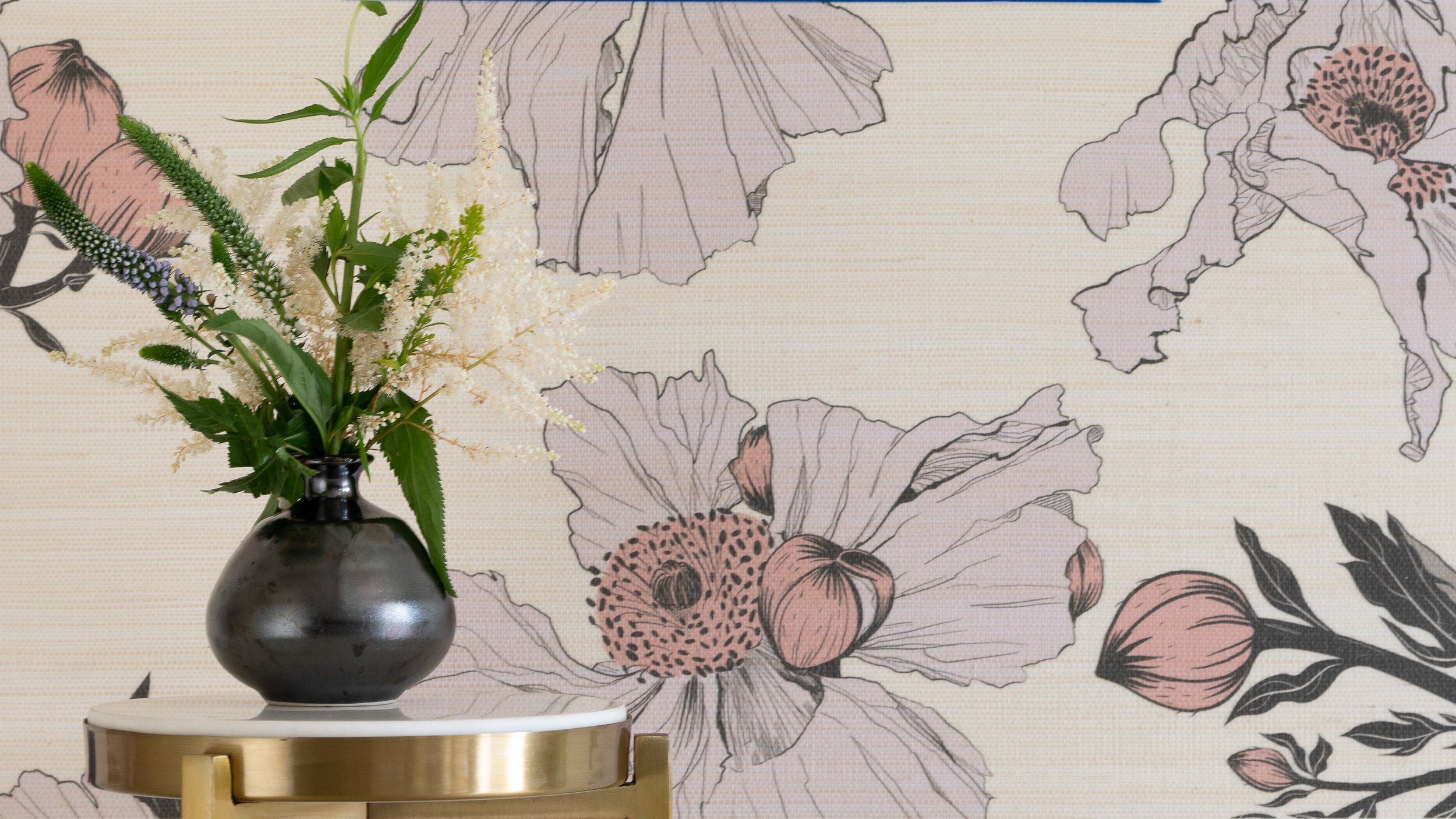
The Softness of Resilience: Introducing Matilija Poppy in Boletus and Shell
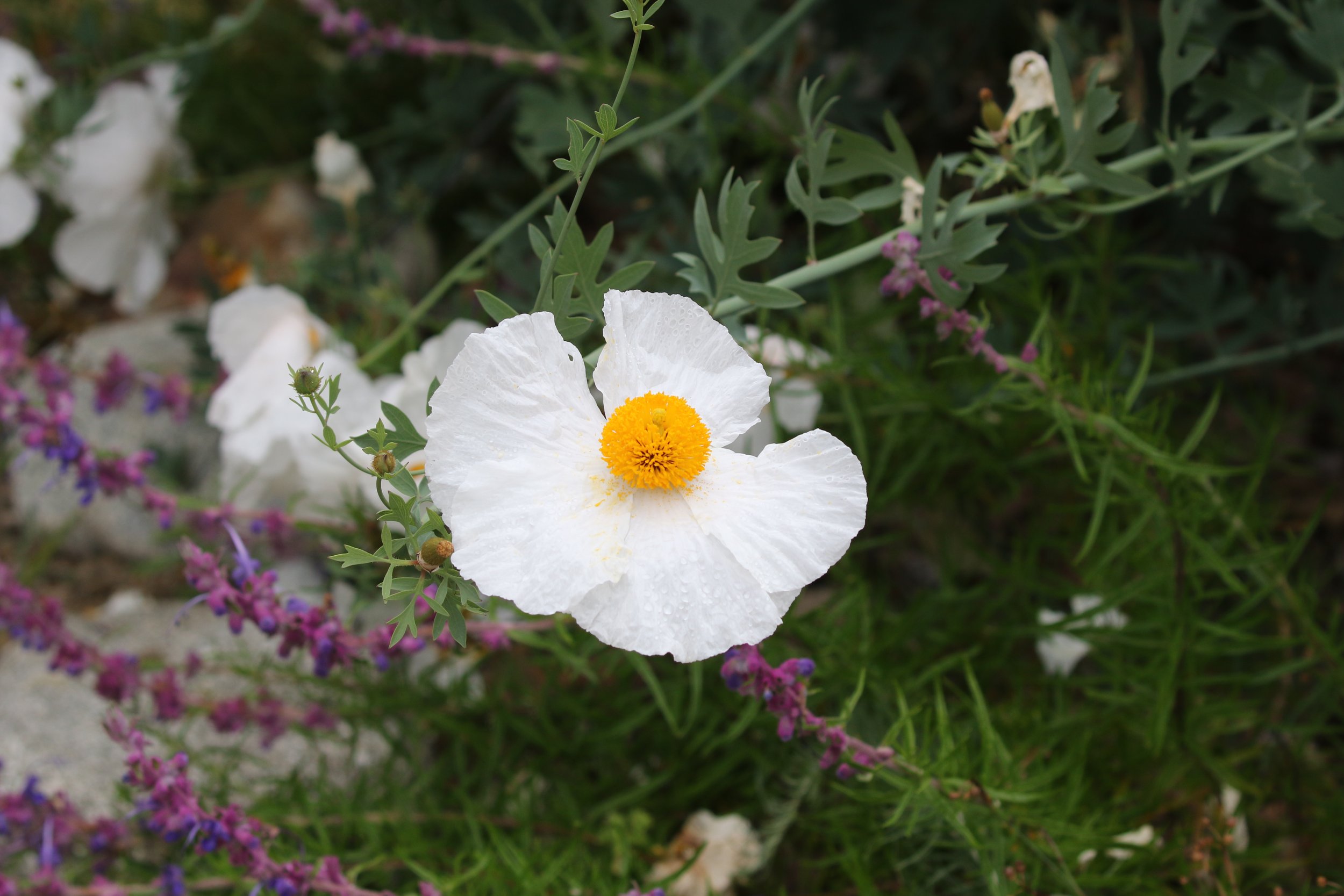
Our homes serve as a curated sanctuary, a necessary counterpoint to a fast-moving world. For the discerning eye, interior design is more than an aesthetic pursuit; it is a medium for cultivating composure, grace, and restorative quiet.
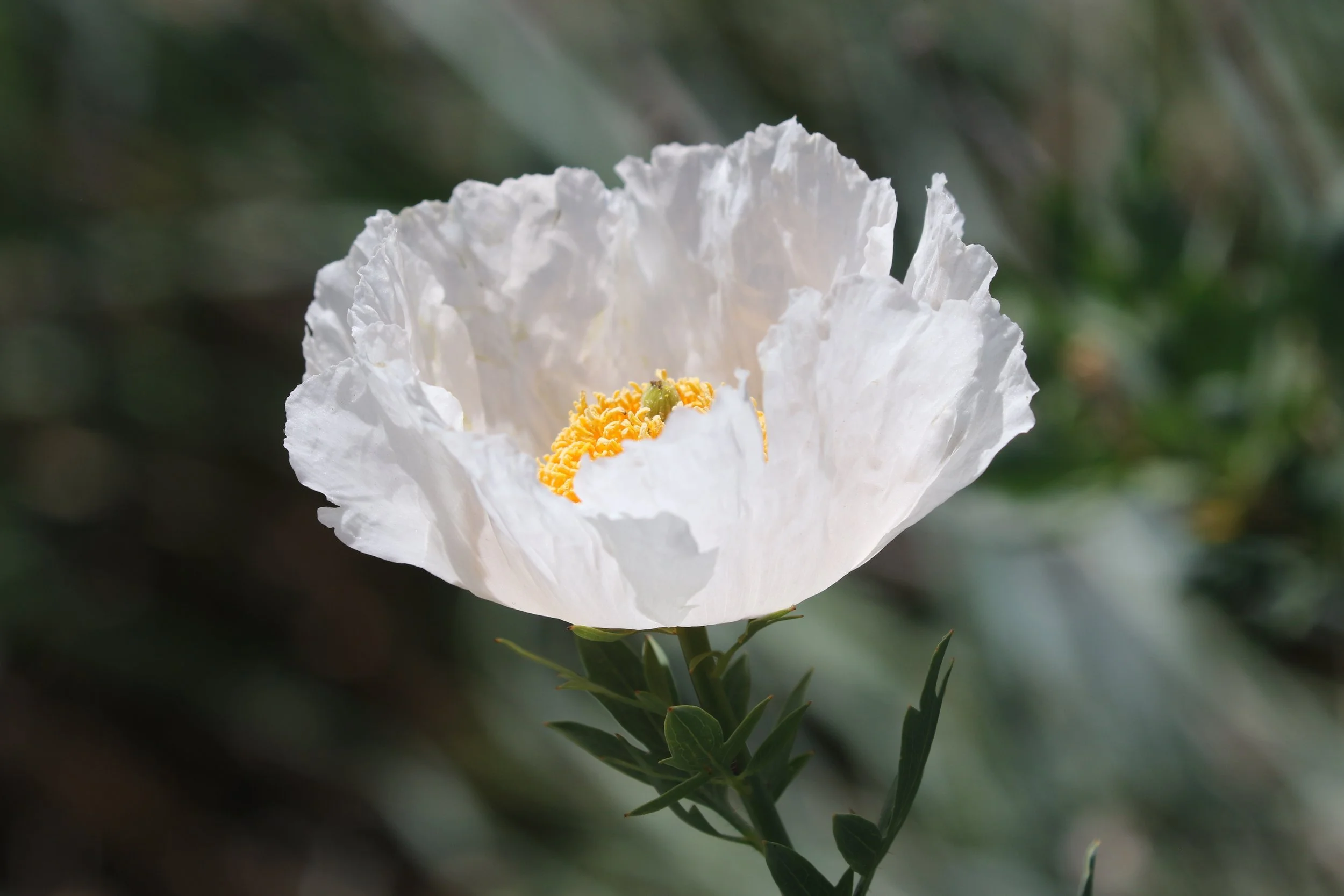
We often look to the California Floristic Province for inspiration, finding that nature’s most resilient inhabitants possess the most delicate beauty. The Matilija Poppy is a testament to this balance. While it is celebrated for its grand, iconic presence in the wild, our two newest colorways, Boletus and Shell, explore the plant’s more subtle, sophisticated mid-tones. These additions are designed to bring effortless tranquility and intentional softness to the interior landscape.
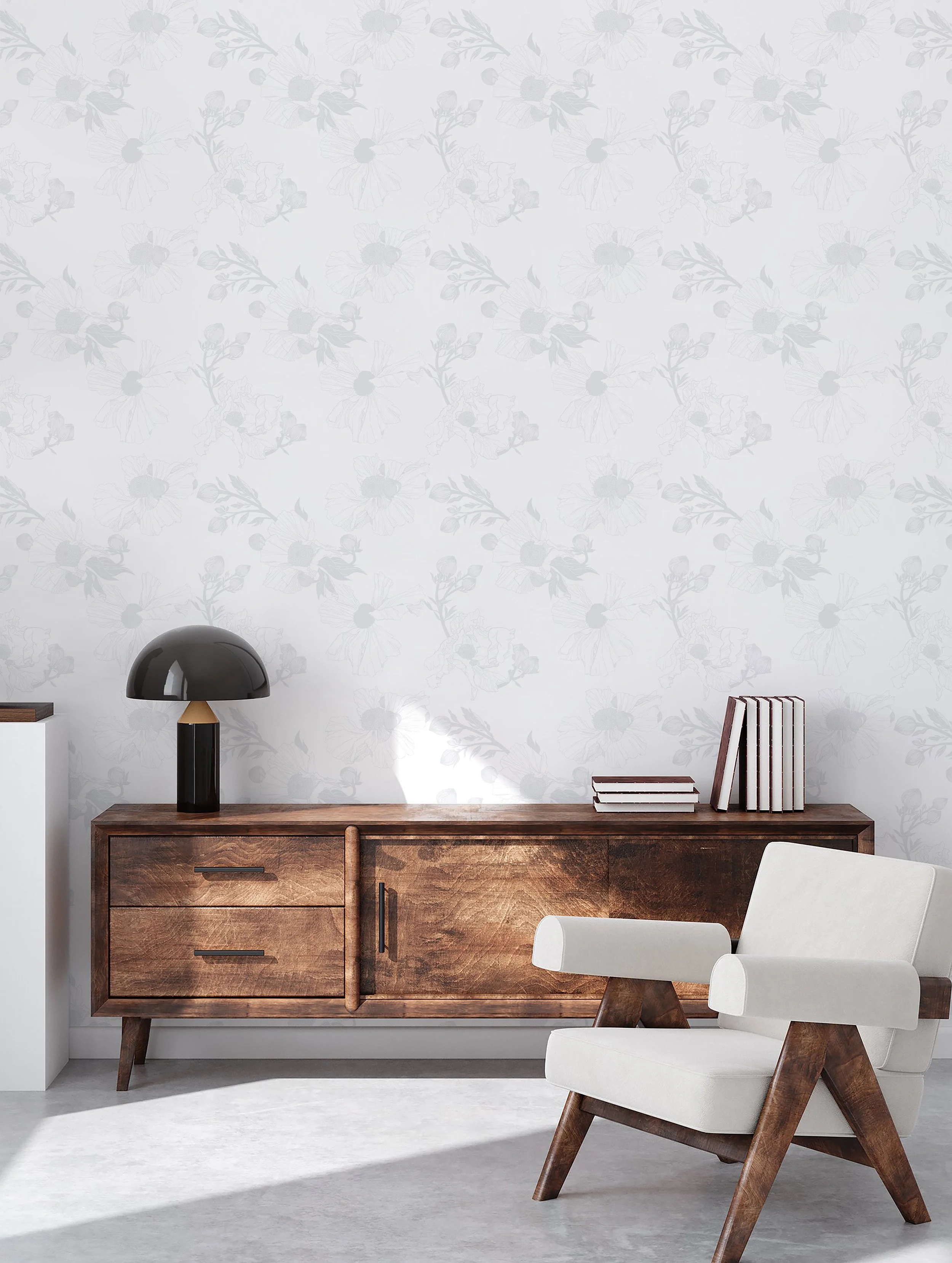
Boletus: Tones of the Forest Floor
Inspired by the ethereal fungi of the forest floor, the Boletus colorway captures a hue as elusive as it is elegant. It is a singular, sophisticated in-between tone, a shade that gracefully lies between soft sage and muted silver.
The pattern is set against a light, warm neutral foundation, allowing the tonal linework to feel like a visual whisper. Boletus acts as a grounding element, providing composition and clarity. It is a palette that invites the eye to linger and the mind to settle, offering a serene connection to the quiet strength of California’s wildlands.
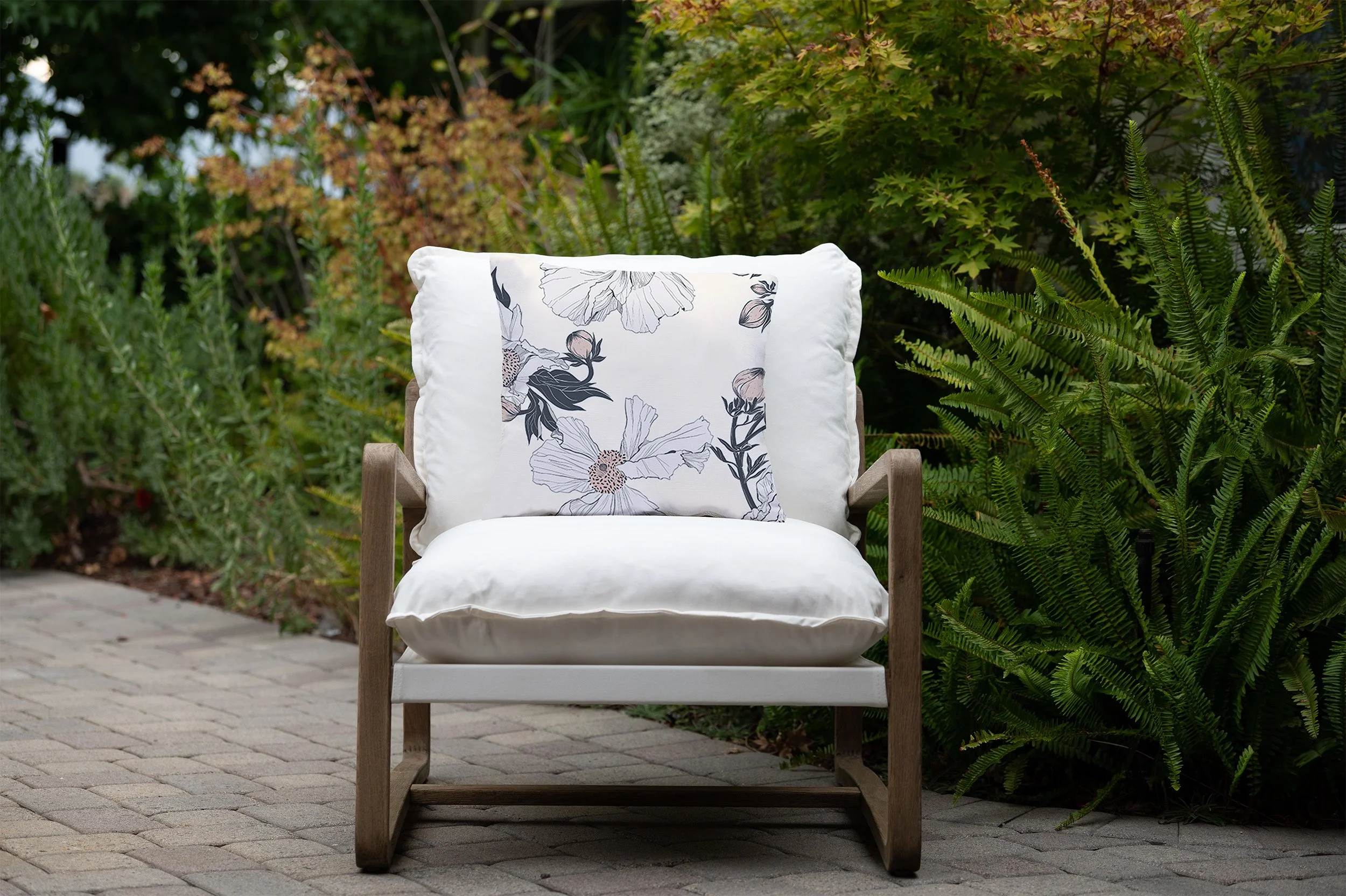
Shell: A Luminous Evolution
Shell represents a refined evolution of our classic Petal colorway. While Petal offers a crisp, energetic morning light, Shell captures the deep, resonant warmth of a golden afternoon.
The background is rich and sun-steeped, reminiscent of the way light filters through the poppy’s generous, paper-thin petals at high day. This increased saturation creates an enveloping, cohesive environment, making it ideal for intimate spaces.
A Multi-Sensory Collection
The new Kale Tree® colorways are available in:
Belgian Linen: Celebrated for its quality, linen features a classic weave that adds sophisticated texture to drapery and upholstery. Its natural weight and drape bring a sense of history and permanence to the design.
Wallpaper: FSC-certified and PVC-free with an artisanal, unpasted finish. Printed with water-based latex inks, this wallcovering offers a high-end aesthetic that helps transform a room into a complete, immersive sanctuary.
Cultivating an Interior Landscape
Ultimately, a home should be a reflection of our most centered selves. By translating the resilience of the local landscape into a language of softness and sophistication, we create spaces that help support our well-being. Exploring Boletus and Shell offers an opportunity to see how these new expressions of the Matilija Poppy can elevate the spirit of a private sanctuary.
Crow Inspired Interior Design

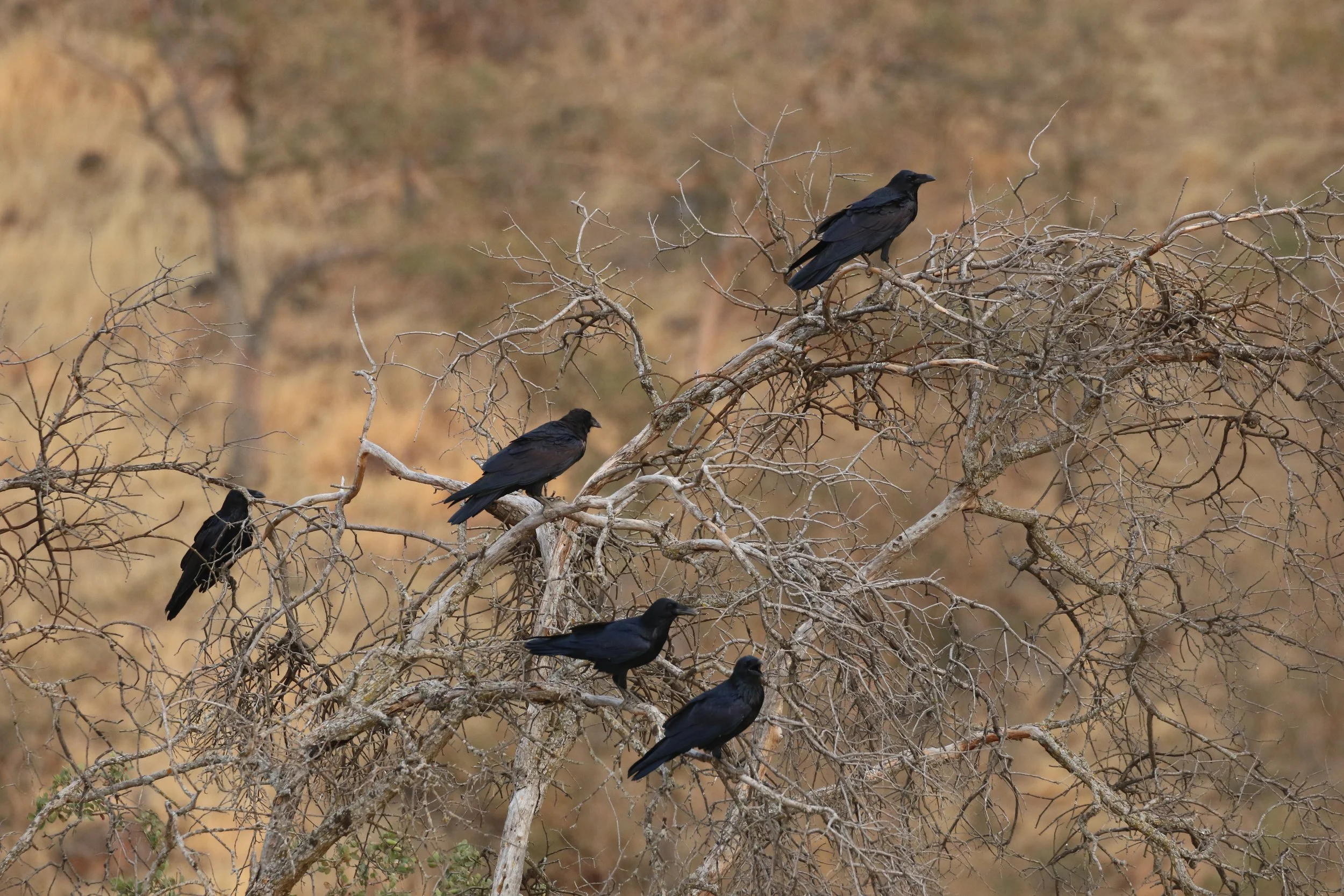
Nature supplies us with endless inspiration for interior design, and a cast of characters with beauty and personality that adds special nuance, especially when considering the bird kingdom. In particular, the crow has an interesting backstory that adds depth to its role as a muse for interior design.
The crow is an often misunderstood bird. It’s mysterious, quietly and intensely intelligent (some experts say it’s as smart as a seven-year-old child, and is the subject of many duplicitous symbols: it can represent doom and gloom, but also new beginnings and hope, depending on the cultural context. It’s also viewed as a trickster, in part because its high intelligence helps it outsmart foes. Even their coloring is varied, depending on light conditions.
All About Crows
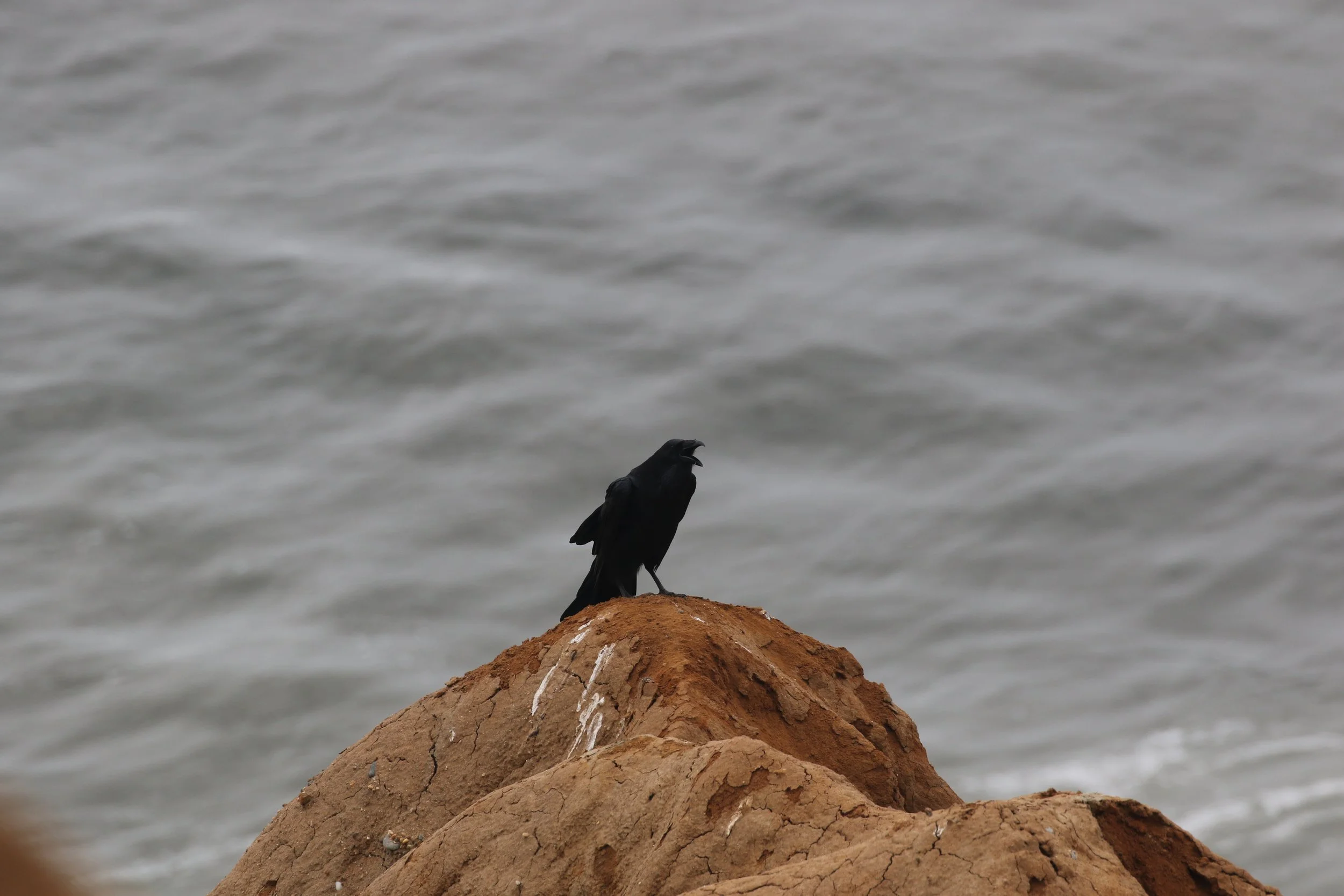
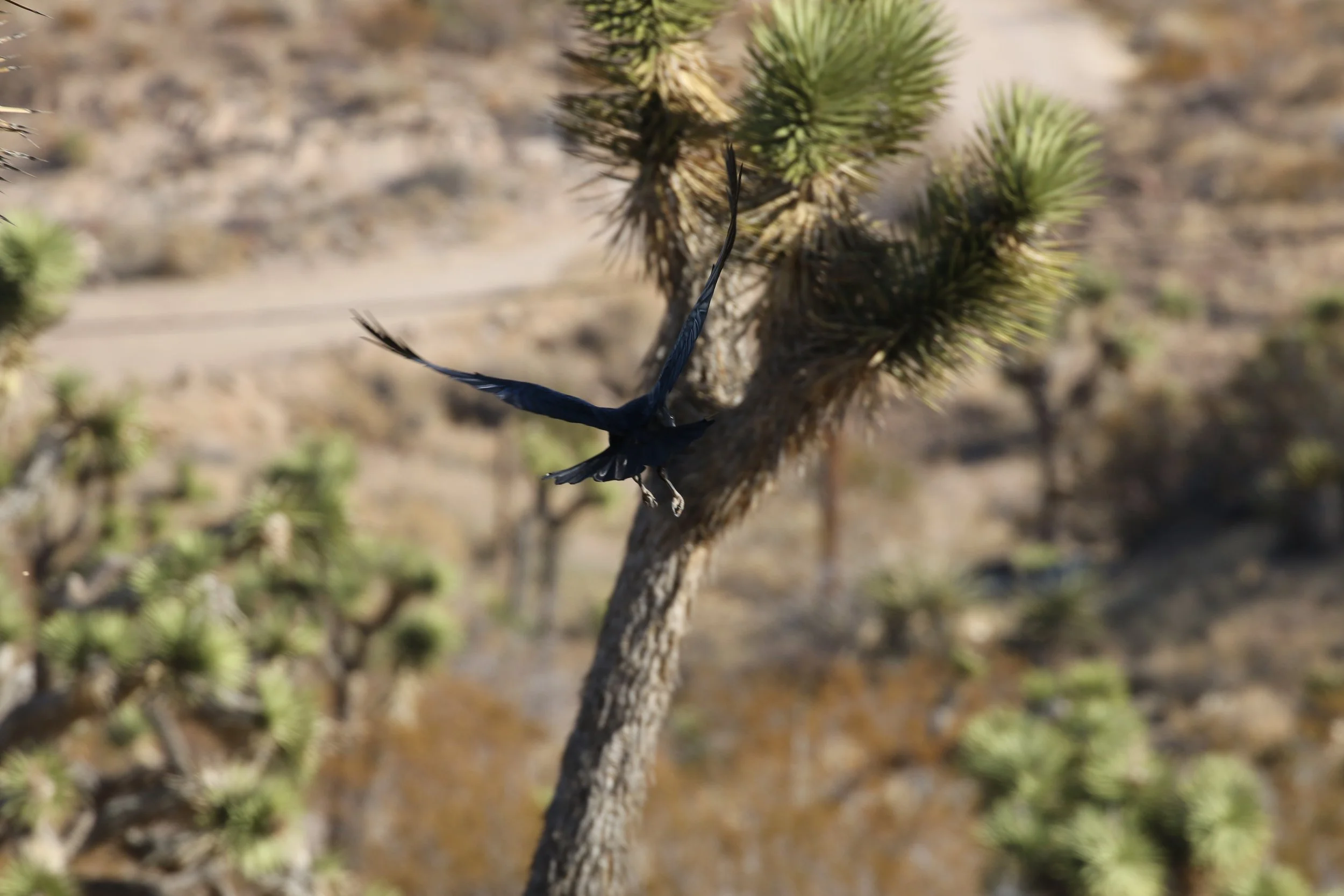
Crows have a kind of gothic, ethereal look, with all-black feathers, legs, and beak. At a closer look, though, the crow’s feathers reveal iridescent coloring, with shades of purple, blues, green, and more. Rather than being a true black, light plays across their feathers, casting an almost metallic sheen.
Their eyes are a steely blue, and baby crows have pink coloring around their mouths, called a gape, which helps parents identify them, aids feeding, and marks them as youngsters to other crows.
Behaviourally, crows are known for mobbing, where gangs of the birds gather together and dive-bomb and squawk at perceived predators. They might be protecting a nest or territory. This is often effective against larger predators, who often give up and leave, simply because of the number and frenetic behavior of the crows- it’s not worth the predator’s time.
The most common species of crow in the United States is aptly named the American Crow. They are highly communal, often gathering in large roosts of upwards of 100 birds to sleep together for warmth on cold nights.
Cultural and Symbolic Meaning of the Crow
Crows represent many different things across various cultures and folklore, some of which are oppositional. It’s no wonder the crow has such a duplicitous reputation.
In Native American folklore, crows have a deep spiritual connection and are considered messengers from the afterlife, serving as a connection to deceased ancestors.
In Celtic folklore, crows are associated with a warrior goddess who could shape-shift into a crow. She would appear prior to battles and hint at the outcome.
In Greek mythology, crows are associated with Apollo, the god of prophecy, and are seen as symbols of insight. In the Greek myth, Apollo sent a white bird to watch over his lover, who later betrayed him. The white bird delivered this news, and in his fury, Apollo curses the bird, turning the feathers from white to black.
How Crows Can Inspire Interior Design
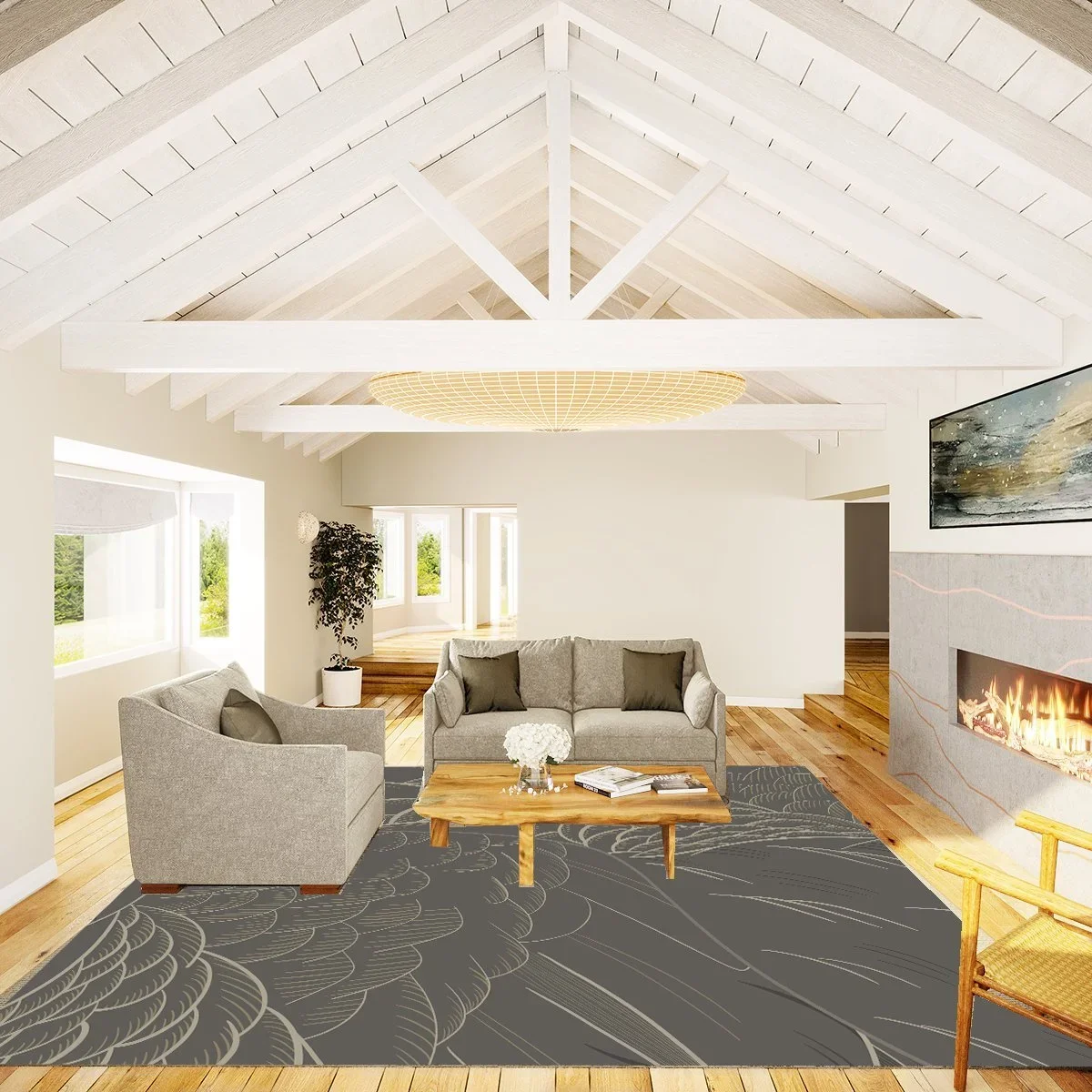
“Given the cultural and scientific context of the crow, along with its physical properties, the crow can be a meaningful aspect of biophilic design, especially as a motif in textiles, wallpaper, or in artwork,” says Sarah Barnard, WELL and LEED-accredited interior designer. Barnard is an expert in biophilic and wellness-focused design. Her projects are nature-inspired and consider the physical and emotional benefits when the built environment meets biophilia.
Beyond using its beauty to distill beautiful patterns and decor, “Considering and replicating some of the behaviors of this intelligent bird can add nuance to interior design,” she says. Here are some ways to use the crow’s qualities to inspire interior design.
Kale Tree® Crow
Look at Color in Different Ways
When choosing colors, consider how light might affect perception. As with the crow’s feathers, light conditions literally alter the colors, creating a totally different experience. Remember things like light sources, surface finishes, and the size of the space.
Design for Community
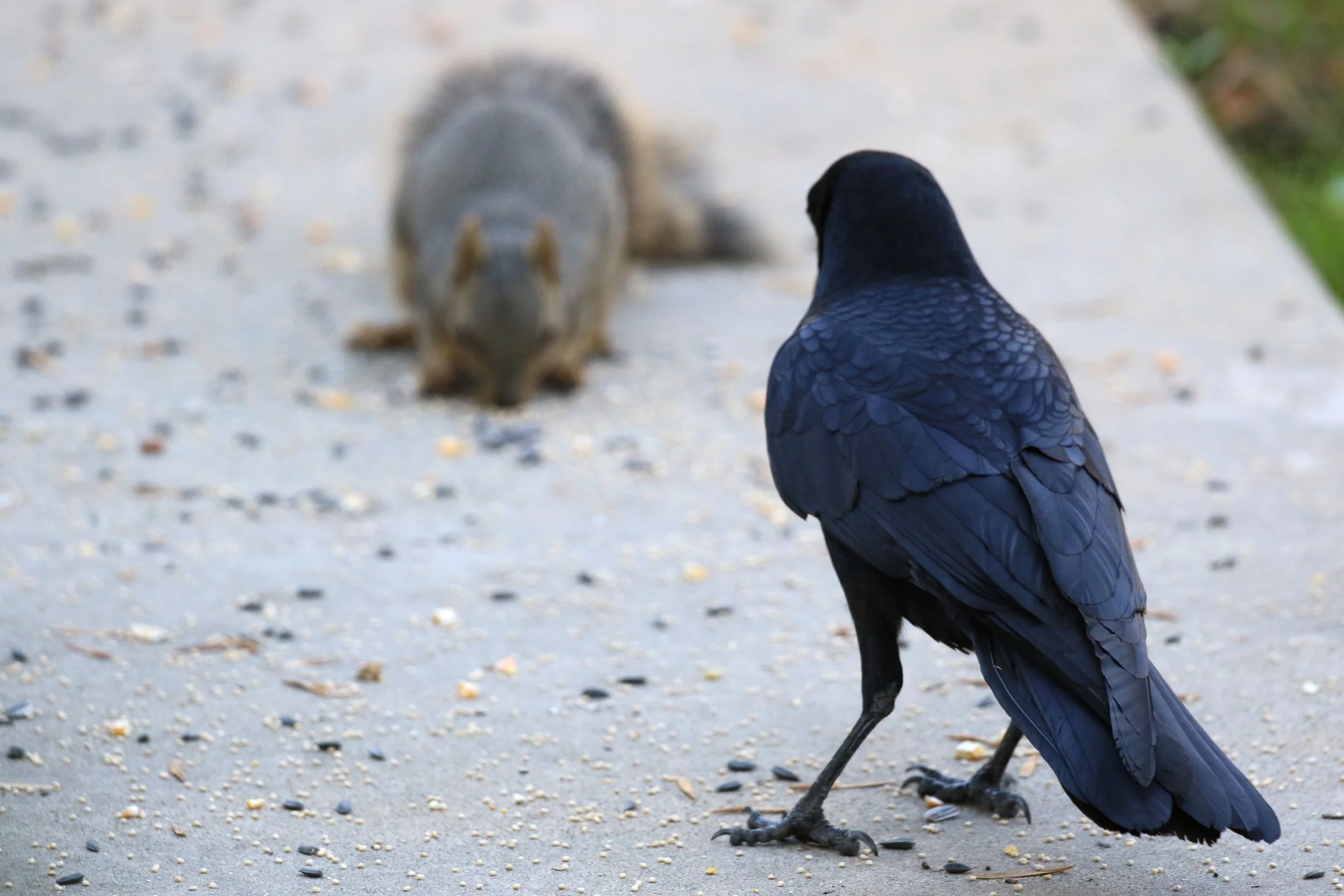
Crows are community-centric and deeply interconnected, fostering supportive bonds and yielding benefits. Designing with the same intention, including spaces that foster connection, gathering, and socialization, from furnishings that cluster for conversation to kitchen design that encourages gathering.
Pensive and Patient
The crow is so smart, in part because of its stop-and-think approach to the world. Granting oneself permission to pause and to create space for patience to observe and consume the surroundings can be grounding. Create space at home dedicated to stillness before action, whether a meditation room, a window seat framed by a view, or a cozy reading nook.
The crow is intelligent, inclusive, and willing to reveal its dark beauty to patient viewers. In a world of digital overwhelm and surface-level impact, the crow is a reminder of the richness of layers, the rewards for patience, and how instincts are centering.
Sources:
https://eugene.wbu.com/american-crow
https://urbannature.blog/2019/11/13/crow-collective
https://www.audubon.org/magazine/meet-bird-brainiacs-american-crow
https://www.centreofexcellence.com/spiritual-meaning-of-a-crow
https://www.learnreligions.com/the-magic-of-crows-and-ravens-2562511
https://birdastic.com/are-crows-bad-omen-symbolism-meaning-explained/#:~:text=Conclusions,you%20choose%20to%20interpret%20them.
https://www.allaboutbirds.org/guide/American_Crow/overview#:~:text=Basic%20Description,rarely%20broken%20up
Hermit Thrush: Echoing Nature
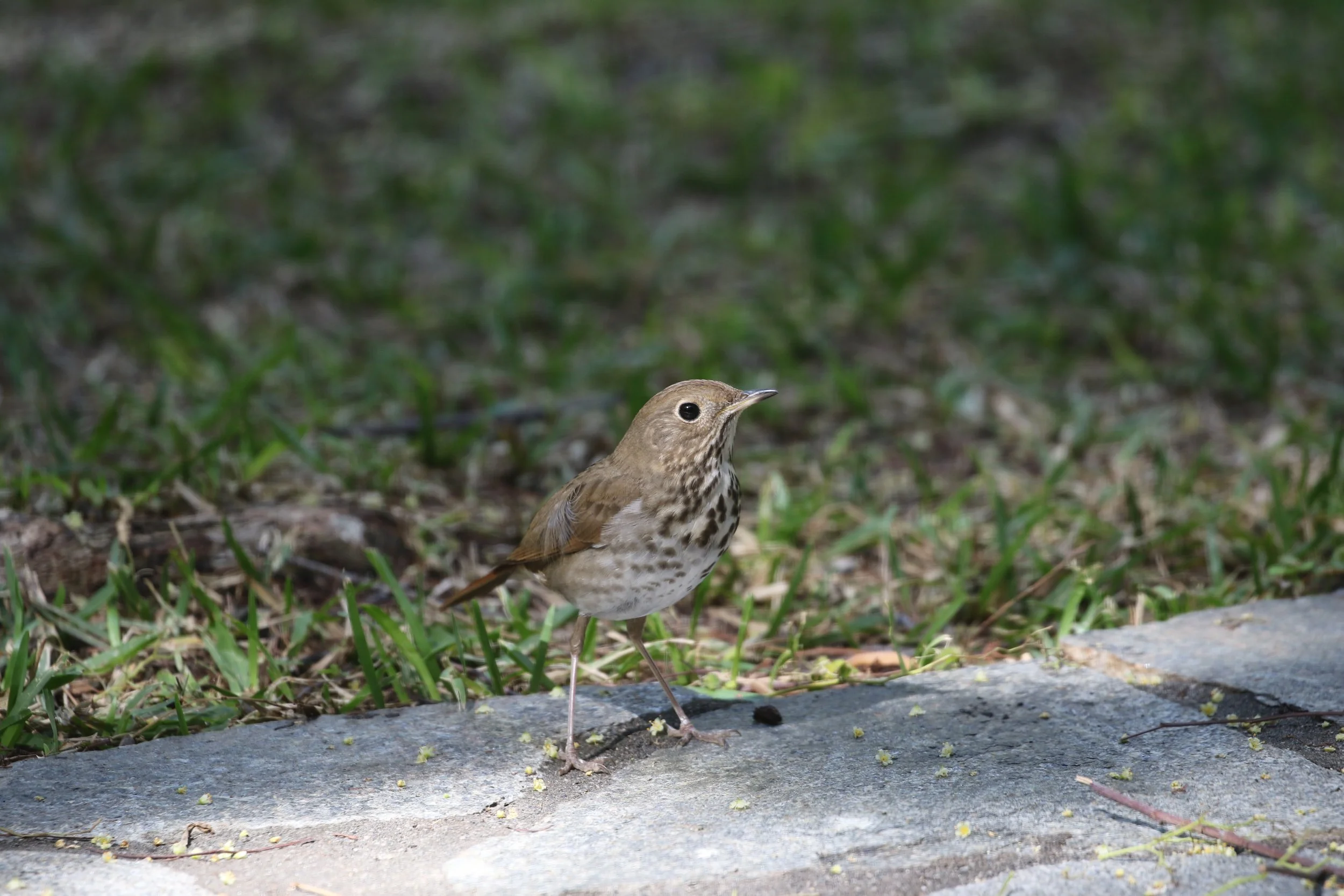
While searching far and wide for creative inspiration can yield interesting results in interior design, sometimes the most meaningful inspiration is closer to home, right in the garden. When it comes to nature-inspired design, the backbone principle of biophilic design, where interiors strive to replicate the calm found outdoors, it can be helpful to be patient when observing nature, allowing the beauty to reveal itself organically.
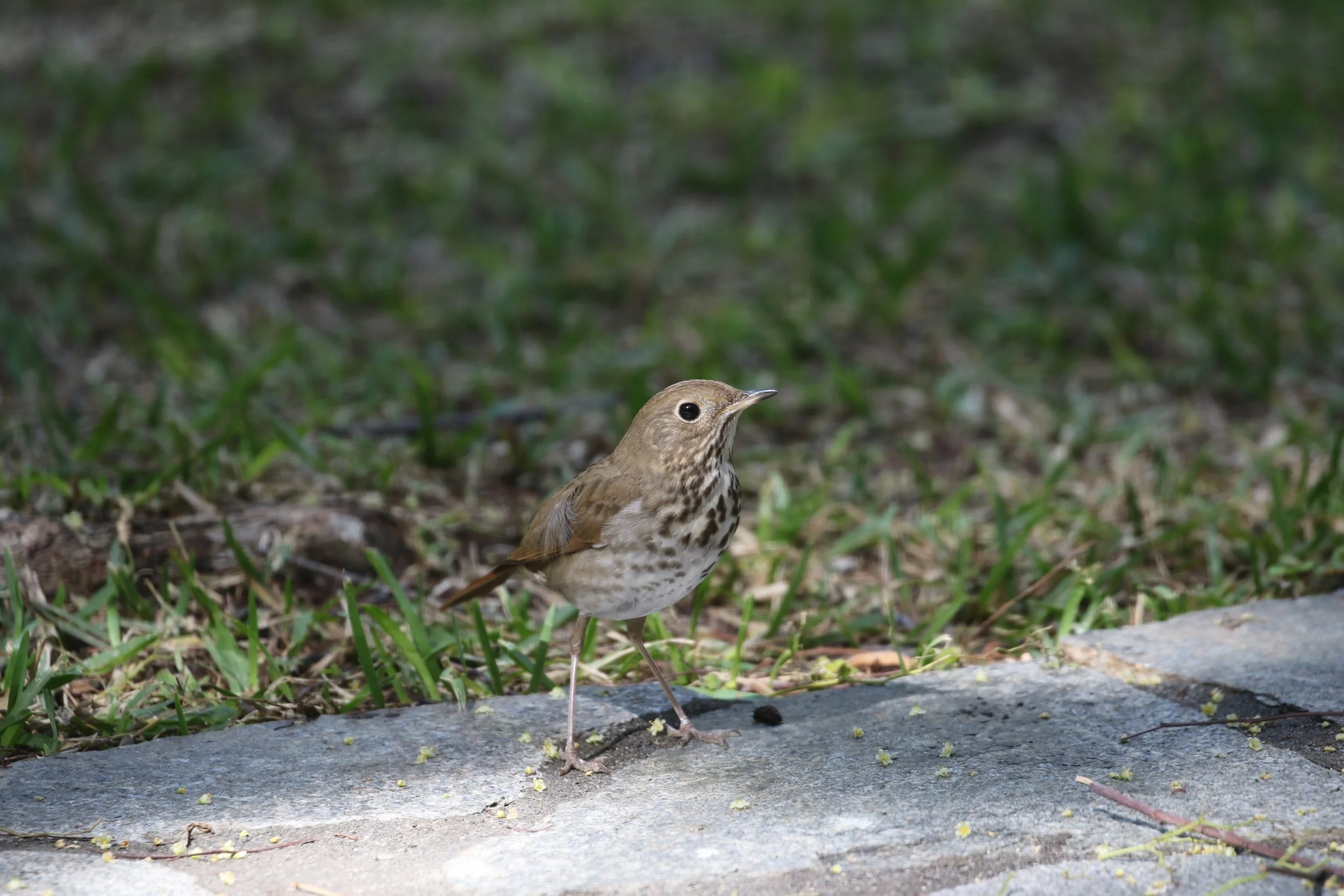
The Hermit Thrush, a small bird with powerful musicality, can offer such inspiration, both in its physical appearance and how its lilting, lovely song is often heard before the bird is seen, dialing into multi-sensory awareness, another principle of biophilic design.
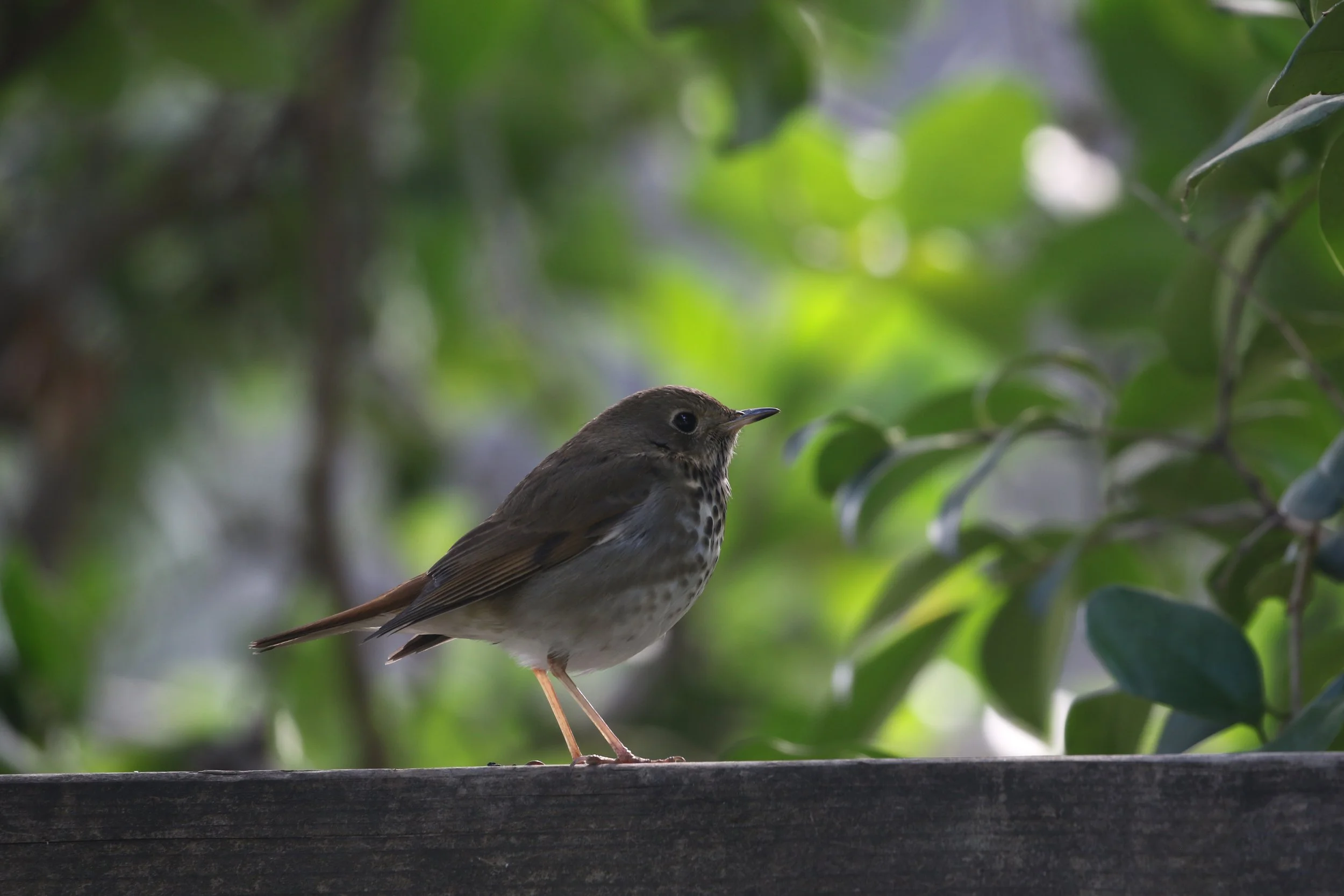
“The Hermit Thrush is one of the most beautiful birds to ever visit my garden,” says WELL and LEED-accredited interior designer Sarah Barnard, “It has long, graceful legs and a round chest with the most elegant patterning,” similar to a California Quail or scaly-breasted munia, also among her favorite birds.
It is a migrating bird, so chance encounters are elevated by the rarity. “The Hermit Thrush is a migrating visitor (to California), and so it's a wonderfully special time when they appear for the first time each year,” says Barnard.
It’s a small bird, generally about six to seven inches high, with a rich brown body and wings that flutter in flight. It likes forested areas primarily, and often lingers in dense underbrush or on the forest floor to forage for food. During feeding, it sometimes uses ‘foot quivering’ where its foot hovers over the ground and shakes grass and plant matter out for insects and other food.
The Hermit Thrush often broadcasts its flute-like song from concealed perches, demonstrating how nature encourages the viewer to be present and to open the senses to experience. It also underscores how subtlety can be more attention-getting than making a commotion.
Symbolically, the hermit thrush represents stillness. Some find the bird spiritual.
Its song is described by experts as haunting, lyrical, and melancholy, tinged with longing, which makes sense in the context of the legend associated with the small bird.
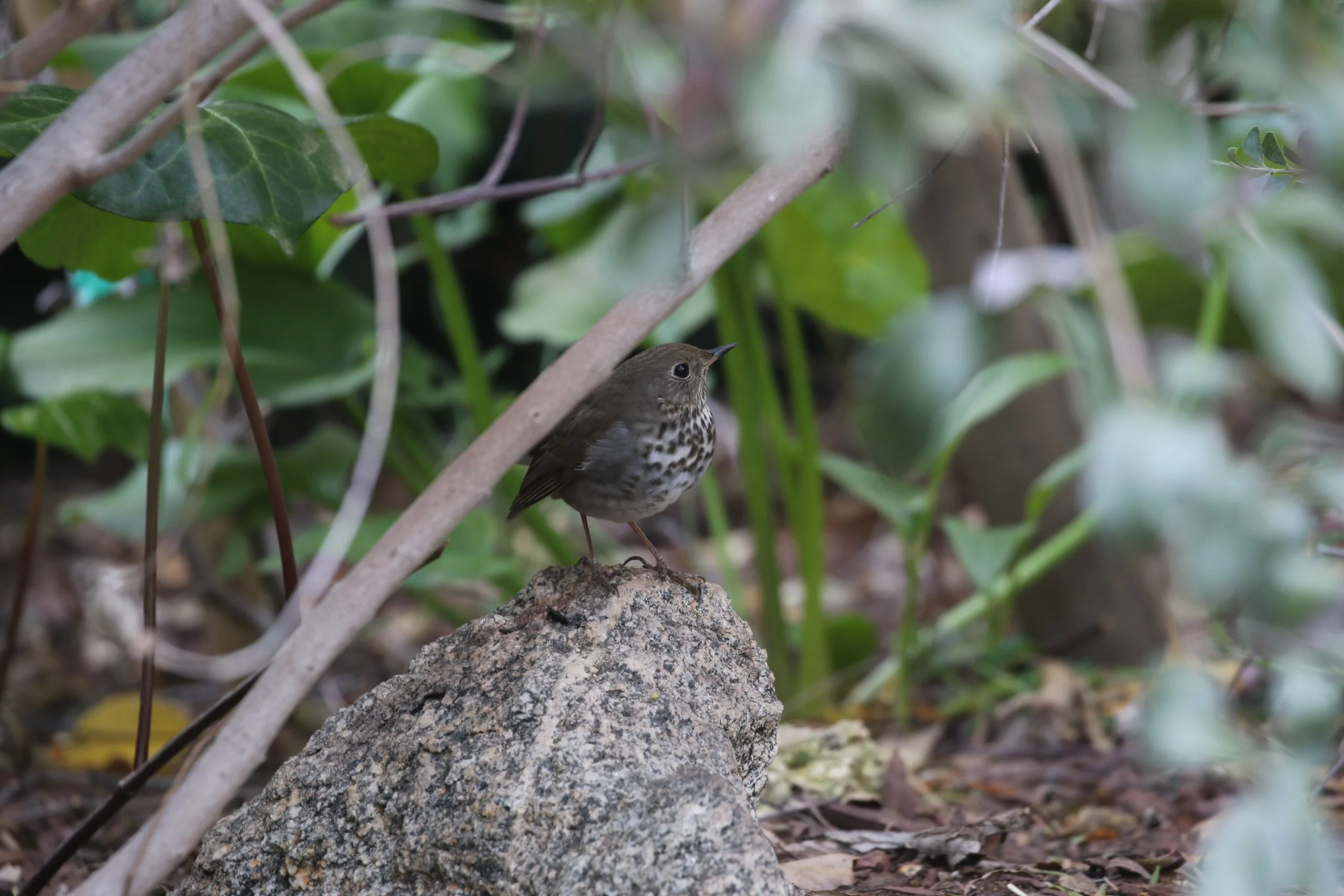
The Legend of The Hermit Thrush
The bird’s backstory, The Sacred Song of the Hermit Thrush, is a Native American legend describing how birds got their songs, with hidden lessons about honesty, often passed from parents and elders to children, during teachable moments.
The story goes that long ago, birds had no songs. The Great Spirit had decided to bestow birds with song and staged a competition among birds to see who would win the gift of song by flying the highest. The Hermit Thrush, tiny compared to many of the other birds, was worried it would not be able to compete. It hid in the feathers of a large eagle, ultimately winning the contest dishonestly. Winning came at an emotional cost, though.
The Hermit Thrush was ashamed and flew deep into the forest to remain hidden in a self-imposed exile, although its song can be heard from a distance: beautiful, introspective, and slightly melancholy, expressing regret.
The legend says that the Hermit Thrush remains there in hiding, but when it sings, the power and beauty of the song is so strong that all other creatures stop to listen.
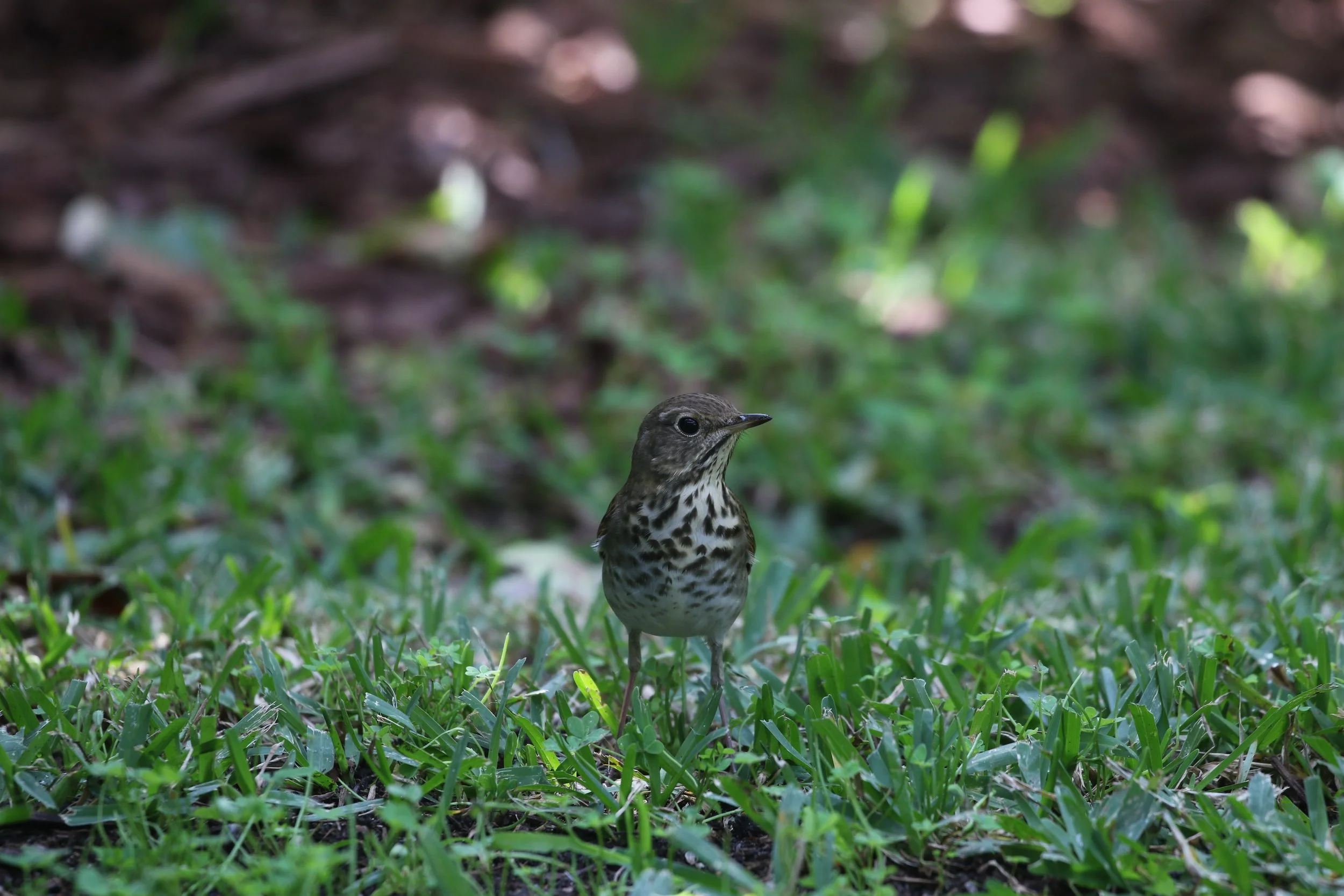
How the Hermit Thrush and Its Behaviors Influence Biophilic Design
The Hermit Thrush can serve as biophilic-influenced inspiration on a couple of levels. First, its rich coloring, elegant details, and textured feathers can be striking when physically replicated or reproduced on patterns, textiles, and other housing goods.
Second, turning inwards and considering some of the behaviors and patient perspectives of the tiny, often hidden, bird, and its nuanced interactions with its natural surroundings can serve as a foundation to try to bring calm.
The Hermit Thrush listens first, before echoing in song into nature. And in today’s digital-first, frenetic world, having the restraint to listen first, speak later is a skill not to be underestimated. Incorporating biophilic design elements, like those inspired by the Hermit Thrush’s habits, can help create a setting in which to be present and intentional.
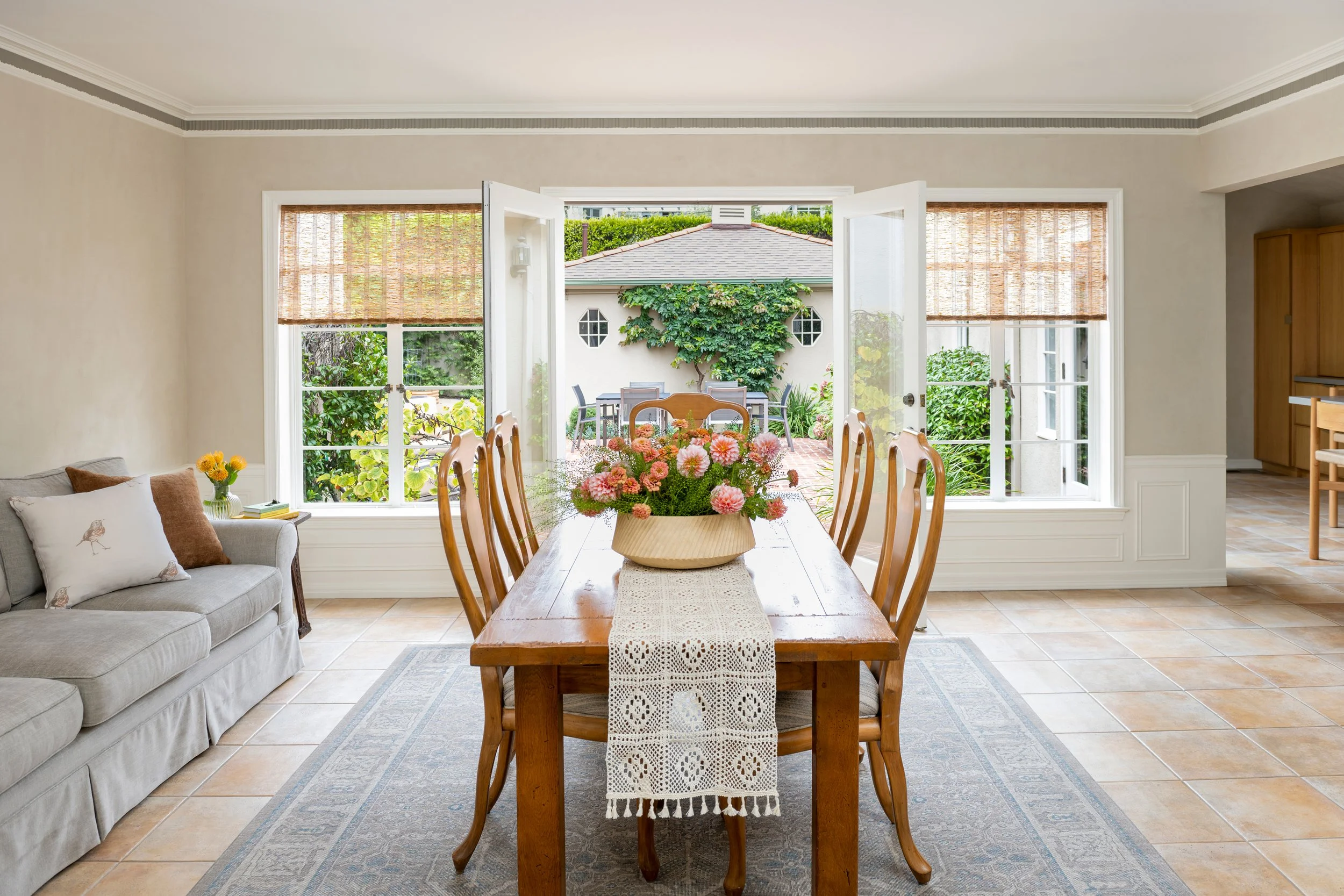
Kale Tree® Hermit Thrush
Here are some examples:
Follow the Cues of Nature
The Hermit Thrush is known for its patience and symbiotic awareness of its surroundings, which ultimately makes its song so powerful and calming. It uses its surroundings to be prominent, rather than competing with them.
In design, an option to replicate this is to follow the cues of nature organically. Instead of creating large focal points, let nature guide the eye and the design, using the path of light throughout the day for visual variety. Make transitions between spaces subtle, and use colors and material selections that mirror those seen in the local landscape, so the inside feels immersed in the outdoors.
Use the Refuge/Prospect Dynamic
Another principle of biophilic design is the refuge/prospect dynamic. The idea is to strike a balance between safety (shelter) and opportunity (in nature, this may include foraging for food, or similar). The Hermit Thrush is known for singing from concealed spaces, so an option to create that sense of safety is to leverage design elements in interior design, such as with a cozy reading nook, nestled in a corner, with a view to the outside, varying ceiling heights, to promote awareness of space, but with concept of shelter overhead, a window seat, or a covered porch.
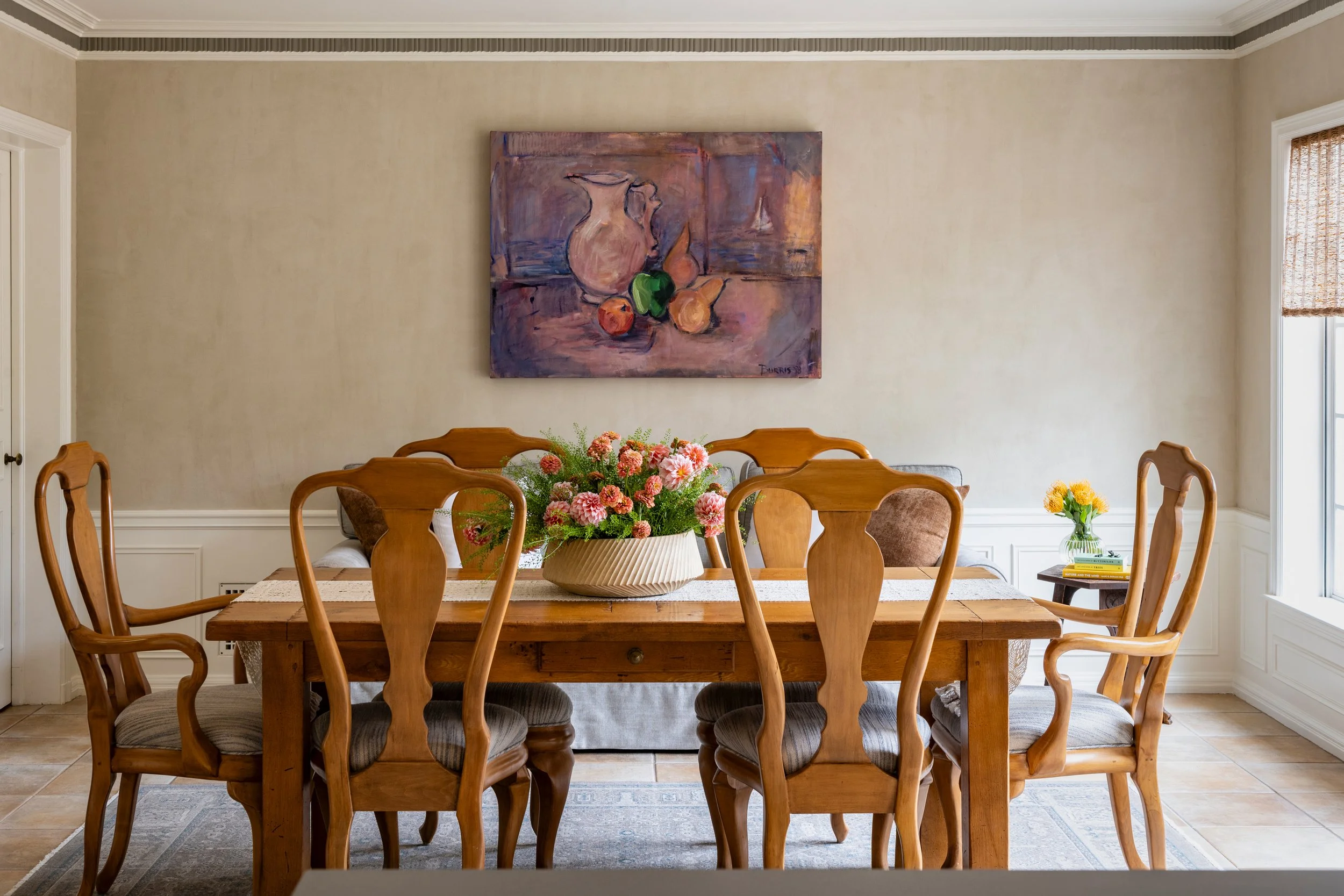
Create Space for Stillness
The Hermit Thrush is known for stillness. Create space at home that can promote stillness, presence, and calm. Use calming color palettes, and embrace a digital-free space, where there are no screens, or screens and other tech are concealed. Consider textiles and other decor that absorb sound to allow for quiet. Comfortable furniture can encourage lingering, while having cues for intention, such as having painting, or journaling materials at hand, can encourage calm.
What all of these design elements, and the habits of the Hermit Thrush demonstrate is that there is inspiration readily available all around; it is often a question of being still, aware, and open to the possibility.
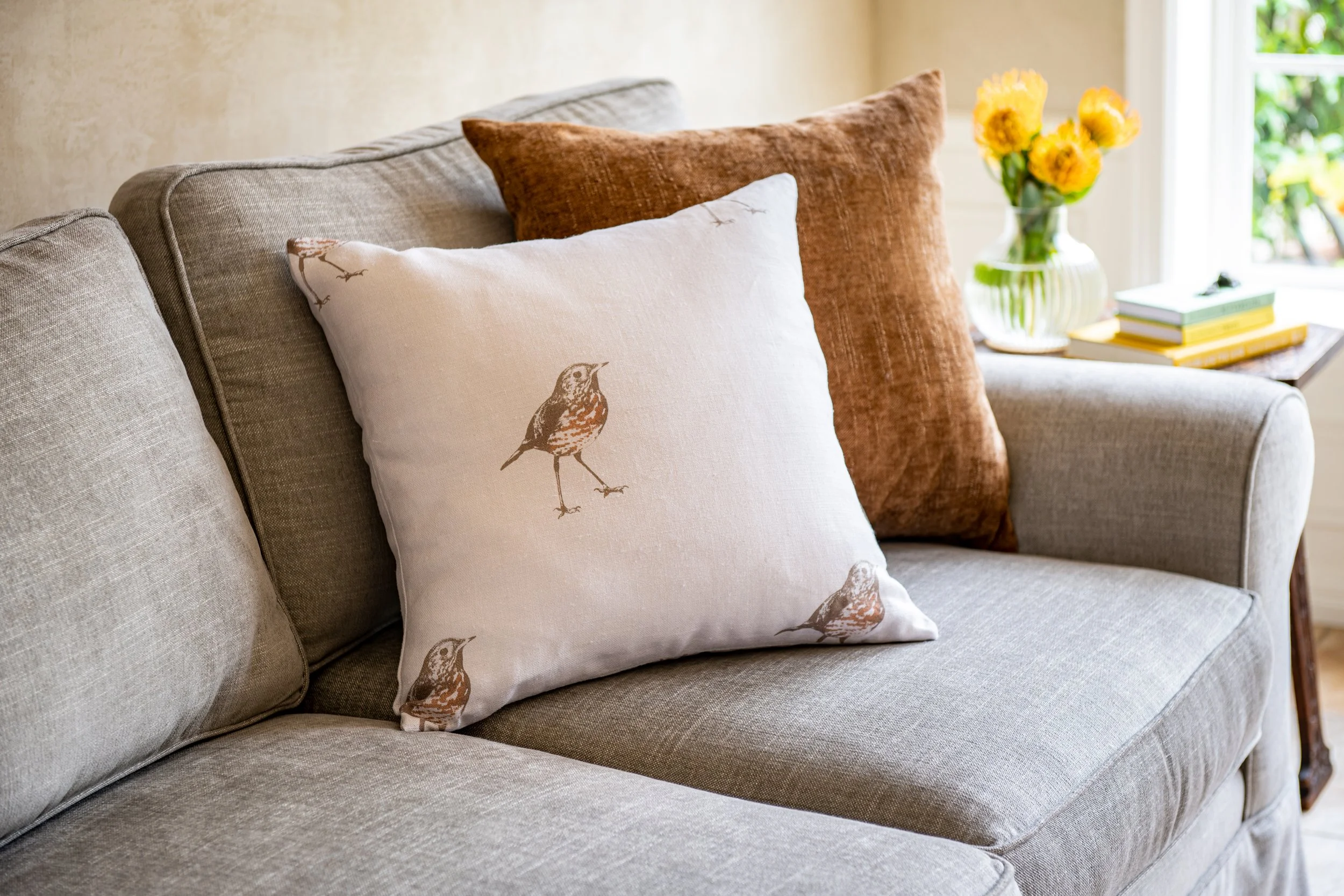
The Hermit Thrush textile in Belgian Linen and organic cotton sateen will be available on the Kale Tree site soon in four colorways! Hermit Thrush is also soon to be available in unpasted wallpaper. For urgent orders, or custom colorways, please contact the studio directly.
Sources:
https://www.allaboutbirds.org/guide/Hermit_Thrush/overview
https://www.audubon.org/field-guide/bird/hermit-thrush
https://www.oneidaindiannation.com/the-legend-of-the-hermit-thrush/

Style & Sustainability: Eco-Friendly Decor Tips to Upgrade Your Space
Kale Tree Shop was recently featured in a Redfin article outlining how to make your home decor more eco-friendly. Take a look at the tips below!
Kale Tree was recently featured in a Redfin article outlining how to make your home decor more eco-friendly. Take a look at the tips below!
Being more conscious of your decorating decisions doesn’t have to be difficult. In reality, eco-friendly can suit any type of budget and design style. But if you’re not sure where to start, we thought who better to consult with questions about where and what to buy (or not to buy) when blending style and sustainability than the experts themselves?
Whether you’re looking to freshen up your chic Toronto, ON, apartment, or exploring ideas to upgrade your Miami, FL, home, we’ve got you covered. Read on for eco-friendly decor tips to give your pad a green makeover.

Opt for quality over quantity
1) As Vivienne Westwood put it, ‘buy less, choose well, make it last.’ Less than 10% of plastic gets recycled, and we’re now each ingesting a credit cards’ worth of microplastics a week. While it may feel fun, skip that cheap tchotchke or seasonal décor. Ask yourself if it’s an item you’d be happy to pass to the next generation—not make it their problem to deal with in a landfill. -Sustainable Travel & Living
Buy pre-loved
2) The best way to reduce your carbon footprint (and minimize waste) when decorating is to feed the circular economy and buy pre-loved furniture. Check out Facebook Marketplace, Kijiji, and Kaiyo, which all have a vast selection of furniture brands and items for every price point. Bonus points if you sell your existing furniture rather than send it to the landfill (where it otherwise releases uber-potent methane for years). -Goodside
3) If you're looking for a stylish and sustainable way to decorate, consider finding your next piece of furniture from a resale marketplace. The gently used furniture marketplace is full of unique vintage items and prior-loved pieces from recognized home furnishing brands, all at a fraction of the original cost. Items made from wood, glass, metal, leather, or marble age beautifully (and move quickly on AptDeco) — and the lived-in look is what makes a home go from cool to cozy. -AptDeco
4) The best way to sustainably style your home is to choose used furniture over buying new. Frequenting thrift stores like Habitat for Humanity, ReStore, or online shopping forums like Facebook Marketplace and community freecycle pages are eco-friendly and cost-effective. And if you don't love the way a piece looks - paint it with chalk paint from a planet-conscious company and make it your own. -The Restored Dogwood
Choose your household products carefully
5) When decorating a home, indoor air quality is essential to having a healthy, eco-friendly, and sustainable environment. You might not see the air, but it is as important as artwork and furnishings. Some things you can do are the following: add plants, open windows, buy an air purifier, take your shoes off at the door, air our dry cleaning and change out your cleaning supplies for non-toxic ones. -The Green Living Gurus

Learn proper waste disposal methods
6) Properly dispose of hazardous wastes: batteries, paint and chemicals, lightbulbs, and electronics. Recycling is one of the top and most cost-effective ways to reduce waste at home and the workplace. Be sure to have a hazardous waste recycling policy that stretches beyond simply paper and plastics to ensure the greatest amount of waste is diverted from landfills. -Green Business Bureau
7) One of the most important parts of completing DIY projects is knowing how to properly store and dispose of chemical products or use alternatives, such as coffee or tea, instead of stain. Proper use of these chemicals prevents fire hazards and water contamination. You can Google “hazardous waste collection” with your city and state to find more information about local disposal centers. -The Sociable Home
Go vintage
8) After determining a new layout, consider where you can replace ‘fresh-from-the-factory’ with repurposed materials or vintage items. Whether it’s a floor made of reclaimed old-growth wood, recycled marble for a vanity top, or a rewired antique light fixture for the foyer, you are creating a special interior while keeping a piece of the planet intact by eliminating the inevitable damage caused by extracting virgin materials. -Living Being Design
9) Add character to your home by purchasing a piece of refinished vintage furniture. This gives an old piece a new life and keeps it out of the landfill. You can also get tips from a local (or online) professional so that you can learn how to refinish something yourself. -Callista Faye Creative
Upcycle items you already own
10) Use what you already own - think candle jars for planters, mason jars for organizing office supplies or kids' art supplies, or repurposed glass jars for bulk goods. I also enjoy labeling my pantry items with an embossing label maker to add a clean, unified look. You can also find sustainable products that reflect your personal style. For example, I have a sleek graphite compost bin and indigo shibori unpaper towels. -Sustainable For Good
Reclaim second-hand furniture
11) If price is a design factor, older furniture is historically well-constructed and can be repurposed, refinished, reupholstered, and reimagined in a way that suits your taste. This keeps furniture out of landfills and reduces the massive carbon footprint generated by today’s various modes of transportation. -Todd Howard Ezrin, ASID, LEED AP, Principal, TOBE DesignGroup

Say yes to natural, recyclable, or sustainable materials
12) When decorating your home in the most eco-friendly way, you can always go with the seasons and see what mother nature has to offer. Buy a big basket full of flowers, fresh fruits, and vegetables from your organic farmers market and arrange it on your dining table or somewhere in the living room. Imagine decorating with tulips in spring, with a huge bowl of fruits in summer, a plate full of pumpkins and greens in Autumn, or some chestnuts and lovely smelling oranges with cloves in Winter as your decoration. All vegan, compostable, and zero waste. -Wegozero
13) Steel and stainless-steel home interiors designed and manufactured with present-day technology fit the bill perfectly on sustainability and style. Modern technology has made many options available to us, and both have better standards of hygiene, as well as water, fire, and pest resistance. For too long we have been consuming from nature more than it can replenish. Our wood consumption for our home interiors costs us hectares of forest every second and is no longer sustainable. -Bethliving
14) Select natural fabrics when possible. Beyond offering comfort and beauty, cotton, linen, and wool fabrics often use fewer (or no) chemicals in production than synthetic options and biodegrade more naturally over time. Bamboo silk offers a luxurious vegan alternative that is excellent for plush, eco-friendly rugs. Natural fabrics may also provide a tactile experience that inspires a connection to nature, contributing to biophilic home design. -Kale Tree
15) Handmade and ethically sourced wool felt decorations and home accents are wonderful and affordable ways to brighten your home while doing good for the planet and the artisans who create them. Plus, they are reusable and compostable at the end of their life. -Friendsheep

Incorporate greenery into your space
16) You can create an eco-friendly and uplifting space by simply bringing nature back into the home or workspace. House plants or nature-inspired imagery that inspires you offers a moment to reconnect with nature throughout your day. Being immersed in nature is proven to have a positive effect on health and well-being and positively impacts creativity, focus, and productivity. -Claire Victoria Bishop from Rewild the Frame
17) Skip the plastic decorations - have houseplants instead. Not only do they look great, but they also purify the air of your home. Some hardware stores and plant stores have free used pots you can take home to save money and avoid buying new items. -Copy That Co
Pick versatile decor and furnishings
18) When it comes to decorating, choose functional pieces that serve a purpose rather than items used purely for decoration. Some examples of functional pieces are candles, books, mason jars (which can be used as vases), and of course, live plants, which can help purify the air. -Eco Girl Shop
Originally published by Redfin
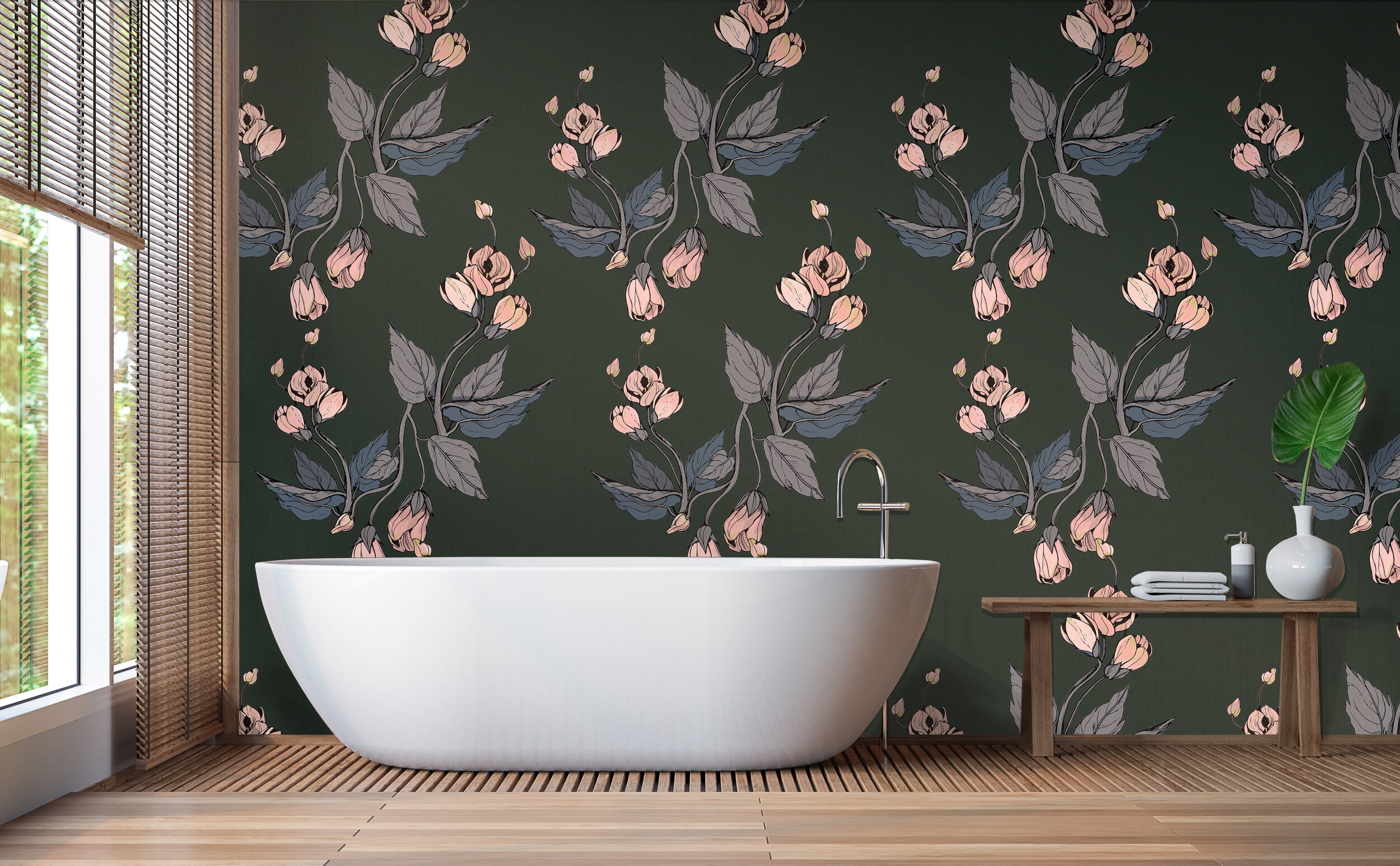
Wallflower: A lesser-known floral blossoms into its moment with a new eco wallpaper
Kale Tree Founder Sarah Barnard is an advocate of all things nature. “Being in nature brings me great pleasure, and is the source of inspiration for much of my work,” says Barnard. “Setting aside time to enjoy and plant in my garden helps me decompress, and fully engage mentally and physically outside of my design practice.
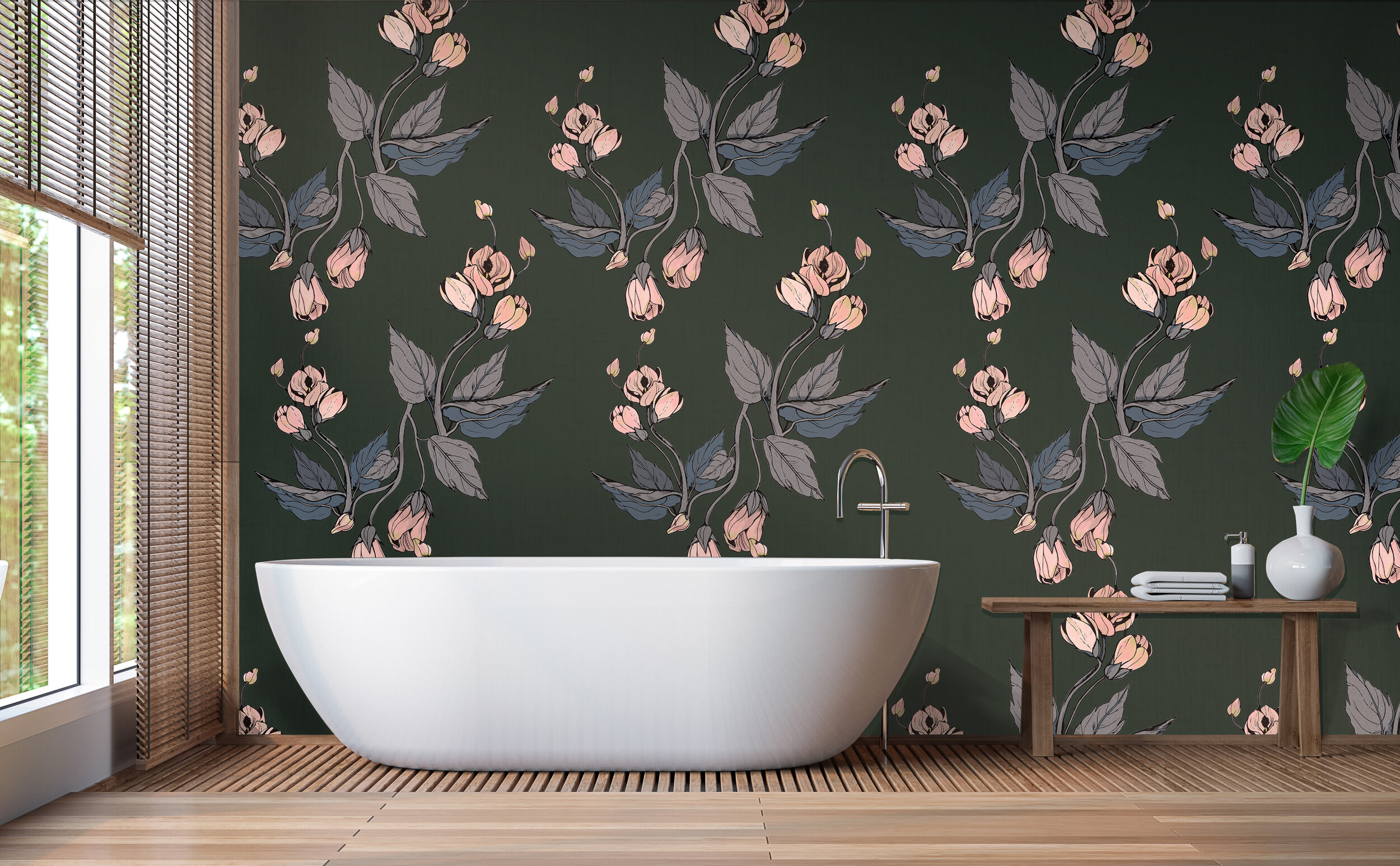
Mallow Wallpaper in Midnight Forest. Image courtesy of Sarah Barnard Design.
Kale Tree Founder Sarah Barnard is an advocate of all things nature. “Being in nature brings me great pleasure, and is the source of inspiration for much of my work,” says Barnard. “Setting aside time to enjoy and plant in my garden helps me decompress, and fully engage mentally and physically outside of my design practice. After gardening, I feel re-energized, focused, and ready to return to work.” One of Sarah’s favorite plants is Mallow. She has three different varieties that she tends to in her garden.
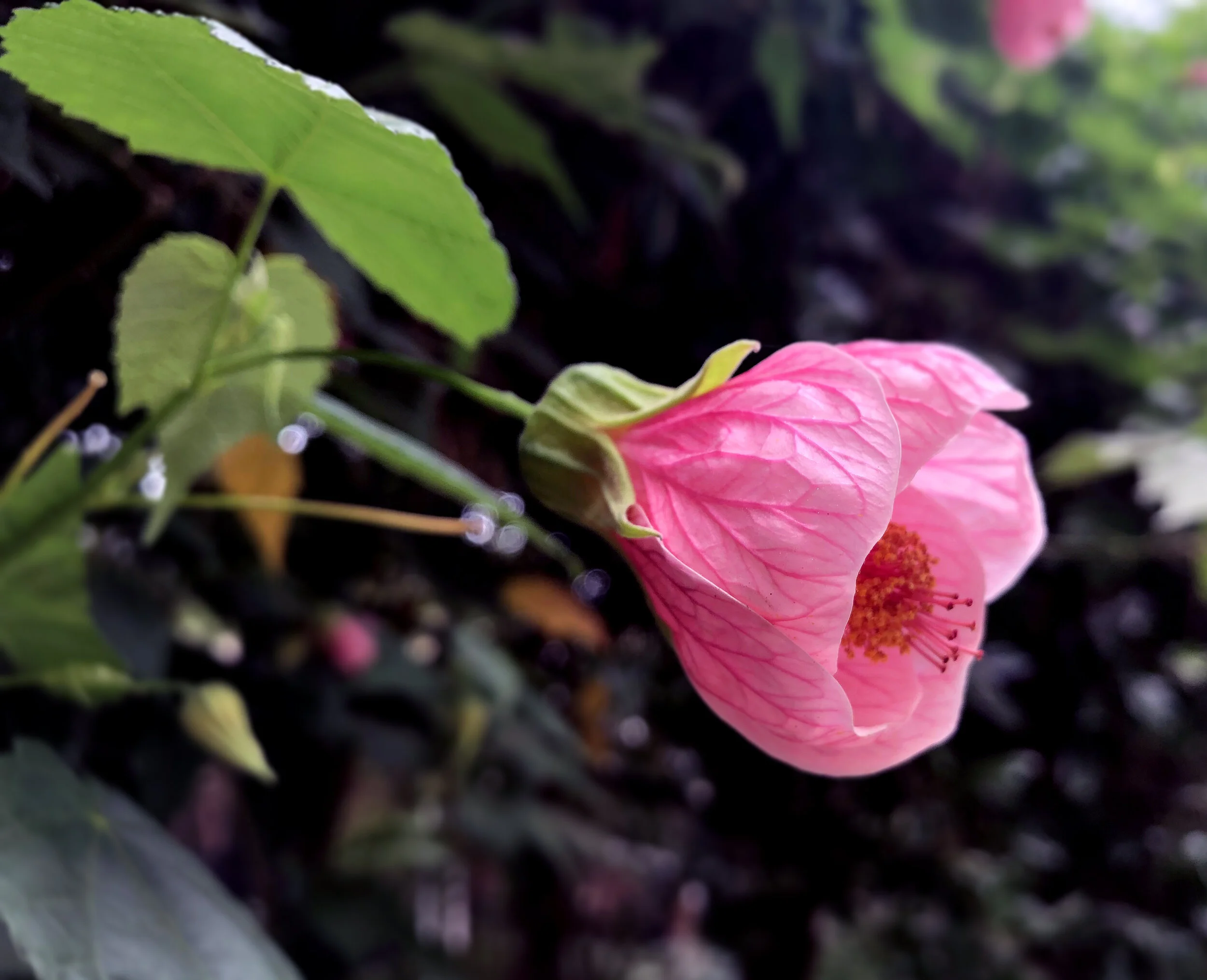
A Mallow making a presence in Sarah’s garden.
Mallow is a free-flowering plant that blooms beautifully draping, lantern-shaped blossoms of all varieties of pinks, yellows, reds, and whites. There are about 200 species in this particular genus. Also referred to as the Flowering Maple, Chinese Lantern, and Indian Mallow, this shrub earned its names from its maple-like leaves, lantern shape flowers, and mallow genus. These shade-loving plants are delicate, requiring regular care and maintenance. This effort can be fruitful; however, as a happy Mallow can flower almost non-stop. These stunning plants are pollinator-friendly, attracting hummingbirds, butterflies, and bees alike[1].
While most commonly planted for ornamentation in gardens, the Mallow has qualities that benefit health and well-being. Some Mallow species have a history of medicinal uses for emollient, analgesic, anti-diabetic, and anti-inflammatory purposes, to name a few[2]. Their flowers produce nectar, making them slightly sweet and astringent[3]. Floriography, the language of flowers, suggests that Abutilon symbolizes Meditation[4].
Out of pure adoration of this plant, Kale Tree created a line of botanical wallpapers inspired by the Mallow.
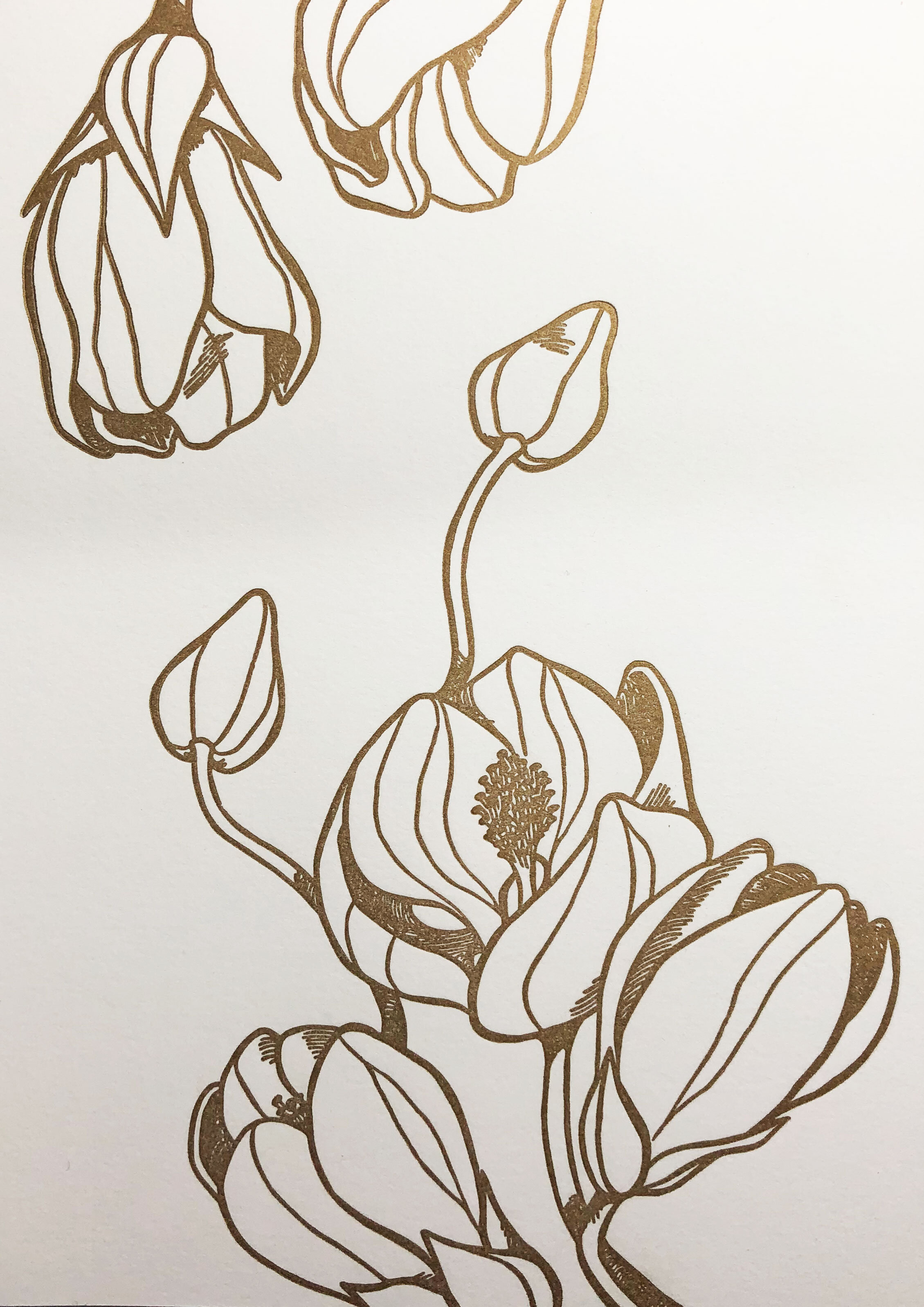
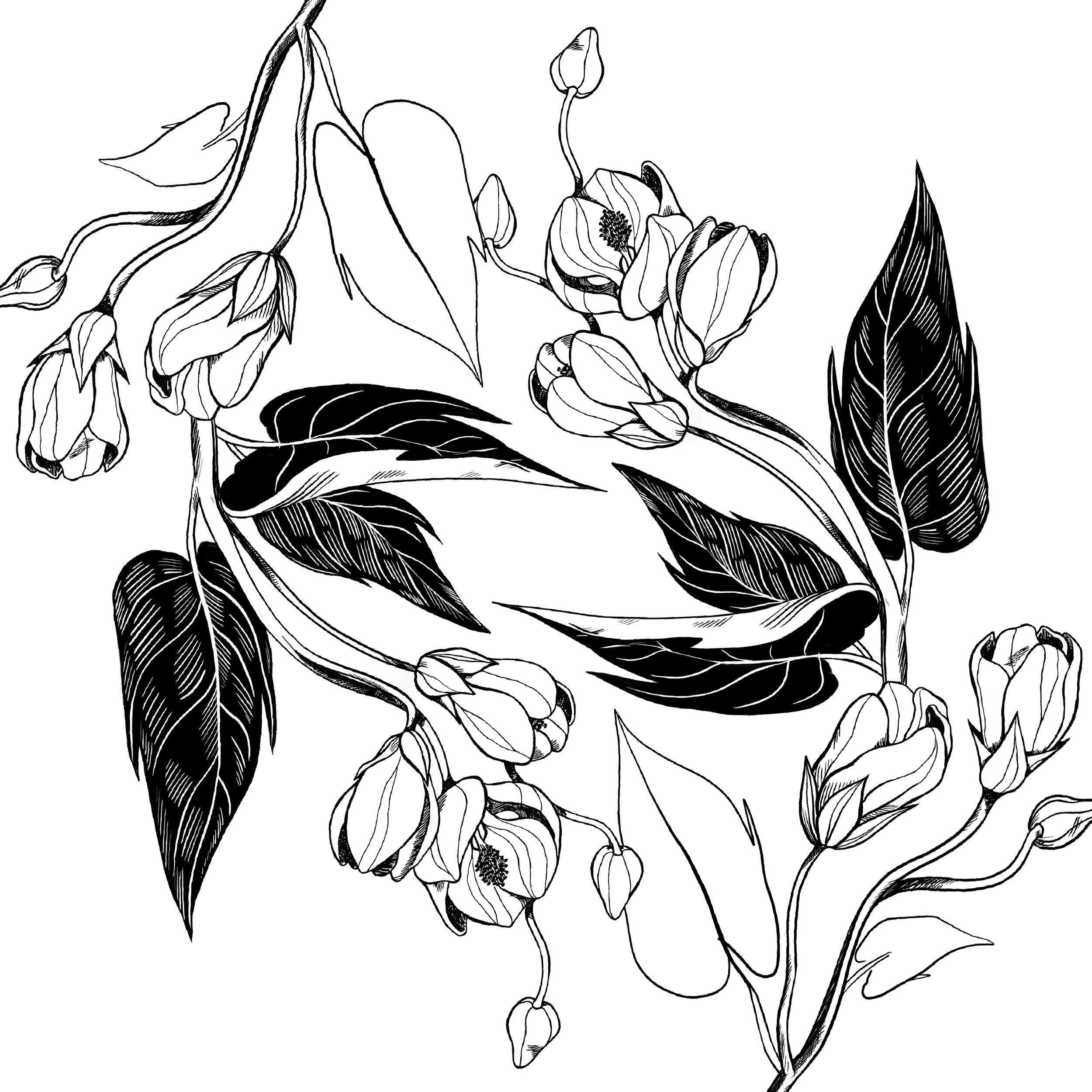
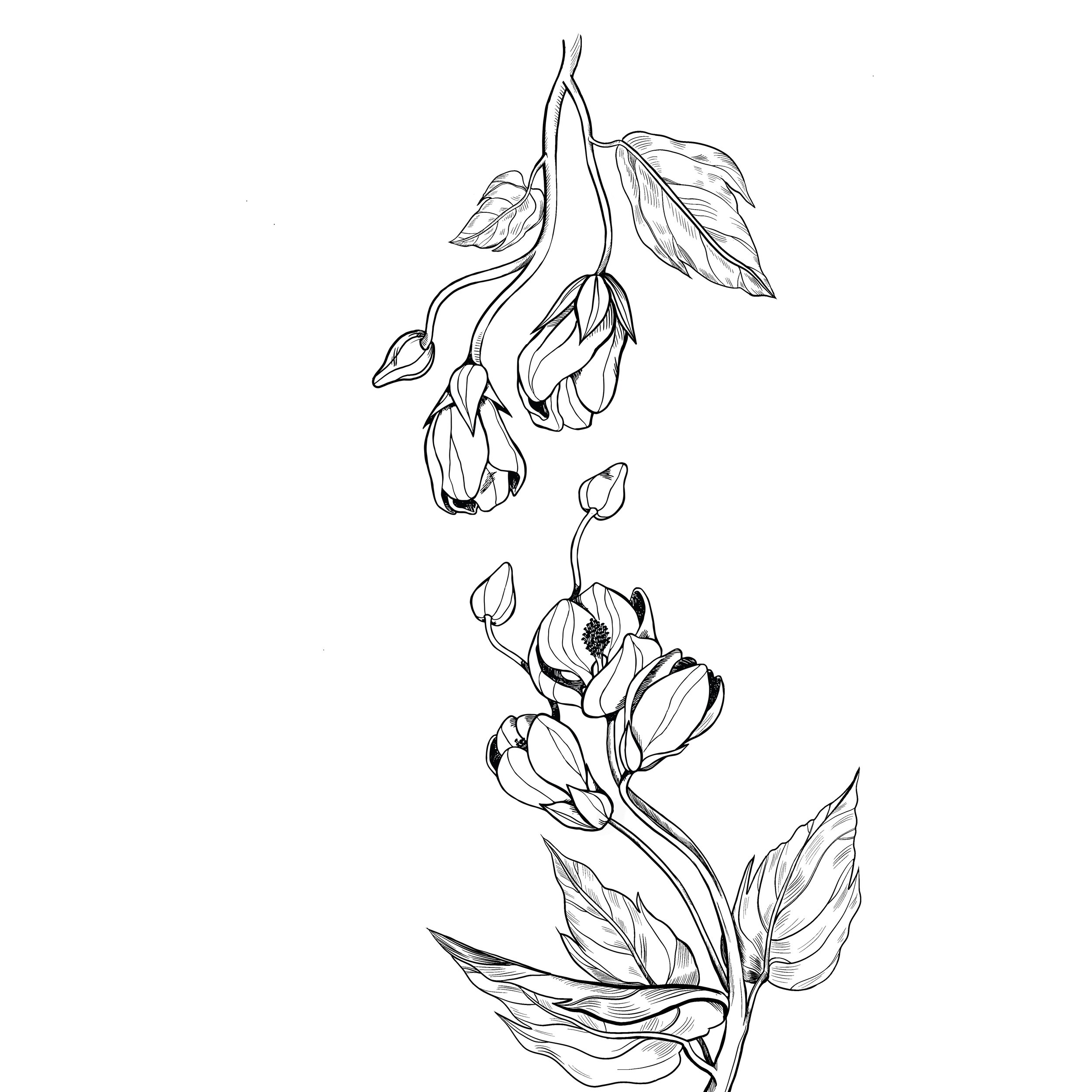
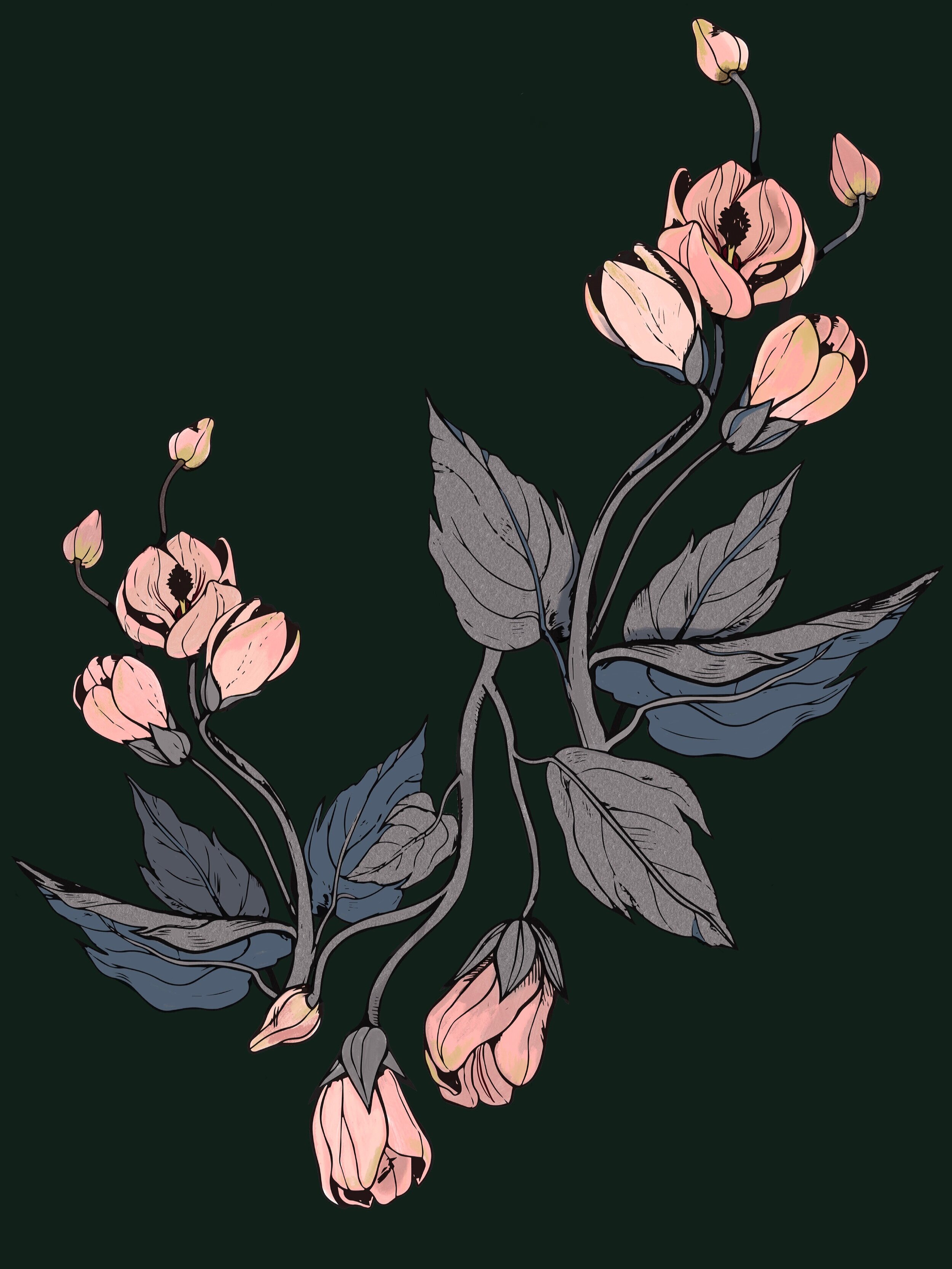
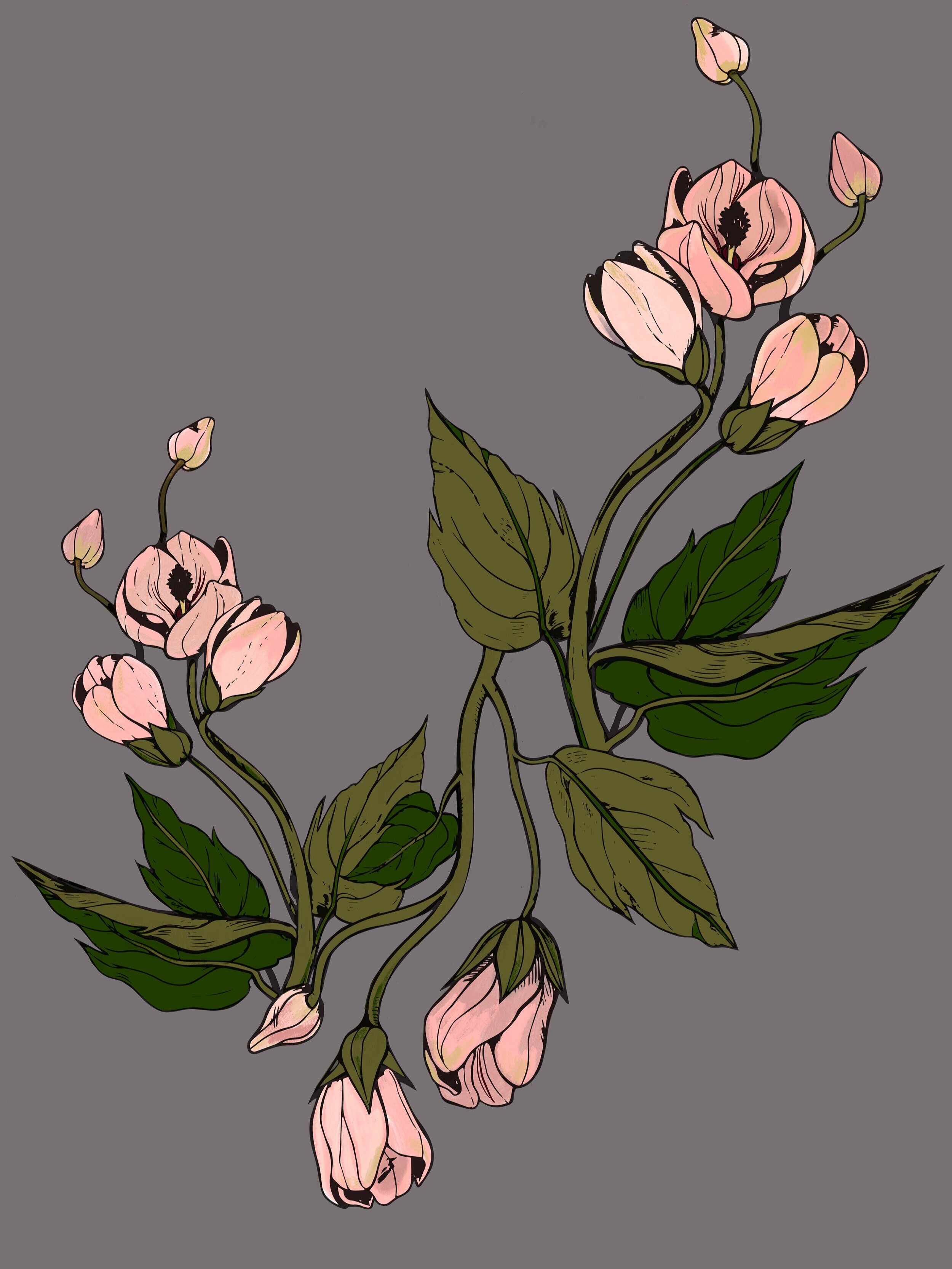
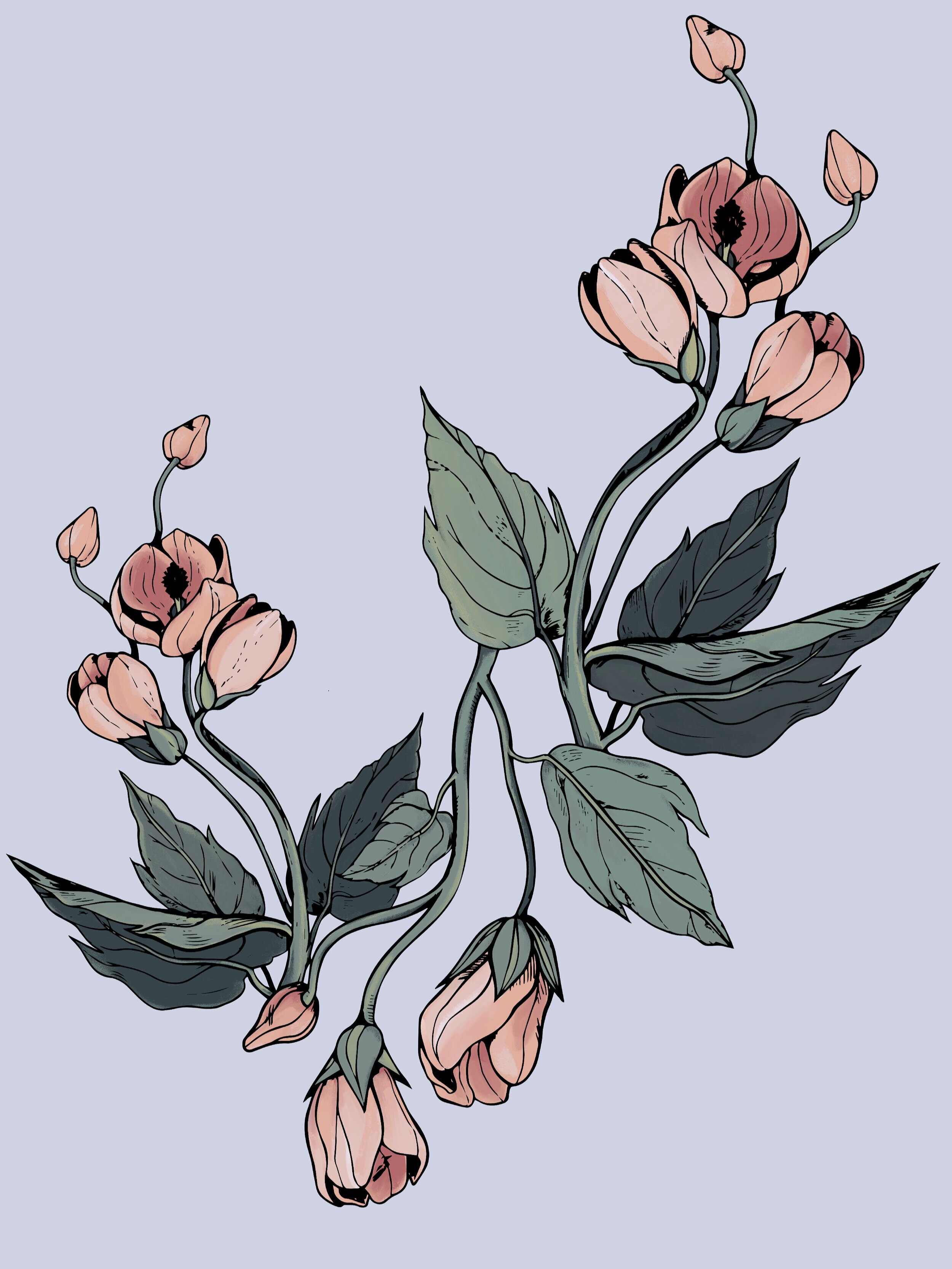
The line drawing for the wallpaper began as the annual letterpress holiday card for Sarah’s interior design studio. The Kale Tree team reworked and expanded the original illustration into a pattern for wallpaper and textiles. Photographs of Mallows in Sarah’s garden were used as references to develop the drawing. Kale Tree designers chose to render the Mallow in a larger than life scale to highlight their extraordinary beauty and bring a contemporary feel to the notion of traditional floral wallpaper. The color palette was adapted from Victorian Era paintings as a nod to art history, marrying classical with contemporary. Pink is utilized generously throughout the illustrations as it happens to be one of Sarah’s favorite colors. “Clients seldom choose to incorporate pink into their spaces, so Kale Tree is my outlet to explore and indulge in this color,” says Sarah.
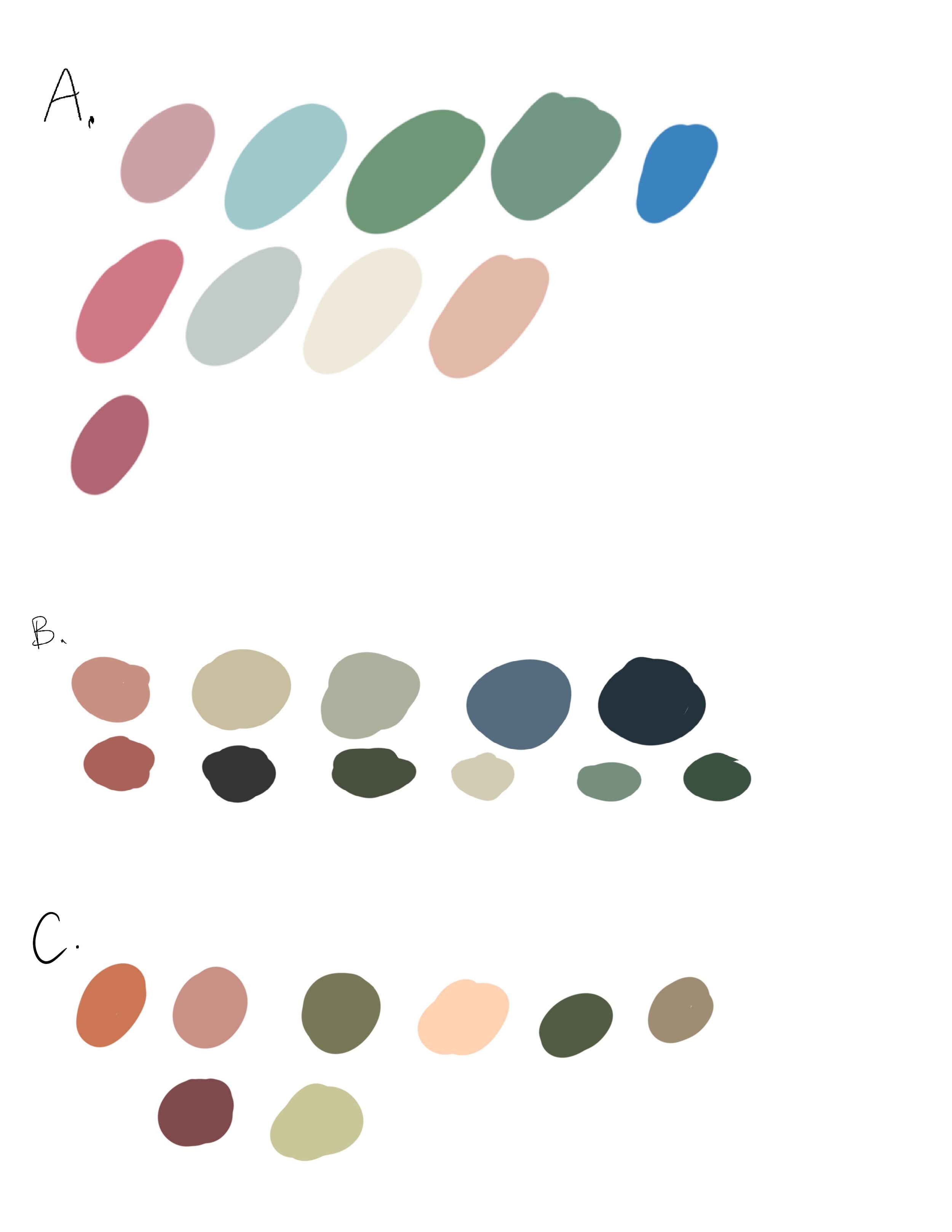
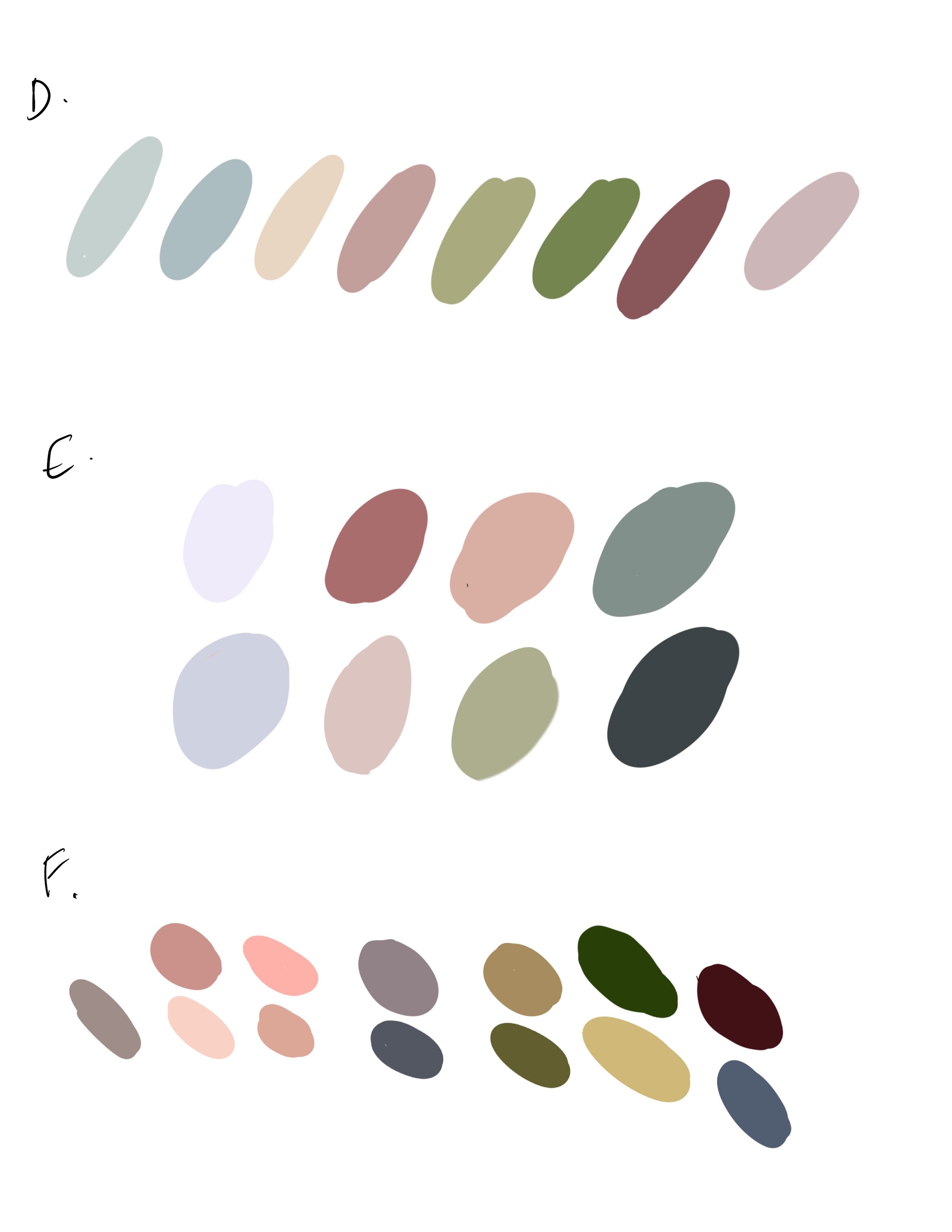
Kale Tree’s eco-friendly wallpaper features a subtle surface texture and a hand-drawn pattern. It is available in three colorways: Midnight Forest, Evening Mauve, and Dusty Dawn. Designed with nature in mind, this product is a PVC-free, type II wallpaper made with 31% post consumer, recycled canvas, and printed with a VOC-free process free of solvents. The wallpaper is 33 inches wide by 18 feet long and is sold per 49.5 square foot roll. Kale Tree aims to promote health and wellbeing through introducing our healthful, ethically produced goods inspired by the intersection of art, design, and nature.
You can pre-order for Spring 2021 here.
References
[1] Mahr, Susan. “Flowering Maple, Abutilon Spp.” Master Gardener Program, 5 Aug. 2020, mastergardener.extension.wisc.edu/article/flowering-maple-abutilon-spp/.
[2] Rajeshwari S, Sevarkodiyone SP (2018) Medicinal properties of Abutilon Indicum. Open J Plant Sci 3(1): 022-025. DOI: 10.17352/ojps.000011.
[3] “Abutilon Striatum (Red Vein Indian Mallow).” Gardenia.net, www.gardenia.net/plant/abutilon-striatum.
[4] Deitz, S. Theresa. Floriography Today: The Symbolic Meanings & The Possible Powers of Trees, Plants and Flowers. 2012.