Hermit Thrush: Echoing Nature
While searching far and wide for creative inspiration can yield interesting results in interior design, sometimes the most meaningful inspiration is closer to home, right in the garden. When it comes to nature-inspired design, the backbone principle of biophilic design, where interiors strive to replicate the calm found outdoors, it can be helpful to be patient when observing nature, allowing the beauty to reveal itself organically.
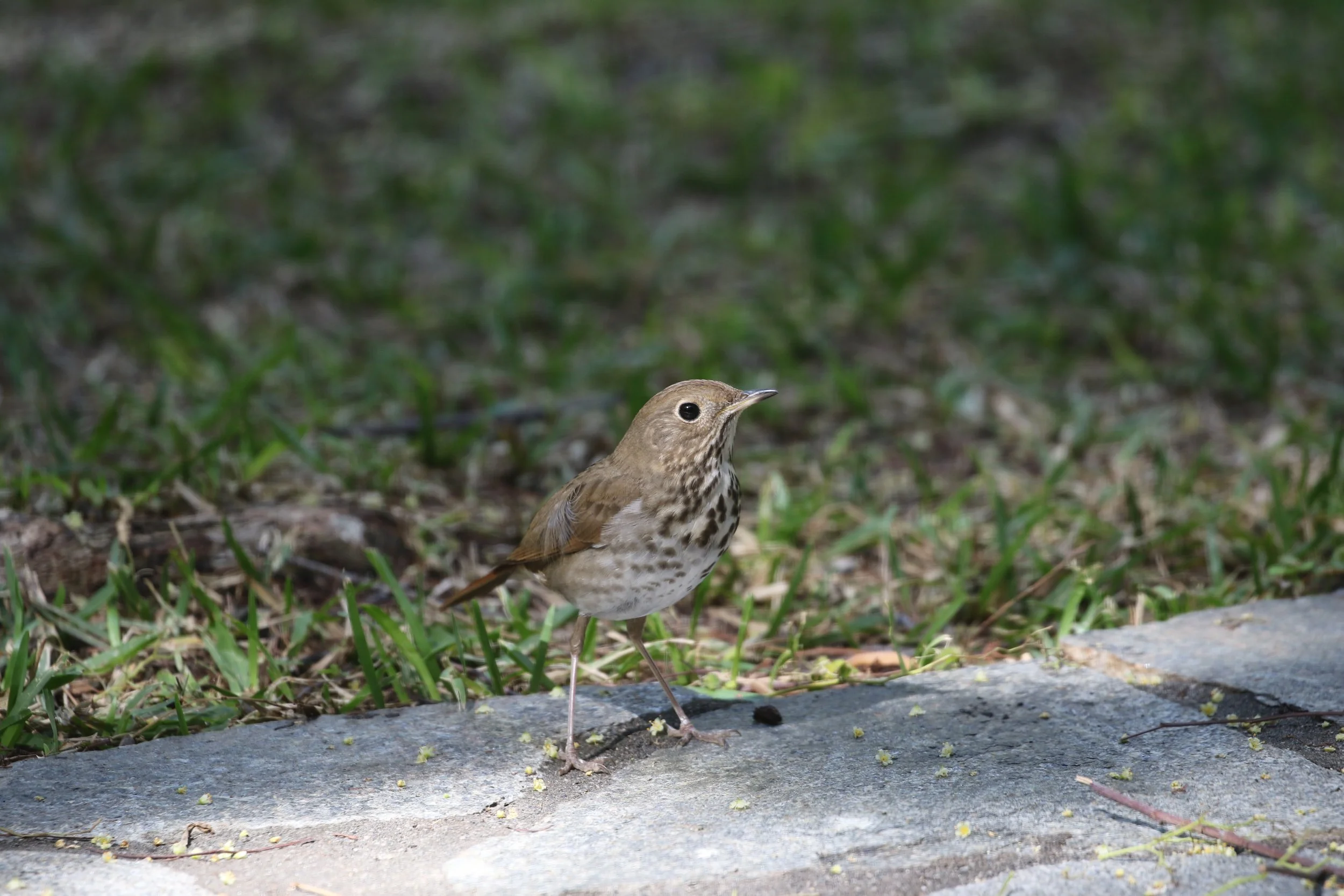
The Hermit Thrush, a small bird with powerful musicality, can offer such inspiration, both in its physical appearance and how its lilting, lovely song is often heard before the bird is seen, dialing into multi-sensory awareness, another principle of biophilic design.
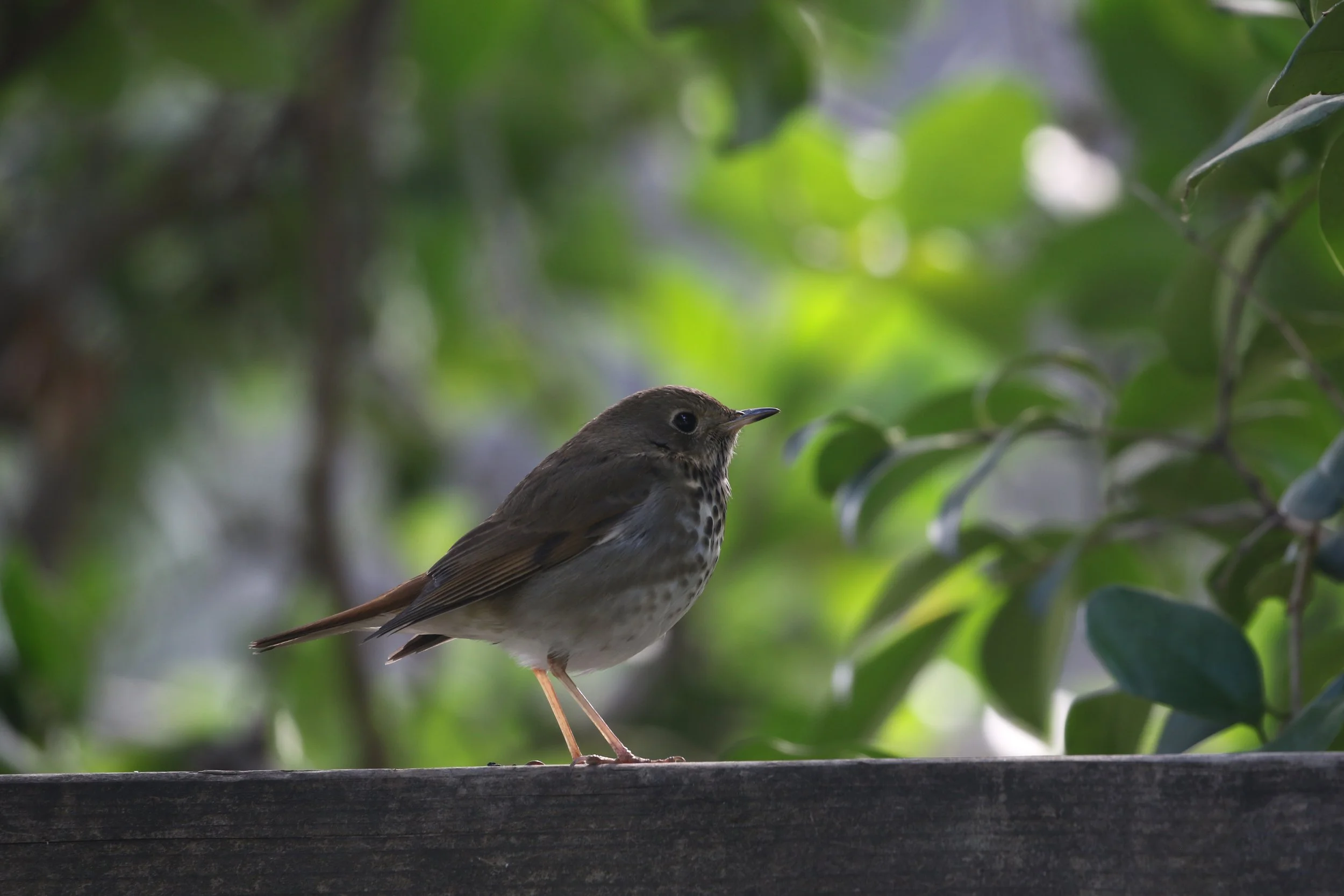
“The Hermit Thrush is one of the most beautiful birds to ever visit my garden,” says WELL and LEED-accredited interior designer Sarah Barnard, “It has long, graceful legs and a round chest with the most elegant patterning,” similar to a California Quail or scaly-breasted munia, also among her favorite birds.
It is a migrating bird, so chance encounters are elevated by the rarity. “The Hermit Thrush is a migrating visitor (to California), and so it's a wonderfully special time when they appear for the first time each year,” says Barnard.
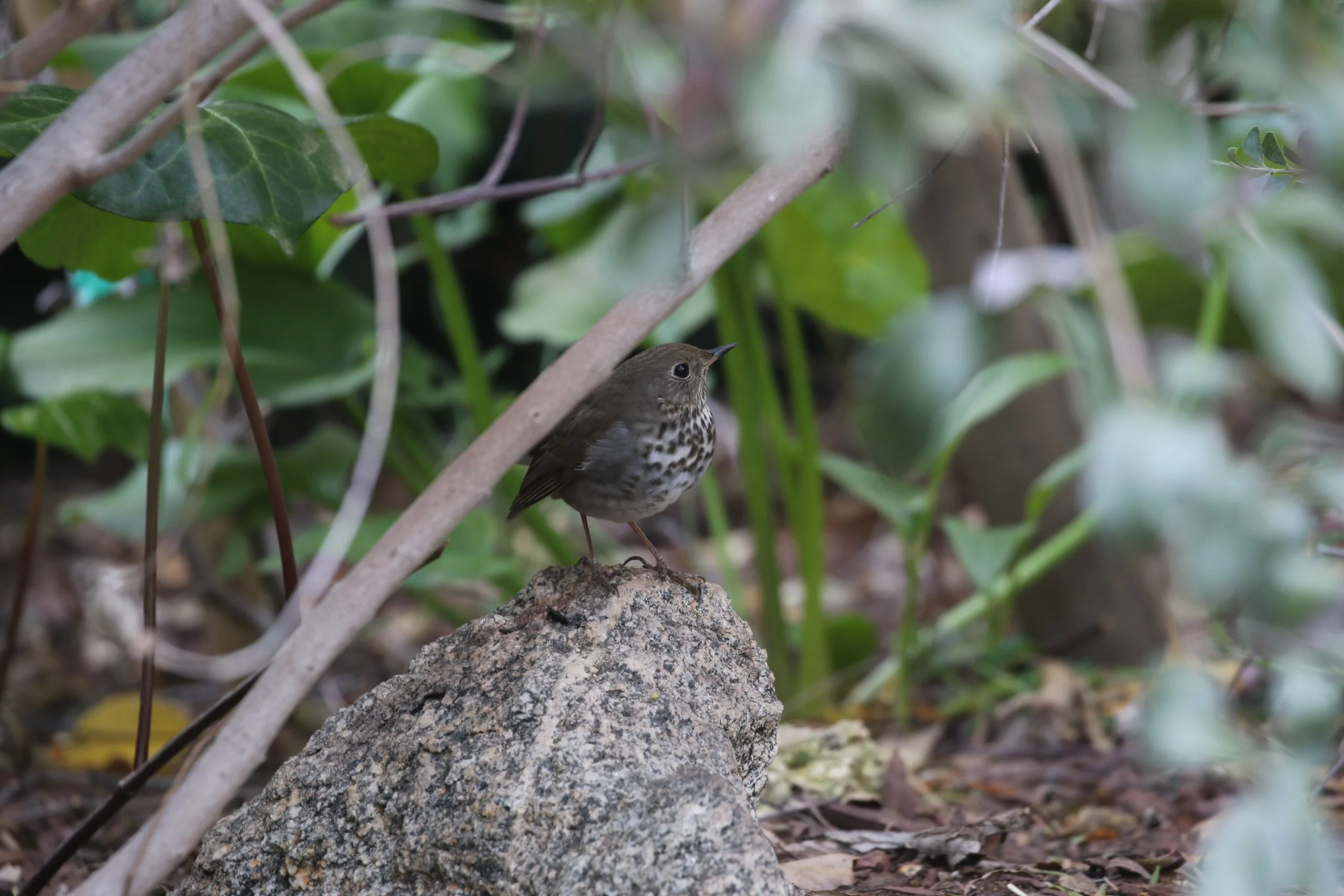
It’s a small bird, generally about six to seven inches high, with a rich brown body and wings that flutter in flight. It likes forested areas primarily, and often lingers in dense underbrush or on the forest floor to forage for food. During feeding, it sometimes uses ‘foot quivering’ where its foot hovers over the ground and shakes grass and plant matter out for insects and other food.
The Hermit Thrush often broadcasts its flute-like song from concealed perches, demonstrating how nature encourages the viewer to be present and to open the senses to experience. It also underscores how subtlety can be more attention-getting than making a commotion.
Symbolically, the hermit thrush represents stillness. Some find the bird spiritual.
Its song is described by experts as haunting, lyrical, and melancholy, tinged with longing, which makes sense in the context of the legend associated with the small bird.
The Legend of The Hermit Thrush
The bird’s backstory, The Sacred Song of the Hermit Thrush, is a Native American legend describing how birds got their songs, with hidden lessons about honesty, often passed from parents and elders to children, during teachable moments.
The story goes that long ago, birds had no songs. The Great Spirit had decided to bestow birds with song and staged a competition among birds to see who would win the gift of song by flying the highest. The Hermit Thrush, tiny compared to many of the other birds, was worried it would not be able to compete. It hid in the feathers of a large eagle, ultimately winning the contest dishonestly. Winning came at an emotional cost, though.
The Hermit Thrush was ashamed and flew deep into the forest to remain hidden in a self-imposed exile, although its song can be heard from a distance: beautiful, introspective, and slightly melancholy, expressing regret.
The legend says that the Hermit Thrush remains there in hiding, but when it sings, the power and beauty of the song is so strong that all other creatures stop to listen.
How the Hermit Thrush and Its Behaviors Influence Biophilic Design
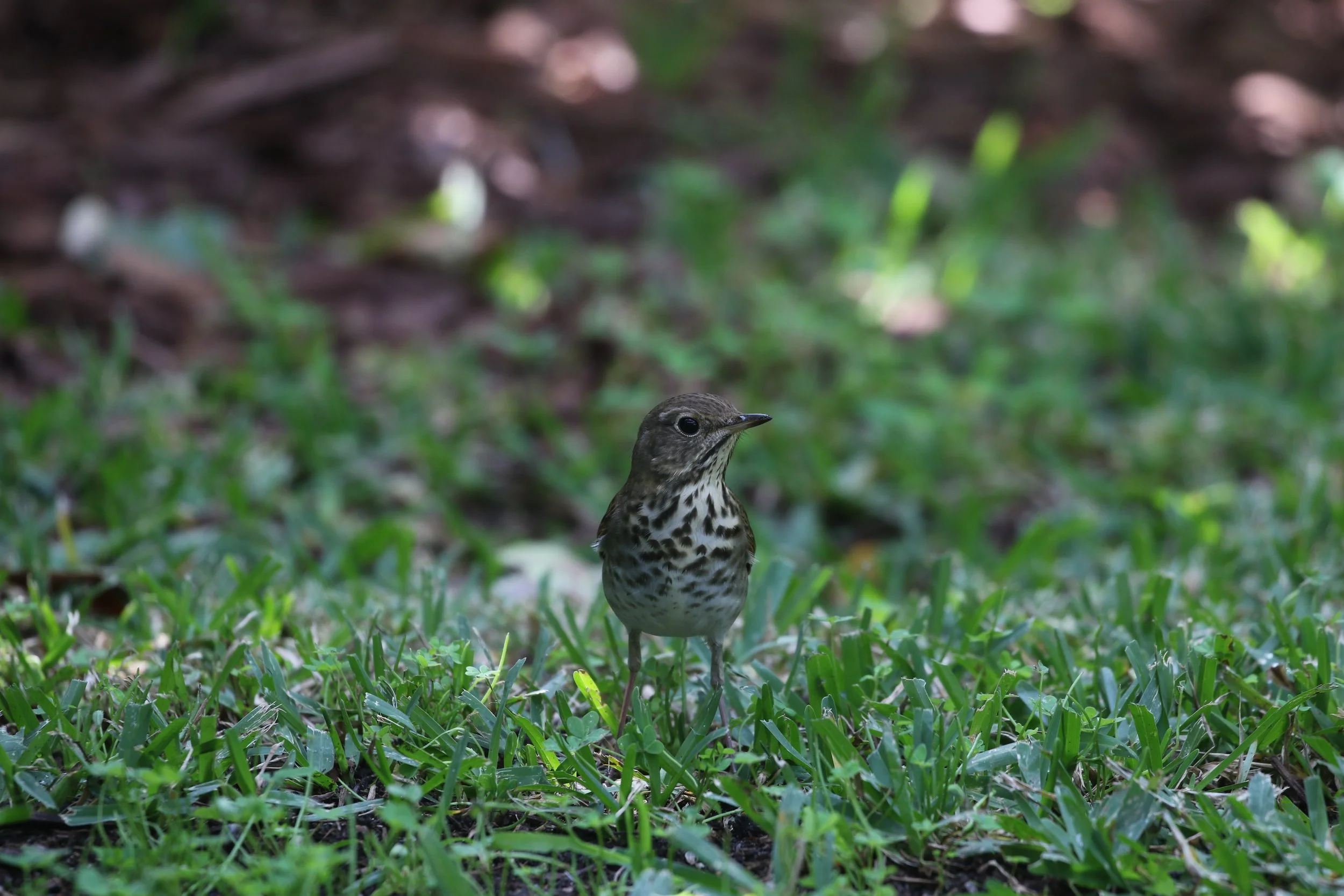
The Hermit Thrush can serve as biophilic-influenced inspiration on a couple of levels. First, its rich coloring, elegant details, and textured feathers can be striking when physically replicated or reproduced on patterns, textiles, and other housing goods.
Second, turning inwards and considering some of the behaviors and patient perspectives of the tiny, often hidden, bird, and its nuanced interactions with its natural surroundings can serve as a foundation to try to bring calm.
The Hermit Thrush listens first, before echoing in song into nature. And in today’s digital-first, frenetic world, having the restraint to listen first, speak later is a skill not to be underestimated. Incorporating biophilic design elements, like those inspired by the Hermit Thrush’s habits, can help create a setting in which to be present and intentional.
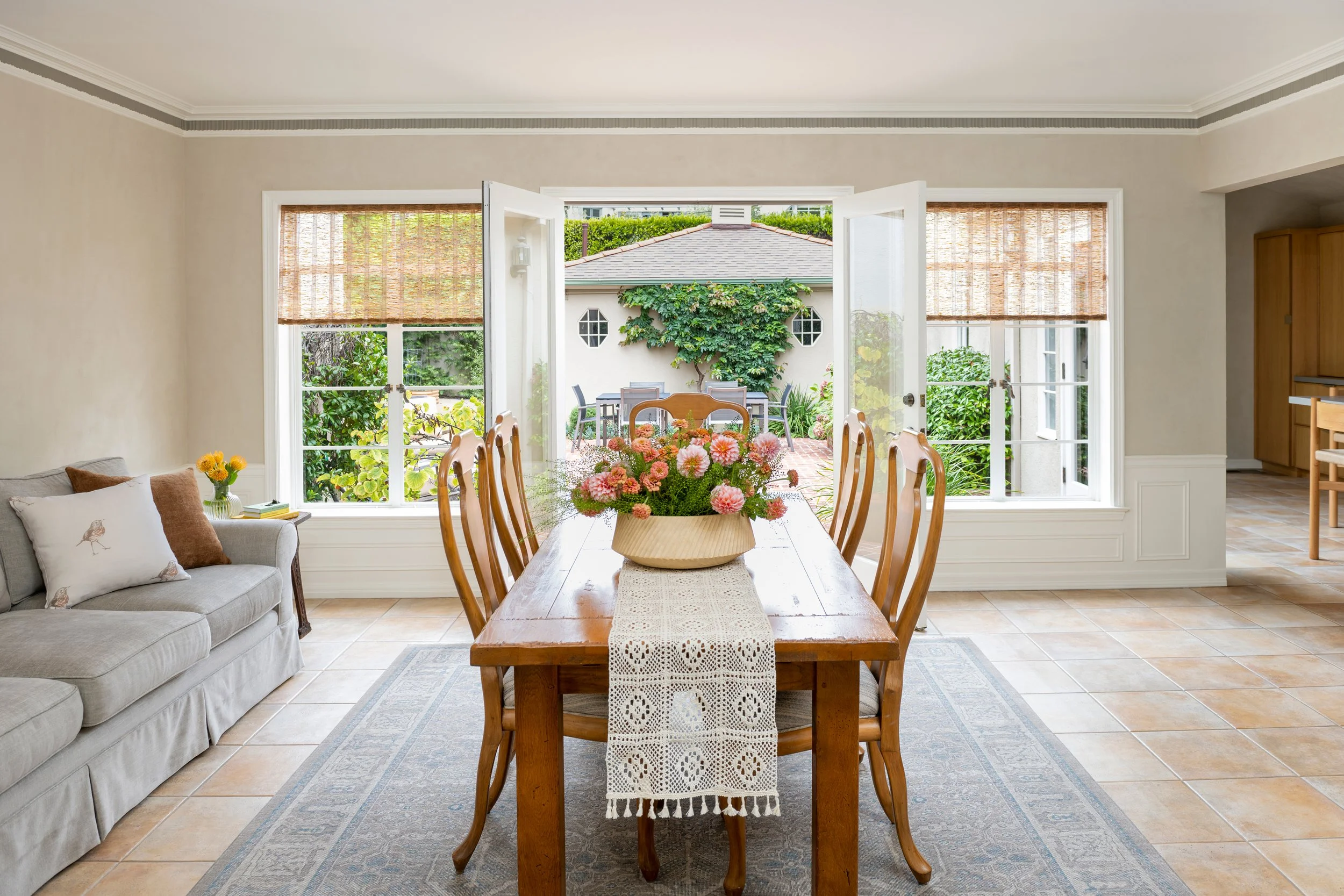
Kale Tree® Hermit Thrush
Here are some examples:
Follow the Cues of Nature
The Hermit Thrush is known for its patience and symbiotic awareness of its surroundings, which ultimately makes its song so powerful and calming. It uses its surroundings to be prominent, rather than competing with them.
In design, an option to replicate this is to follow the cues of nature organically. Instead of creating large focal points, let nature guide the eye and the design, using the path of light throughout the day for visual variety. Make transitions between spaces subtle, and use colors and material selections that mirror those seen in the local landscape, so the inside feels immersed in the outdoors.
Use the Refuge/Prospect Dynamic
Another principle of biophilic design is the refuge/prospect dynamic. The idea is to strike a balance between safety (shelter) and opportunity (in nature, this may include foraging for food, or similar). The Hermit Thrush is known for singing from concealed spaces, so an option to create that sense of safety is to leverage design elements in interior design, such as with a cozy reading nook, nestled in a corner, with a view to the outside, varying ceiling heights, to promote awareness of space, but with concept of shelter overhead, a window seat, or a covered porch.
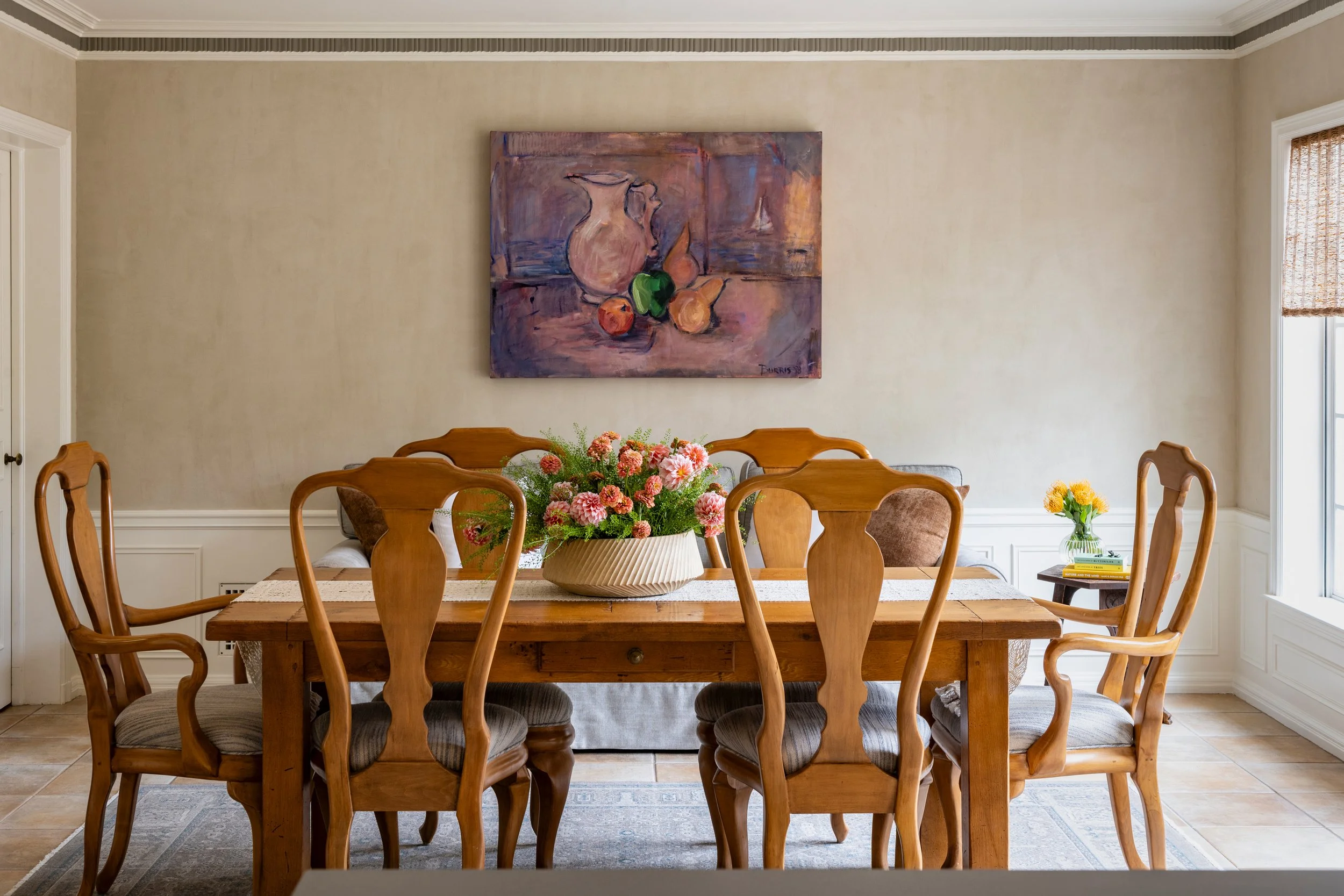
Create Space for Stillness
The Hermit Thrush is known for stillness. Create space at home that can promote stillness, presence, and calm. Use calming color palettes, and embrace a digital-free space, where there are no screens, or screens and other tech are concealed. Consider textiles and other decor that absorb sound to allow for quiet. Comfortable furniture can encourage lingering, while having cues for intention, such as having painting, or journaling materials at hand, can encourage calm.
What all of these design elements, and the habits of the Hermit Thrush demonstrate is that there is inspiration readily available all around; it is often a question of being still, aware, and open to the possibility.
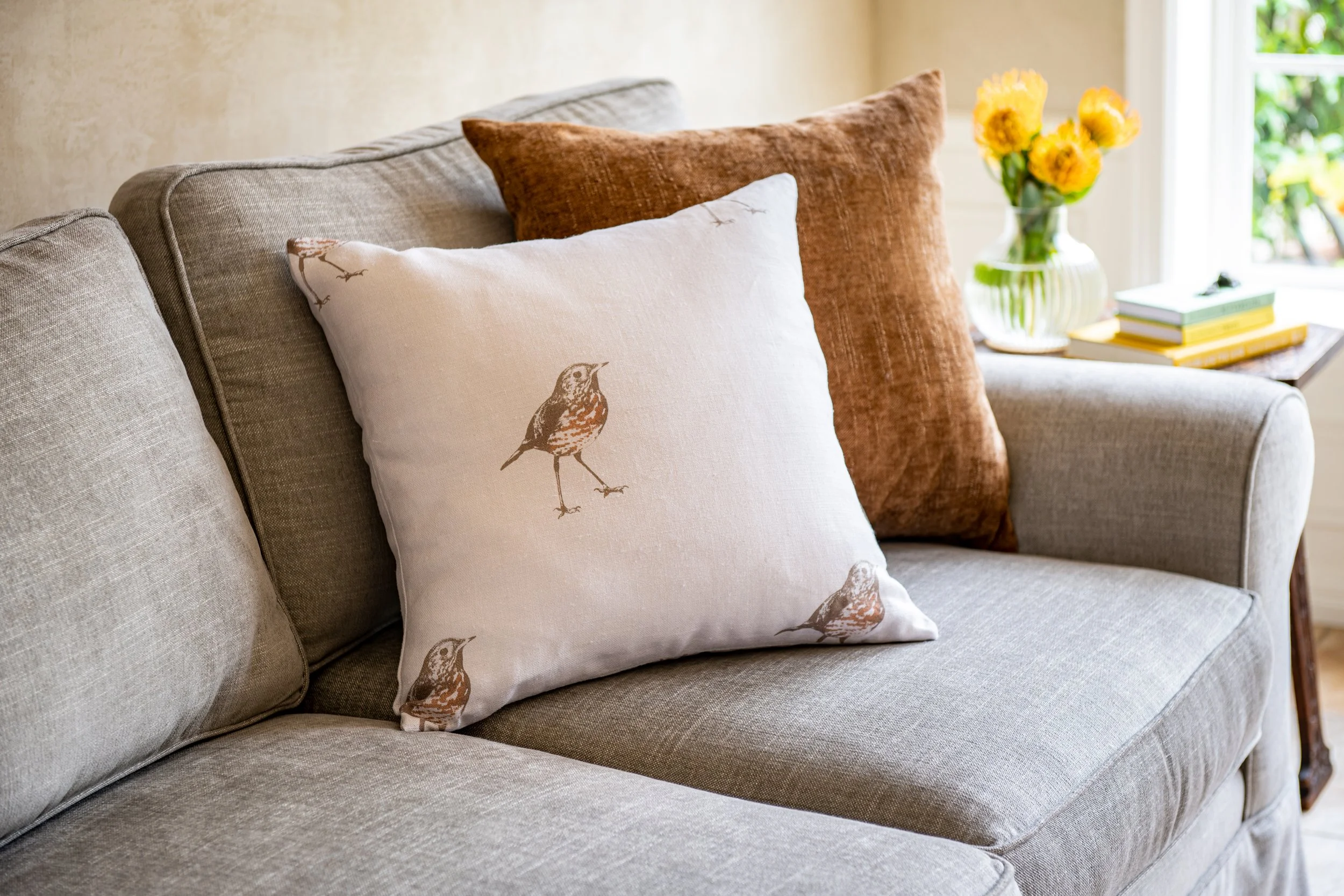
The Hermit Thrush textile in Belgian Linen and organic cotton sateen will be available on the Kale Tree site soon in four colorways! Hermit Thrush is also soon to be available in unpasted wallpaper. For urgent orders, or custom colorways, please contact the studio directly.
Sources:
https://www.allaboutbirds.org/guide/Hermit_Thrush/overview
https://www.audubon.org/field-guide/bird/hermit-thrush
https://www.oneidaindiannation.com/the-legend-of-the-hermit-thrush/