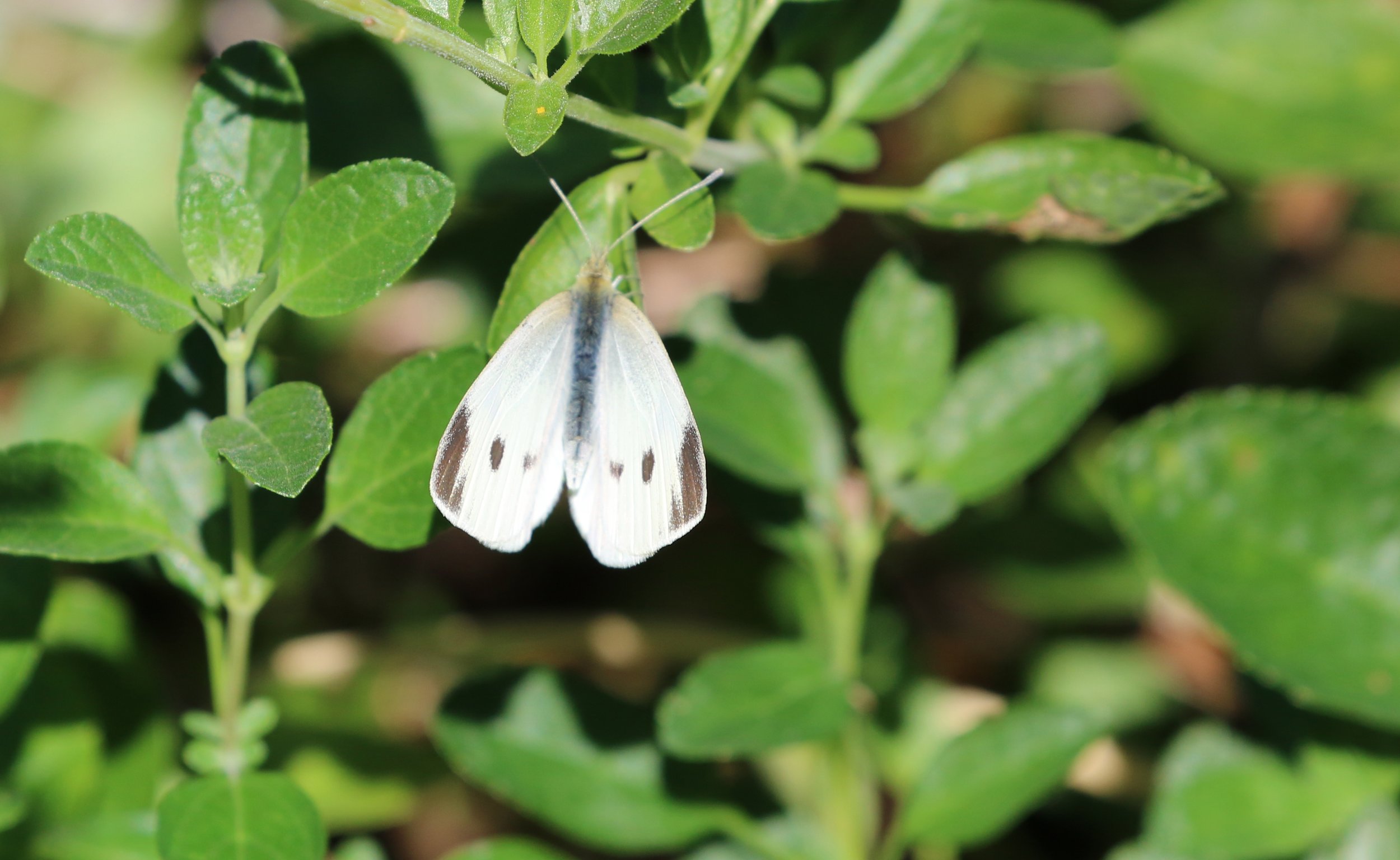
The Ethereal Palette: Artistry and Ecology in the Moth Collection
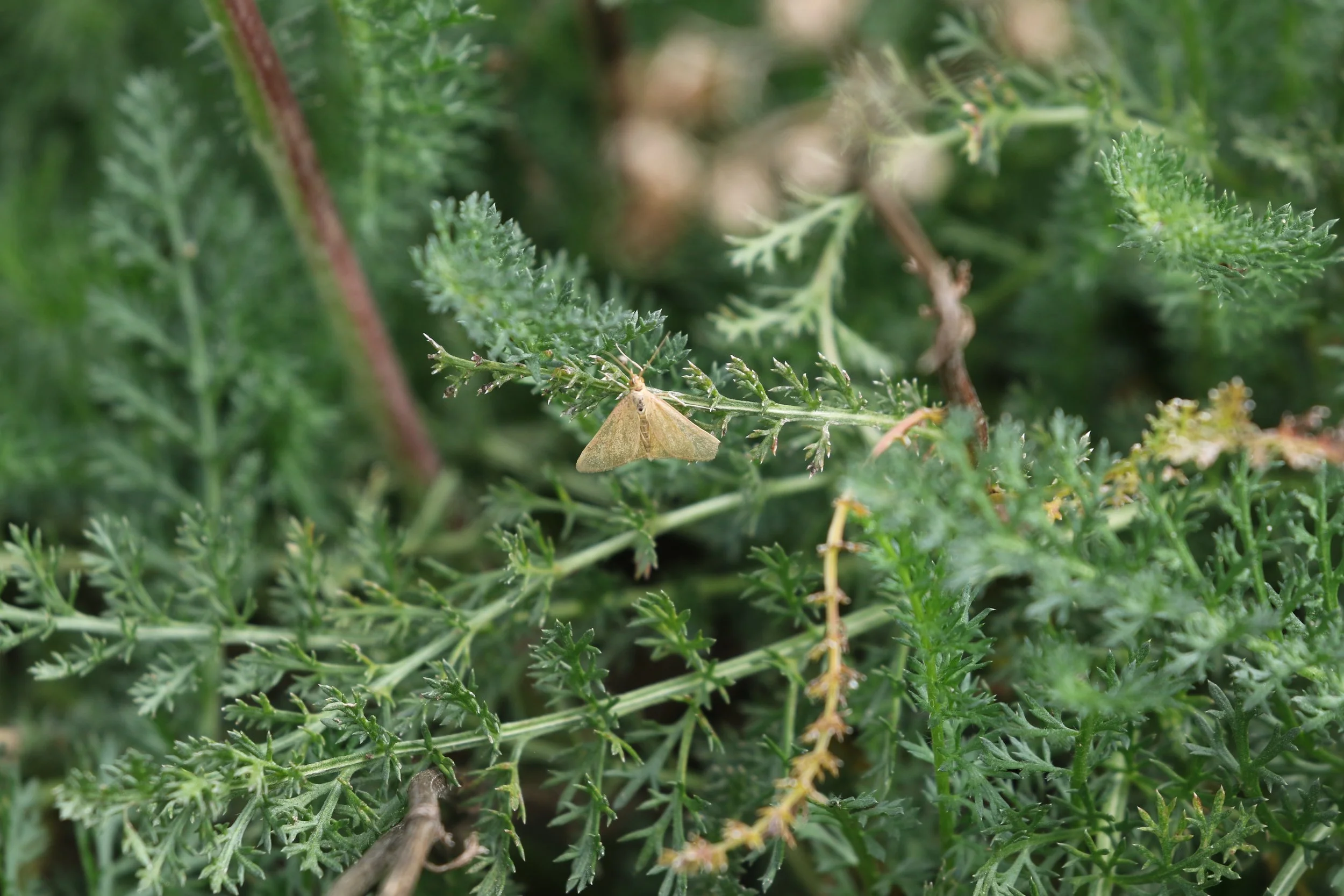
A quiet presence descends upon the California landscape during the blue hour, when the sun has dipped below the horizon and the evening air begins to cool. While much of the world's attention turns to daytime pollinators, a silent, equally vital pollinating night shift is just beginning its essential work. This twilight transition serves as the creative foundation for the expansion of the Moth collection, celebrating a cast of characters that sustain local ecosystems under the cover of dusk.
This collection is a tribute to these understated guardians of the environment. Moths are remarkable and diverse, playing a crucial role in pollinating countless plant species that rely on nocturnal visitors for reproduction. Their intricate wing patterns and delicate textures offer a masterclass in organic symmetry, providing a sophisticated alternative to more common natural motifs.
The Legacy of Pebble: A Foundational Inspiration
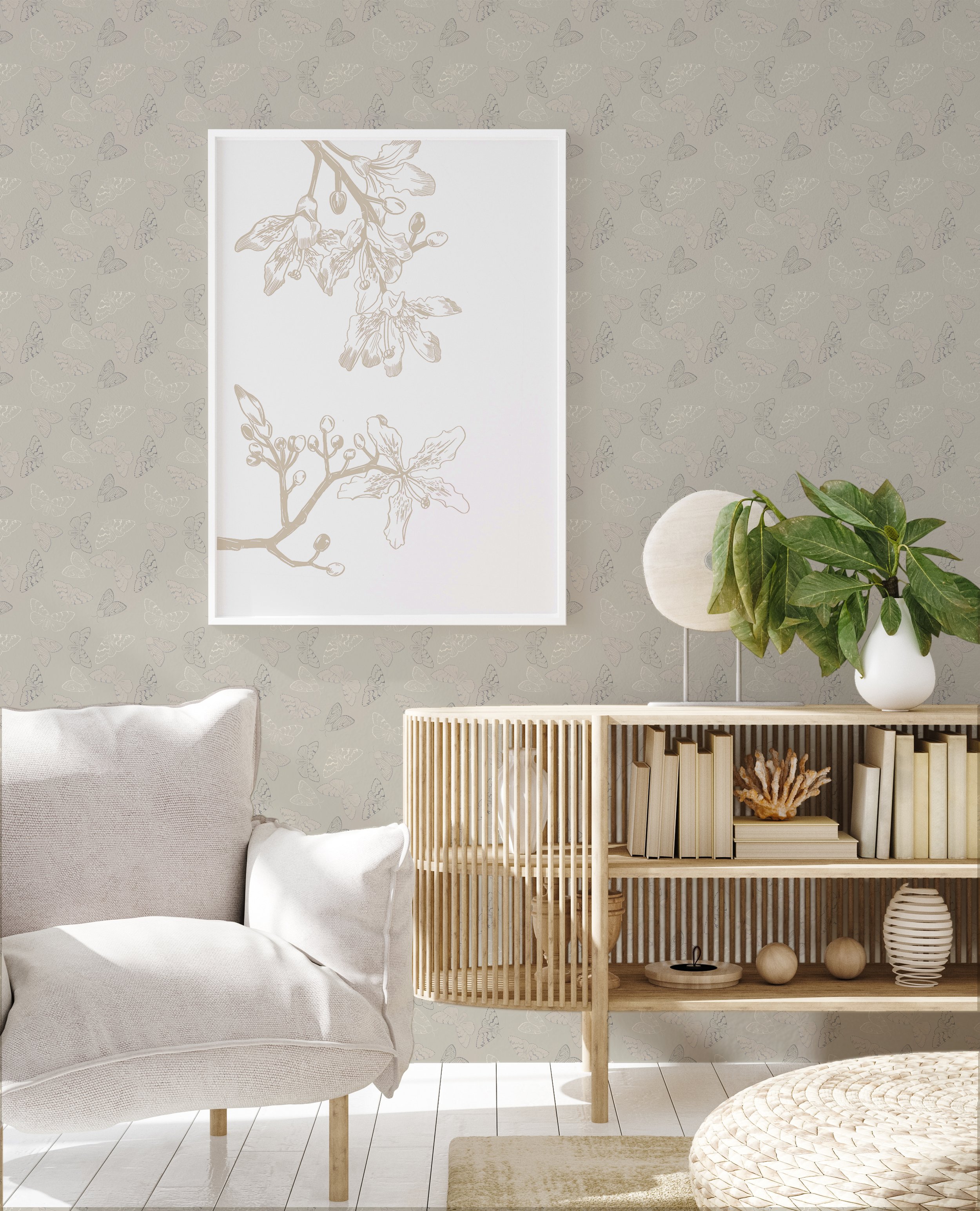
The collection began with a singular, anchoring colorway: Pebble. Inspired by the neutral, toasted gray wings of native species that flutter through the California evening, Pebble was designed to be a versatile staple. Available in both the signature Moth Wallpaper and Moth Textile, this pattern captures the essence of the nocturnal landscape, representing the quiet elegance and understated strength of the moth in motion.
Pebble has become a favorite for restorative, biophilic spaces that honor nature's subtle details. It represents the start of a design journey, the grounded neutral that allowed for the observation and eventual expansion of a palette reflecting the broader tapestry of the California lifestyle.
A New Horizon: From the Coast to the Kitchen Garden
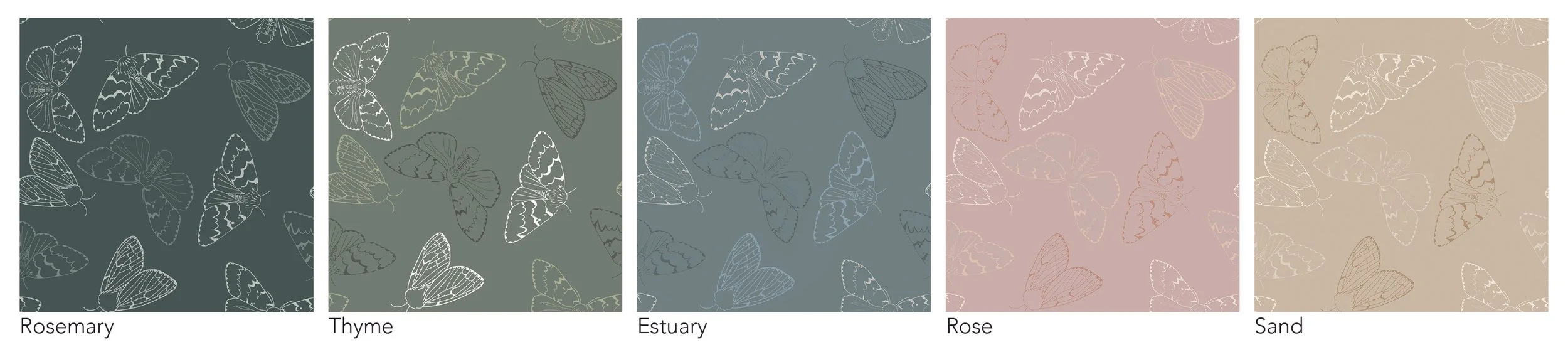
In this new release, the collection moves beyond the foundational neutral to introduce five colorways that reflect a curated California life. These hues draw from the environments that surround and inspire the studio.
Thyme: A verdant, silvery green that pays homage to the heart of the California home, the kitchen garden. This hue brings the aromatic freshness of cultivated herbs indoors.
Rosemary: A deeper, forest-toned green that echoes the structured beauty of Mediterranean-inspired landscaping found throughout the state.
Estuary: Inspired by the cool, deep blues of the brackish waters where rivers meet the Pacific, Estuary offers a tranquil, grounding presence.
Sand: This light, earthy tone reflects the warmth of the sun-baked environment and the pale, neutral dunes found along the coast.
Rose: A soft, mineral glow that embodies the hues of California canyon walls at sunset.
Biophilic Living: A Tactile, Plant-Based Approach
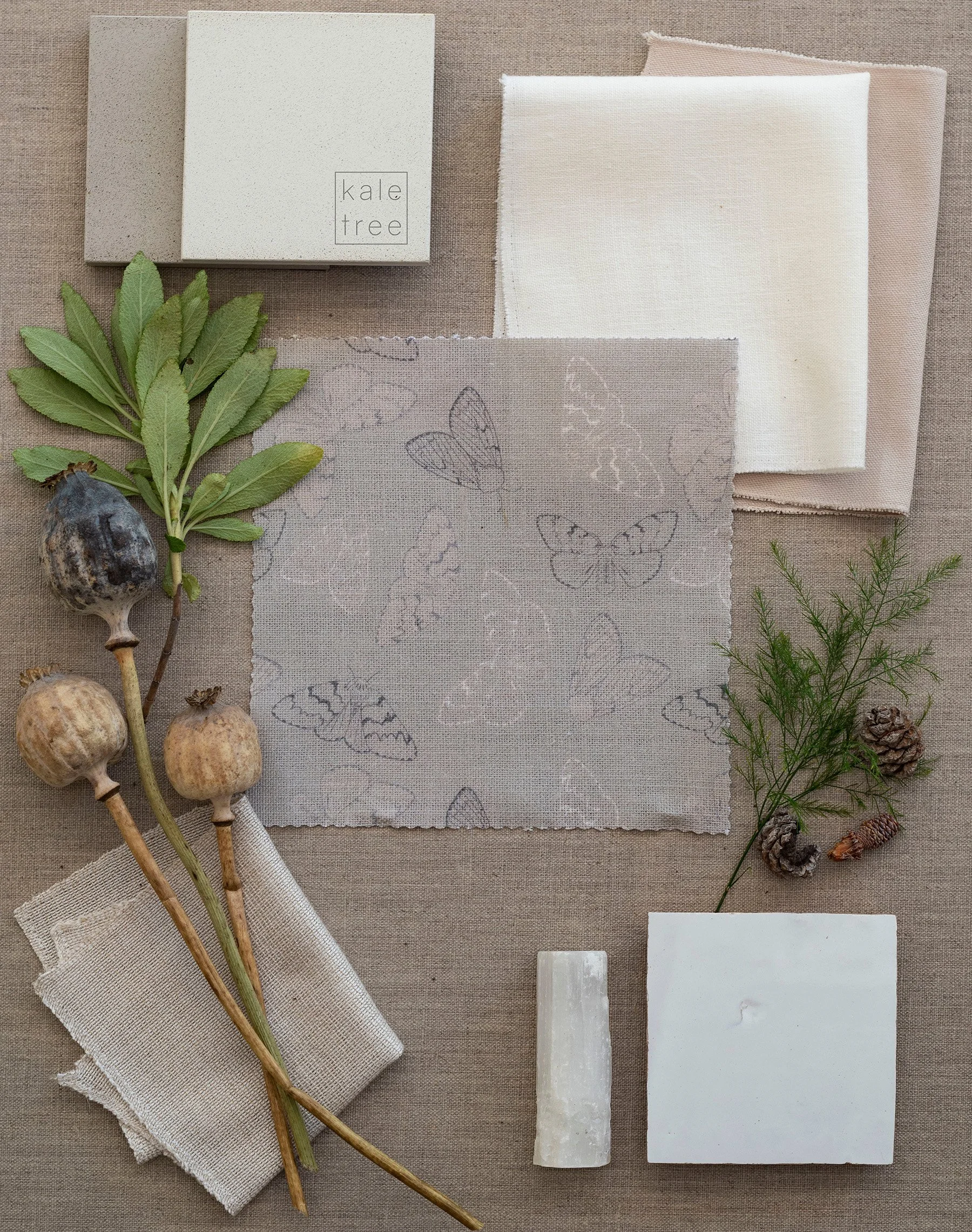
Integrating these new colorways into a home requires a focus on materiality and a connection to the earth's raw elements. The Moth collection is best grounded with textural, natural, organic materials.
The Moth Textile pairs naturally with the weight of heavy-gauge linen, the smooth coolness of tumbled stone, or the warmth of wood. By surrounding these patterns with woven fibers, the home becomes a multi-sensory environment that feels more balanced and intentionally connected to the earth.

Conscious Composition
The expanded Moth textile collection is printed on plant-based fabrics, specifically Belgian linen and organic cotton sateen. These natural fibers offer a tactile, breathable quality that complements a wellness-focused interior.
The Moth Wallpaper is FSC-certified, PVC-free, and printed with GREENGUARD Gold-certified water-based latex inks.
Celebrating the Night Shift
The expanded Kale Tree® Moth collection invites a closer look at the silent contributors to the landscape. From the original elegance of Pebble to the botanical inspiration of the new palette, these designs offer a sophisticated way to bring the artistry of the California evening indoors.
The Night’s Architecture: A Study of California’s Sacred Datura
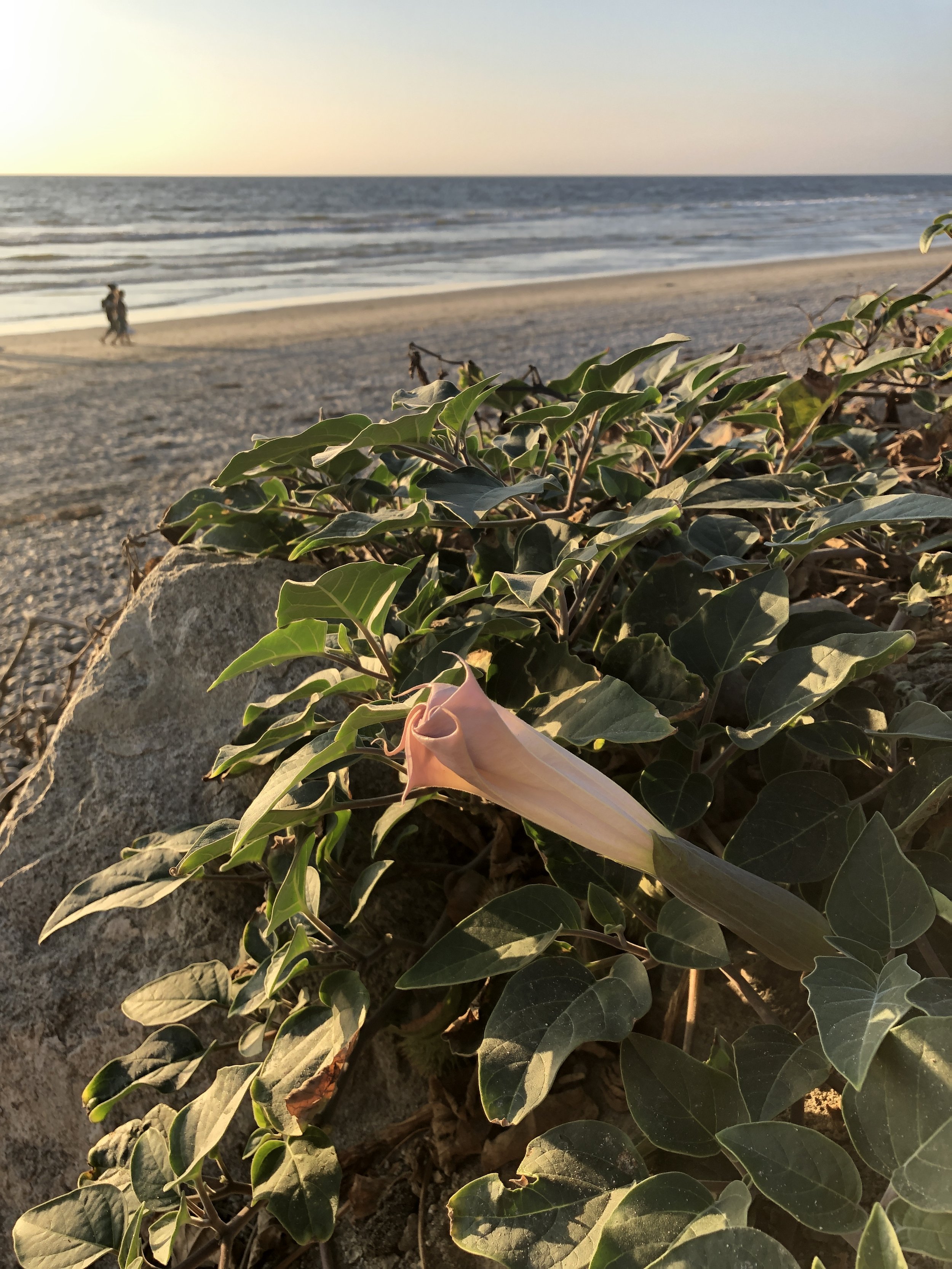
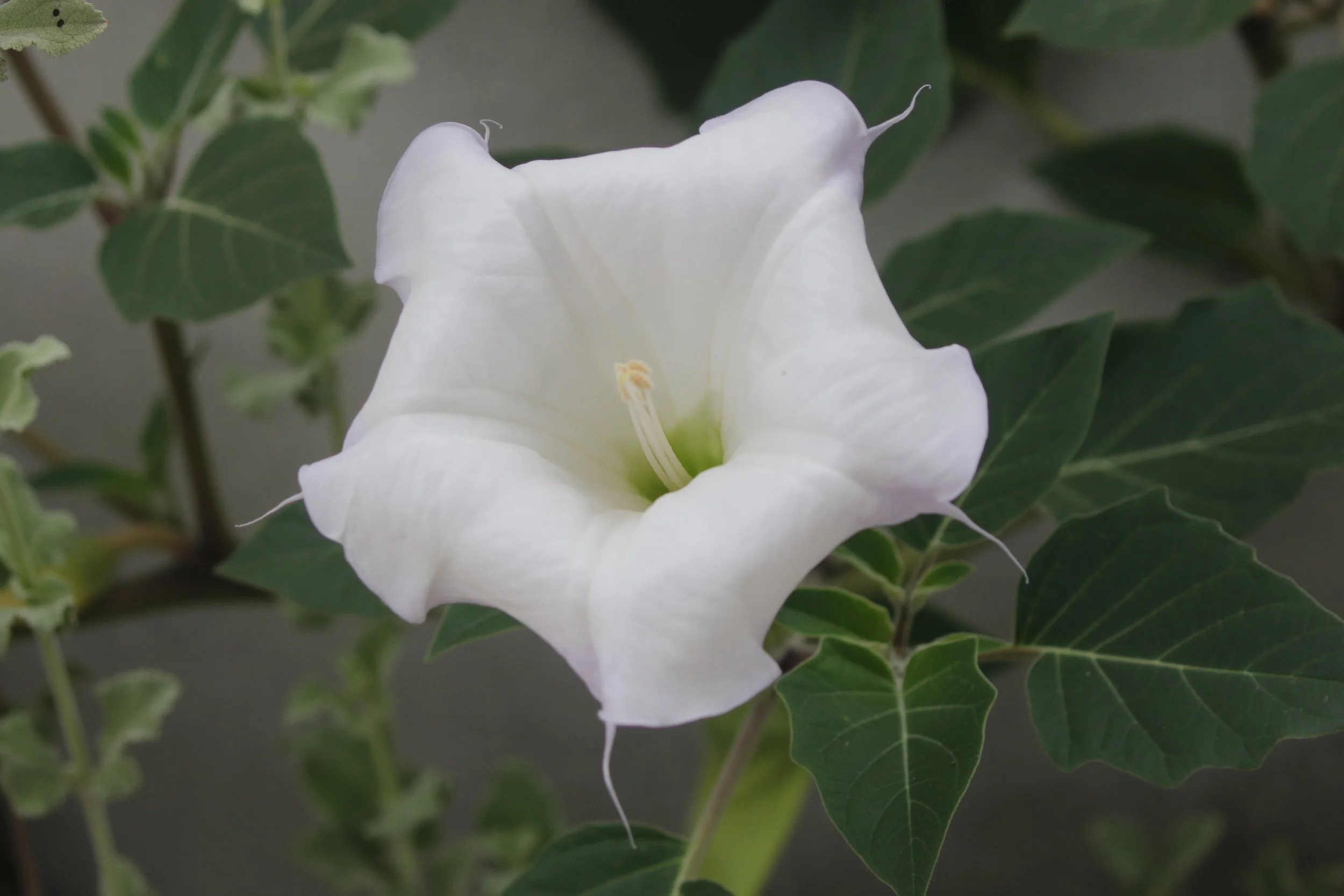
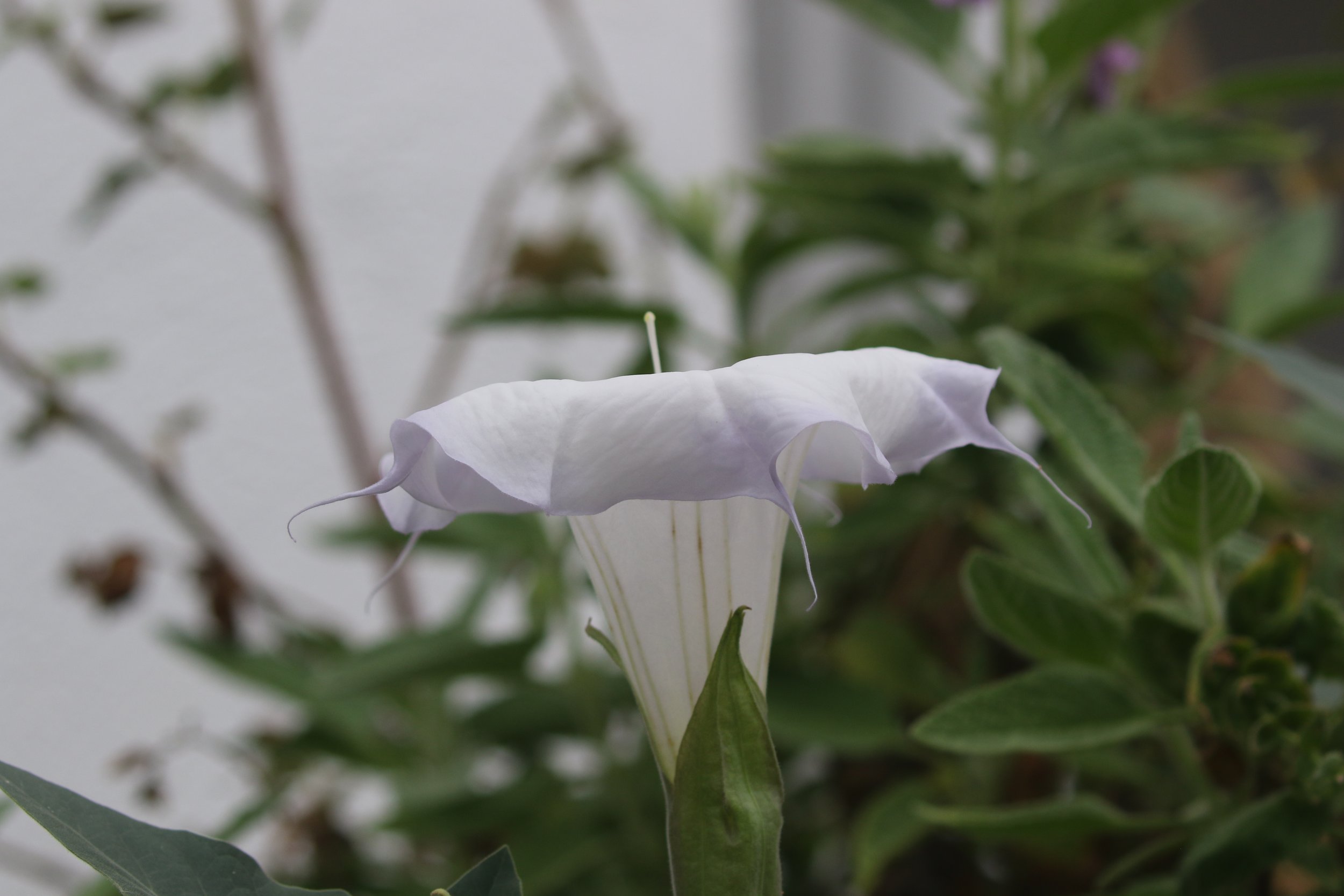
In the high heat of a California afternoon, Datura wrightii looks like a secret hidden in plain sight. Its low-slung, velvety gray foliage hugs the disturbed soil of roadsides and desert washes, appearing almost muted against the vibrant glare of the sun. But as the light fades and the temperature drops, the plant undergoes a structural transformation.
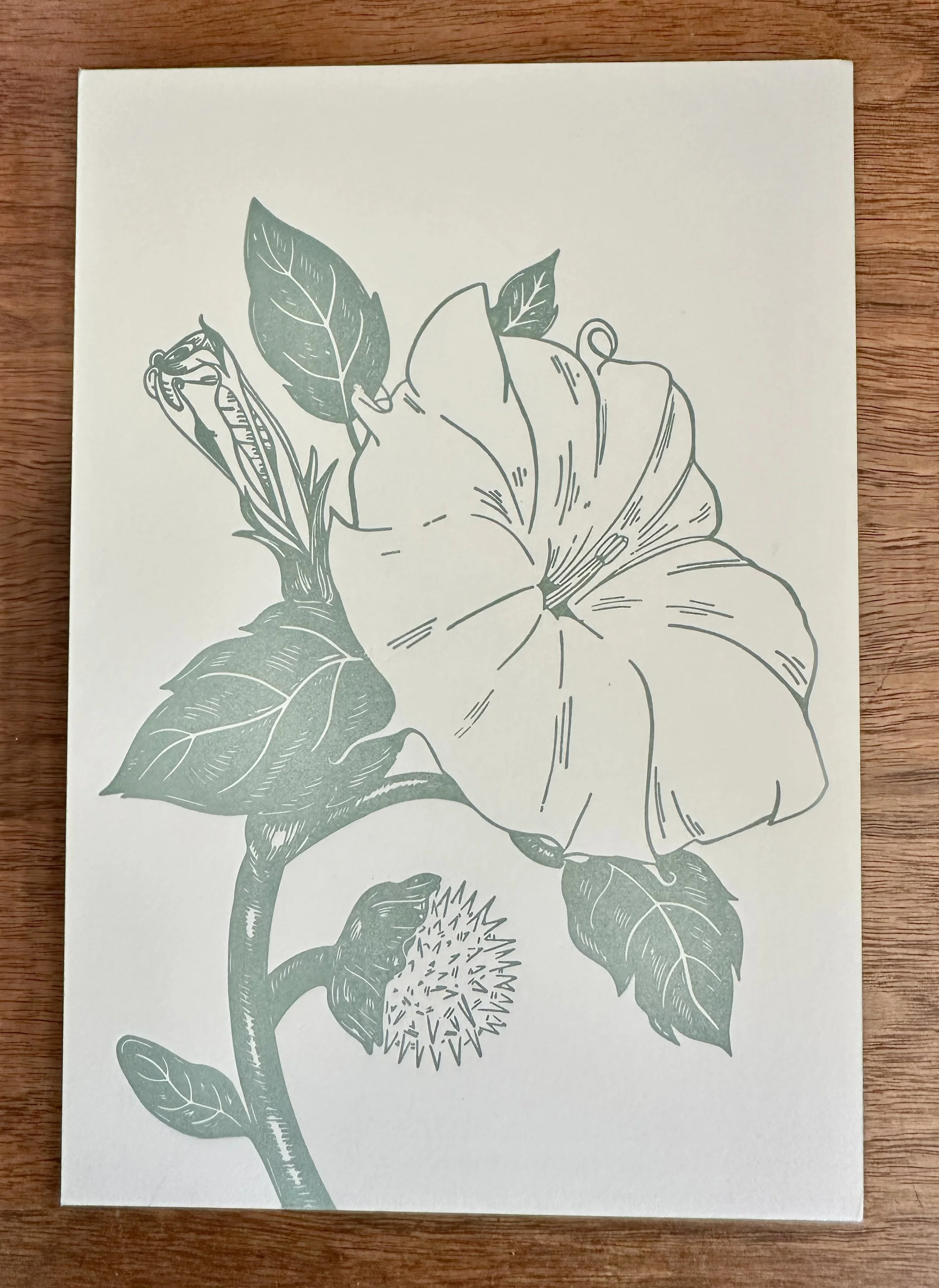
For our Kale Tree® studio, Datura is more than a botanical curiosity; it is a masterclass in organic geometry. We’ve long been drawn to its vespertine nature, the way its massive, pleated buds unfurl with mechanical precision at dusk. What began as a single illustration for a holiday card has become a permanent fixture in our creative vocabulary. We return to its silvered leaves and trumpet-shaped silhouettes not just for their beauty, but for their resilience. In this study, we look past the plant's reputation to explore its role as a cornerstone of the nocturnal ecosystem and a primary muse.
Nocturnal Synchronicity: The Hawkmoth and the Bloom
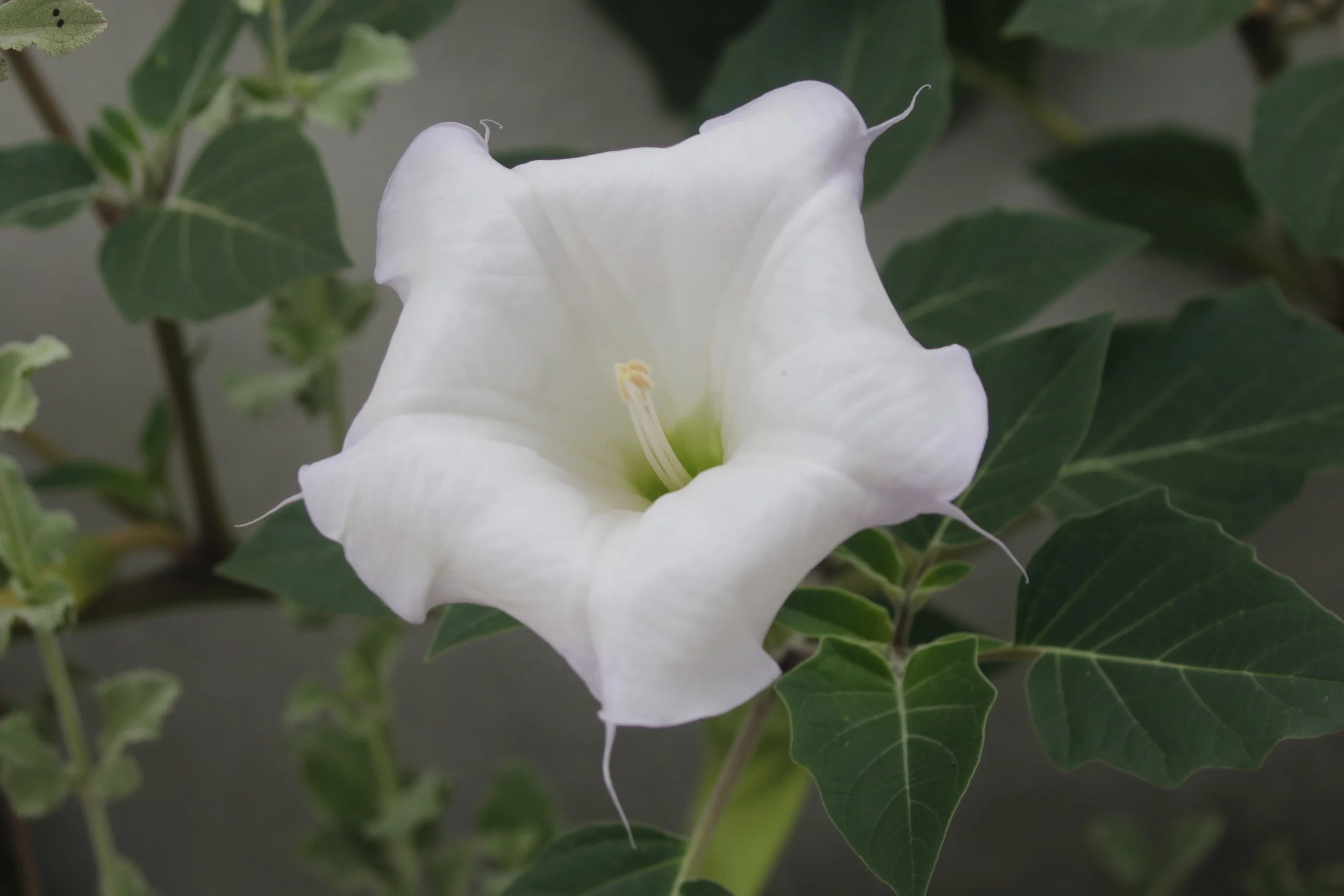
While much of the California landscape thrives under the sun, Datura wrightii operates on a different clock. As the heat of the day dissipates, the plant begins a coordinated sensory display. The massive white trumpets don't just open, they exhale. They release a heavy, intoxicating fragrance that serves as a GPS signal for the Sphinx Moth, or Hawkmoth (USDA Forest Service).
The relationship between the two is a marvel of biological engineering. To reach the nectar deep within the flower’s throat, the Hawkmoth unfurls a proboscis that matches the flower's depth almost perfectly. As the moth hovers, steady as a hummingbird, it becomes an accidental messenger, brushed with the pollen that will sustain the next generation of Datura. In the quiet of a desert or coastal evening, this interaction is one of the few movements in an otherwise still landscape, a silver-on-silver dance that has become a foundational reference for our studio's tonal palettes.
The Ephemeral Bloom
There is a quiet dignity in the plant’s timing. Each flower is a singular event, opening at sunset and offering its full splendor to the night. By the time the next morning’s sun reaches its peak, the bloom has already begun to retreat. This brief, intense window of beauty ensures the plant’s energy is focused on its nocturnal partners, creating a potent moment of connection that defines the rhythm of the desert night.
Deep Roots: A Legacy of Respect
In California, you cannot discuss Datura without acknowledging its profound cultural significance. For the Chumash and Tongva peoples, the plant, known as Momoy or Manit, is far more than a roadside wildflower. It is a sacred entity, historically integrated into rites of passage and sophisticated medicinal practices (Timbrook, 2007).
This history informs how we view the plant today. It isn't just ornamental; it carries a gravity that demands reverence. It is both beautiful and dangerous, as all parts of the plant are highly toxic if ingested (UC IPM). By respecting its boundaries, we can appreciate its role as a survivor. It thrives where other plants wither, providing a critical nectar source in arid environments and standing as a living link to California’s deep botanical and cultural history.
A Note for the Native Garden: The Rowntree Perspective
The pioneer horticulturist Lester Rowntree often spoke of the necessity of bringing the wild into the garden, provided we respect the plant's true nature (Rowntree, 1939). Of the Sacred Datura, she noted its paradoxical beauty and its ability to look lush and tropical while requiring almost nothing from the gardener.
To introduce this architectural giant into the landscape, there are a few considerations. In the wild, Datura wrightii can spread up to 15 feet. In a garden, it needs room to breathe and expand. It craves full sun and well-draining soil. It is drought-tolerant, often performing better with neglect than with over-care. Do not be alarmed if the plant disappears in winter; it is a perennial that retreats into its hardy root system, waiting for the warmth of spring to push it back through the soil. Finally, because of its high toxicity, it should be planted with care, taking into account its proximity to children and pets.
A Continuous Muse
Our work at the studio is an ongoing dialogue with plants like these, species that refuse to be ignored and offer a structural complexity we find endlessly inspiring. The Sacred Datura reminds us that the most profound beauty often reveals itself only when we are willing to wait for the sun to go down.
Works Cited
Rowntree, Lester. Hardy Californians. Macmillan, 1939.
Timbrook, Jan. Chumash Ethnobotany: Plant Knowledge Among the Chumash People of Southern California. Santa Barbara Museum of Natural History, 2007.
UC IPM. "Sacred Datura." University of California Statewide Integrated Pest Management Program.
USDA Forest Service. "Datura wrightii (Sacred Datura)." U.S. Forest Service Celebrating Wildflowers.
Kale Tree Holiday Gift Guide
Give the gift of Biophilic design this holiday season with some of our favorite nature-inspired goods from Kale Tree.

Matilija Poppy Textile - Natural
The Matilija Poppy, a beautiful and unique California native wildflower, inspires this hand-drawn textile design from Kale Tree. This textile is printed on luxurious Belgian linen, ready to be transformed into an array of customized home goods like pillows, drapery, and bedding that will bring the joy of a Californian super bloom into the home of our gardening enthusiast friends and family.

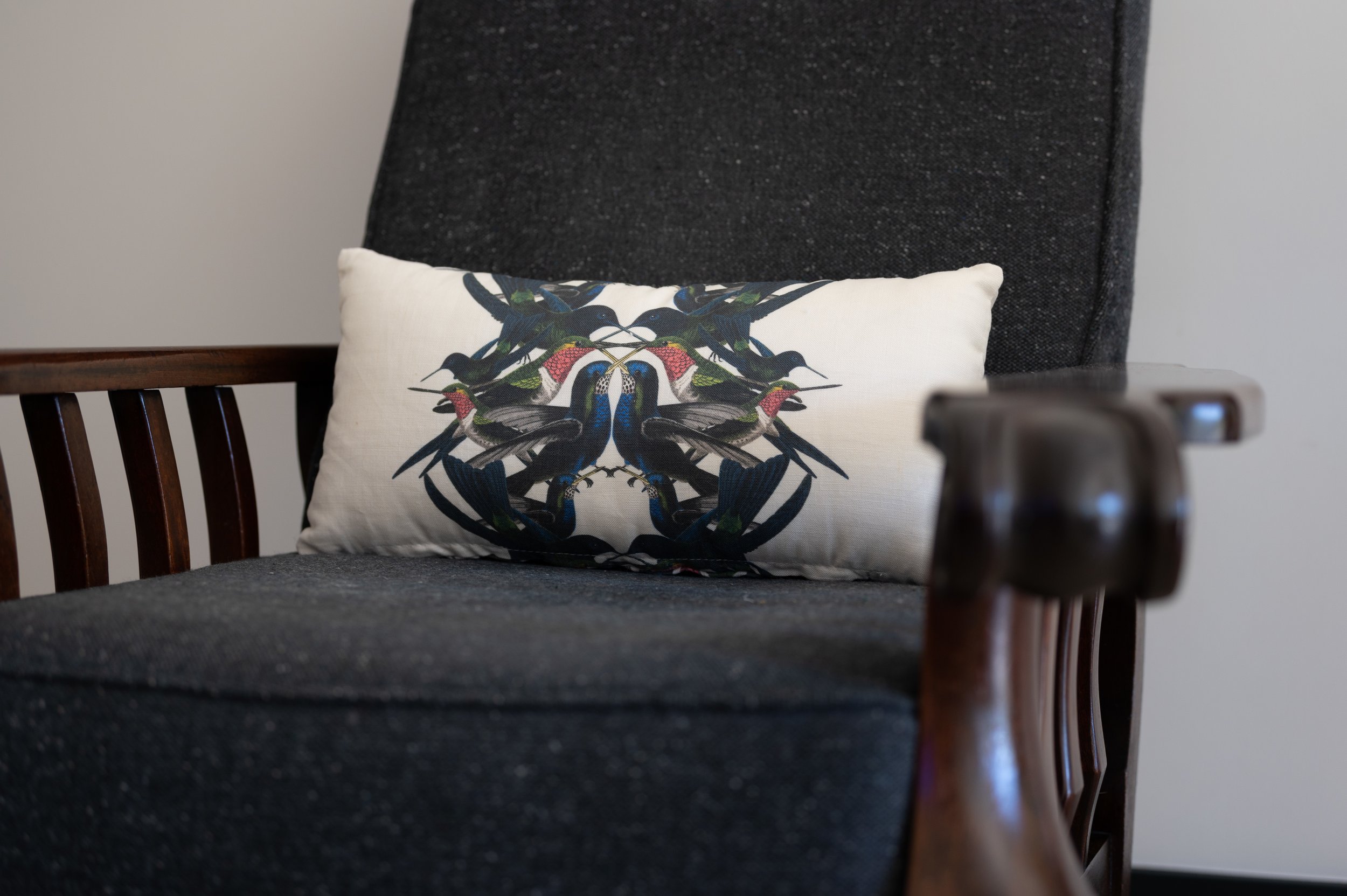
The hand-drawn pattern of the Kale Tree Tree Moth rug is inspired by moths fluttering at dusk. This pattern seeks to add a quiet beauty to any room, a perfect gift for those who appreciate the subtle beauty of nature's pollinators. Each rug is handmade to order in either Vegan Bamboo Silk or 100% New Zealand Wool for a luxuriously soft feel underfoot. Available in 5 x 8, 8 x 10, or 9 x 12 to suit any home size.

Ginko Indoor Outdoor Light Fixture
The Ginko leaf is a symbol of peace, healing, and longevity that often appeared in the designs of the Art Nouveau and the Arts and Crafts movement. This beautiful Ginkgo indoor/outdoor light fixture made of cast bronze Ginko leaves cradling a milk glass globe is sure to be a treasured gift for those who appreciate the beauty of art and nature.

Give the gift of nature-inspired healing spaces with this eco-friendly wallcovering from Kale Tree, featuring a hand-drawn pattern inspired by Mallow blossoms. Commonly called Abutilon or Flowering Maple, this woody shrub is best loved for its delicate drooping blossoms. Available in 3 colorways (Midnight Forest, Evening Mauve, and Dusty Dawn), we love the soothing color of Dusty Dawn as it evokes the calm of dusk. This wallcovering is also PVC and VOC free, contributing to a healthy home environment.

The Cholla Tote is an excellent option for those looking for something special to include in this year's holiday stocking. This design is based on a pen and ink illustration of a Cholla cactus, native to northern Mexico and the Southwestern United States. Hand-printed on 100% certified organic cotton, this tote makes a beautiful yet practical gift.
This selection of bespoke nature-inspired goods helps connect our home interiors with the beauty and peace of the natural world. Give the gift of a mindful home this holiday season, exclusively available through the Kale Tree online store.
Sarah Barnard, WELL AP + LEED AP, is a leading designer of personalized, sustainable spaces that support mental, physical, and emotional wellbeing. She creates highly personalized, restorative spaces that are deeply connected to art and the preservation of the environment. An advocate for consciousness, inclusivity, and compassion in the creative process, Sarah has appeared in Architectural Digest, Elle Décor, Vogue, HGTV, and many other publications. In 2017 Sarah was honored as a “Ones to Watch” Scholar by the American Society of Interior Designers (ASID).