The Ethereal Palette: Artistry and Ecology in the Moth Collection
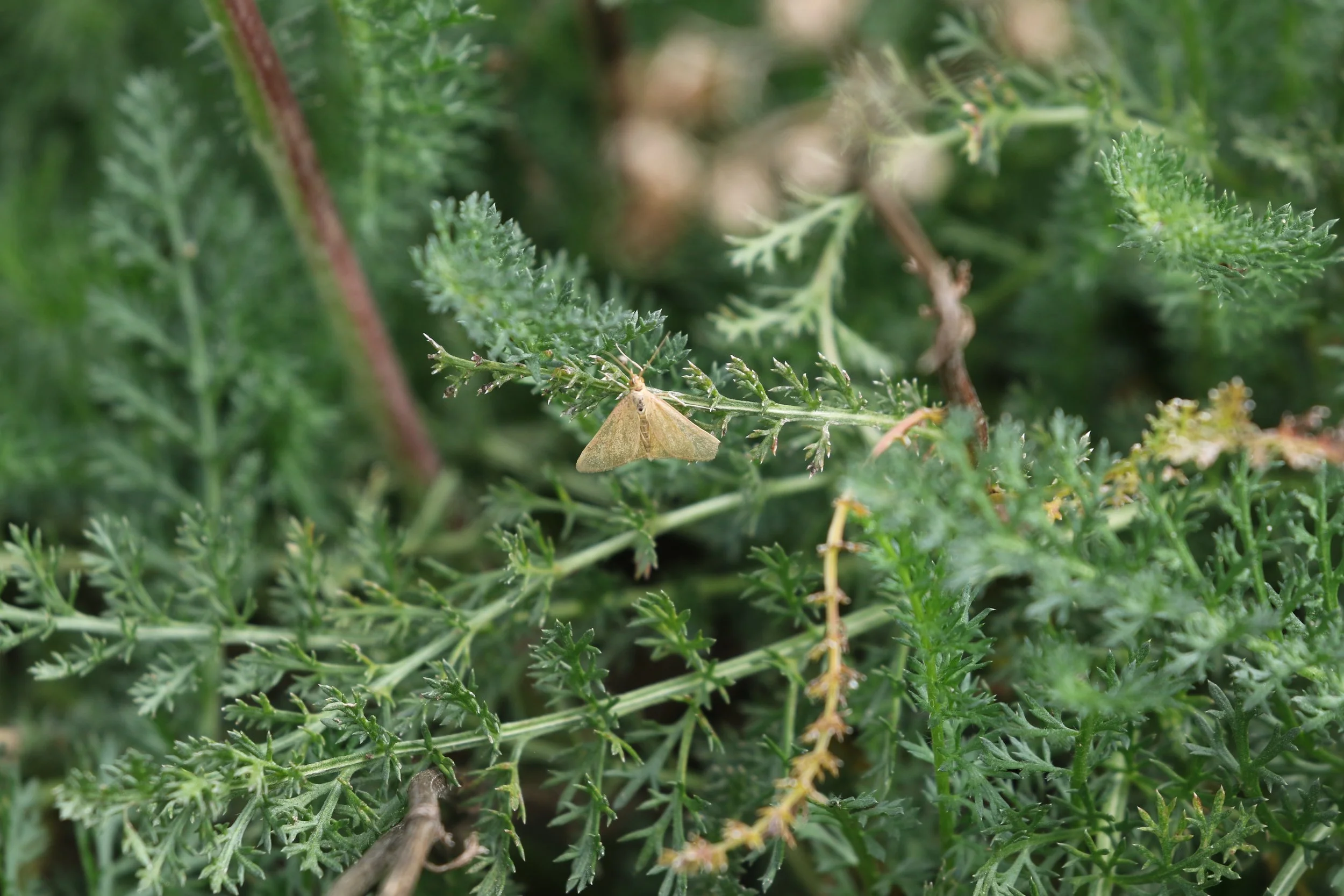
A quiet presence descends upon the California landscape during the blue hour, when the sun has dipped below the horizon and the evening air begins to cool. While much of the world's attention turns to daytime pollinators, a silent, equally vital pollinating night shift is just beginning its essential work. This twilight transition serves as the creative foundation for the expansion of the Moth collection, celebrating a cast of characters that sustain local ecosystems under the cover of dusk.
This collection is a tribute to these understated guardians of the environment. Moths are remarkable and diverse, playing a crucial role in pollinating countless plant species that rely on nocturnal visitors for reproduction. Their intricate wing patterns and delicate textures offer a masterclass in organic symmetry, providing a sophisticated alternative to more common natural motifs.
The Legacy of Pebble: A Foundational Inspiration
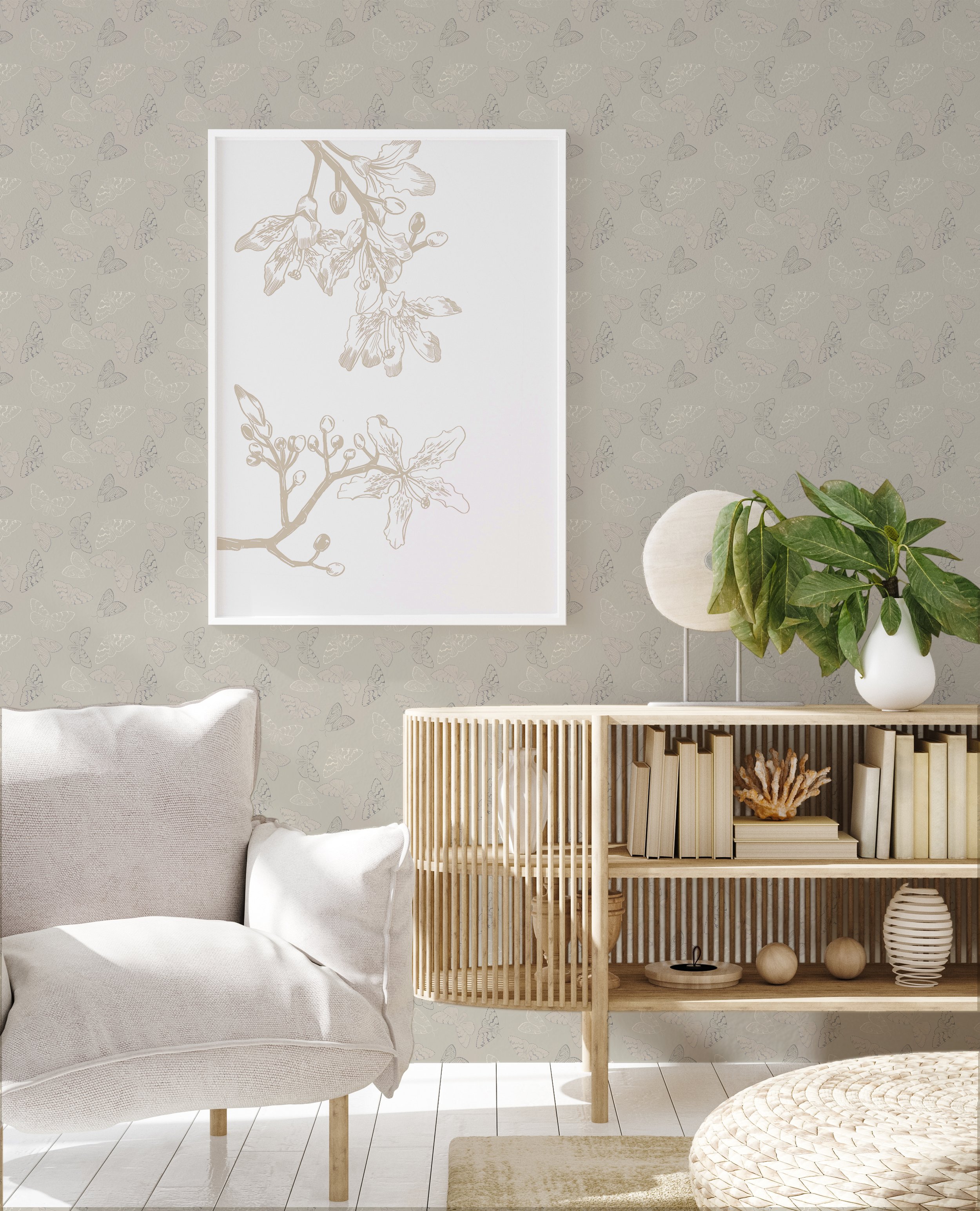
The collection began with a singular, anchoring colorway: Pebble. Inspired by the neutral, toasted gray wings of native species that flutter through the California evening, Pebble was designed to be a versatile staple. Available in both the signature Moth Wallpaper and Moth Textile, this pattern captures the essence of the nocturnal landscape, representing the quiet elegance and understated strength of the moth in motion.
Pebble has become a favorite for restorative, biophilic spaces that honor nature's subtle details. It represents the start of a design journey, the grounded neutral that allowed for the observation and eventual expansion of a palette reflecting the broader tapestry of the California lifestyle.
A New Horizon: From the Coast to the Kitchen Garden
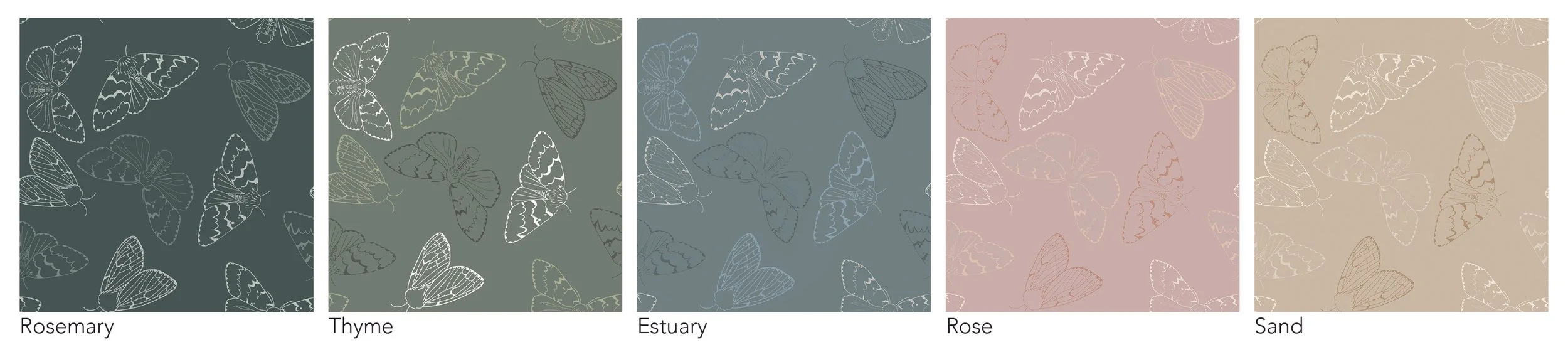
In this new release, the collection moves beyond the foundational neutral to introduce five colorways that reflect a curated California life. These hues draw from the environments that surround and inspire the studio.
Thyme: A verdant, silvery green that pays homage to the heart of the California home, the kitchen garden. This hue brings the aromatic freshness of cultivated herbs indoors.
Rosemary: A deeper, forest-toned green that echoes the structured beauty of Mediterranean-inspired landscaping found throughout the state.
Estuary: Inspired by the cool, deep blues of the brackish waters where rivers meet the Pacific, Estuary offers a tranquil, grounding presence.
Sand: This light, earthy tone reflects the warmth of the sun-baked environment and the pale, neutral dunes found along the coast.
Rose: A soft, mineral glow that embodies the hues of California canyon walls at sunset.
Biophilic Living: A Tactile, Plant-Based Approach
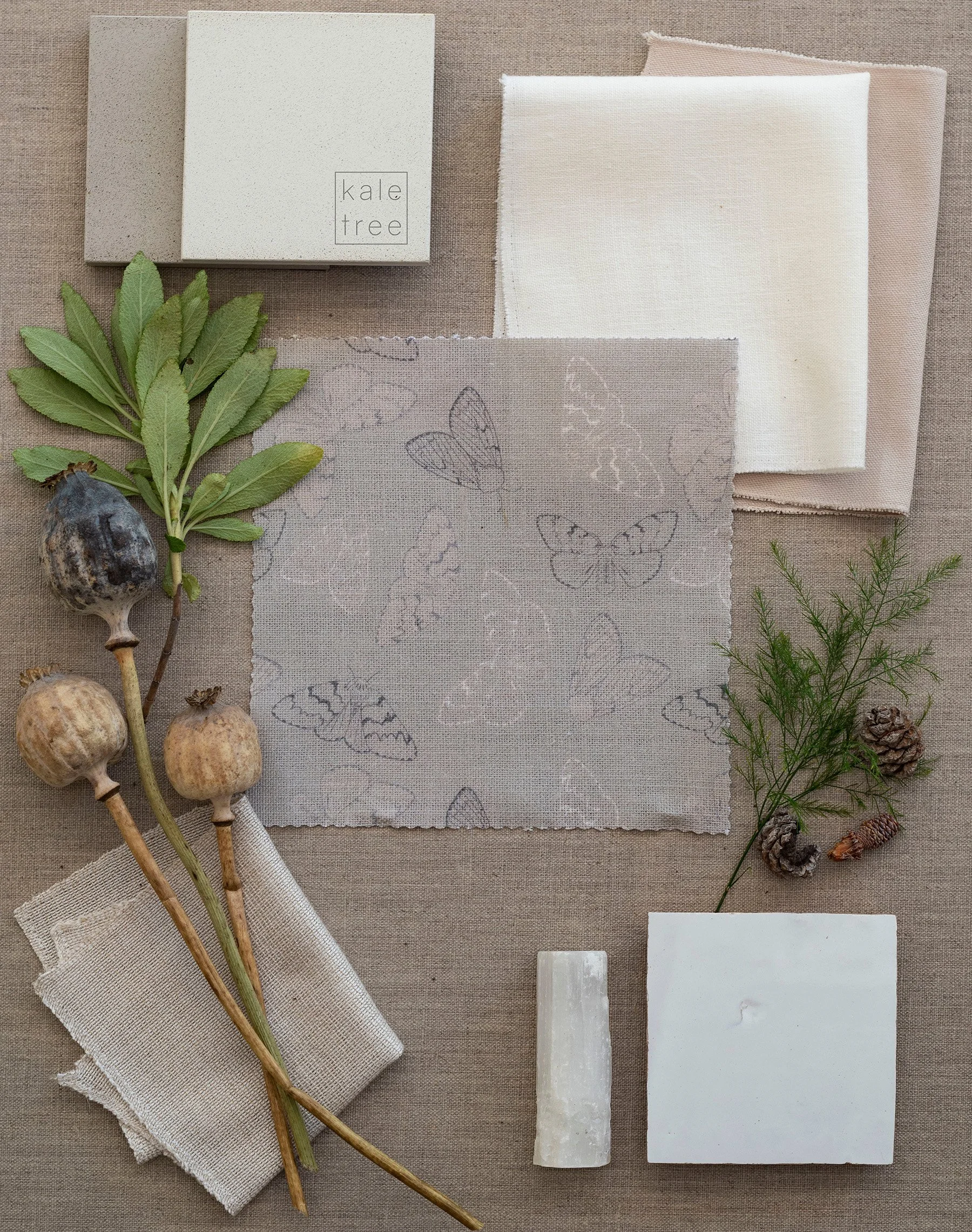
Integrating these new colorways into a home requires a focus on materiality and a connection to the earth's raw elements. The Moth collection is best grounded with textural, natural, organic materials.
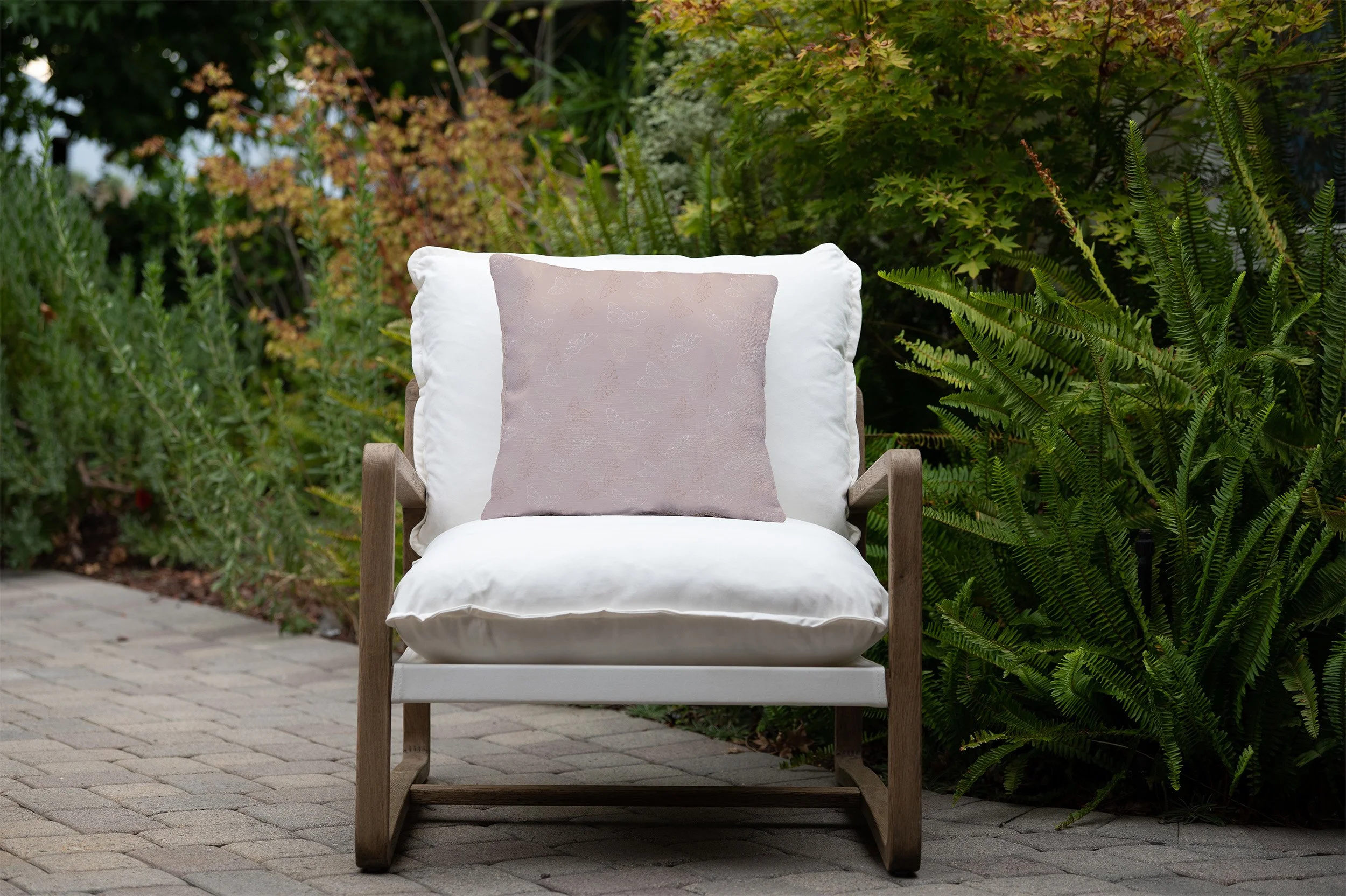
The Moth Textile pairs naturally with the weight of heavy-gauge linen, the smooth coolness of tumbled stone, or the warmth of wood. By surrounding these patterns with woven fibers, the home becomes a multi-sensory environment that feels more balanced and intentionally connected to the earth.
Conscious Composition
The expanded Moth textile collection is printed on plant-based fabrics, specifically Belgian linen and organic cotton sateen. These natural fibers offer a tactile, breathable quality that complements a wellness-focused interior.
The Moth Wallpaper is FSC-certified, PVC-free, and printed with GREENGUARD Gold-certified water-based latex inks.
Celebrating the Night Shift
The expanded Kale Tree® Moth collection invites a closer look at the silent contributors to the landscape. From the original elegance of Pebble to the botanical inspiration of the new palette, these designs offer a sophisticated way to bring the artistry of the California evening indoors.
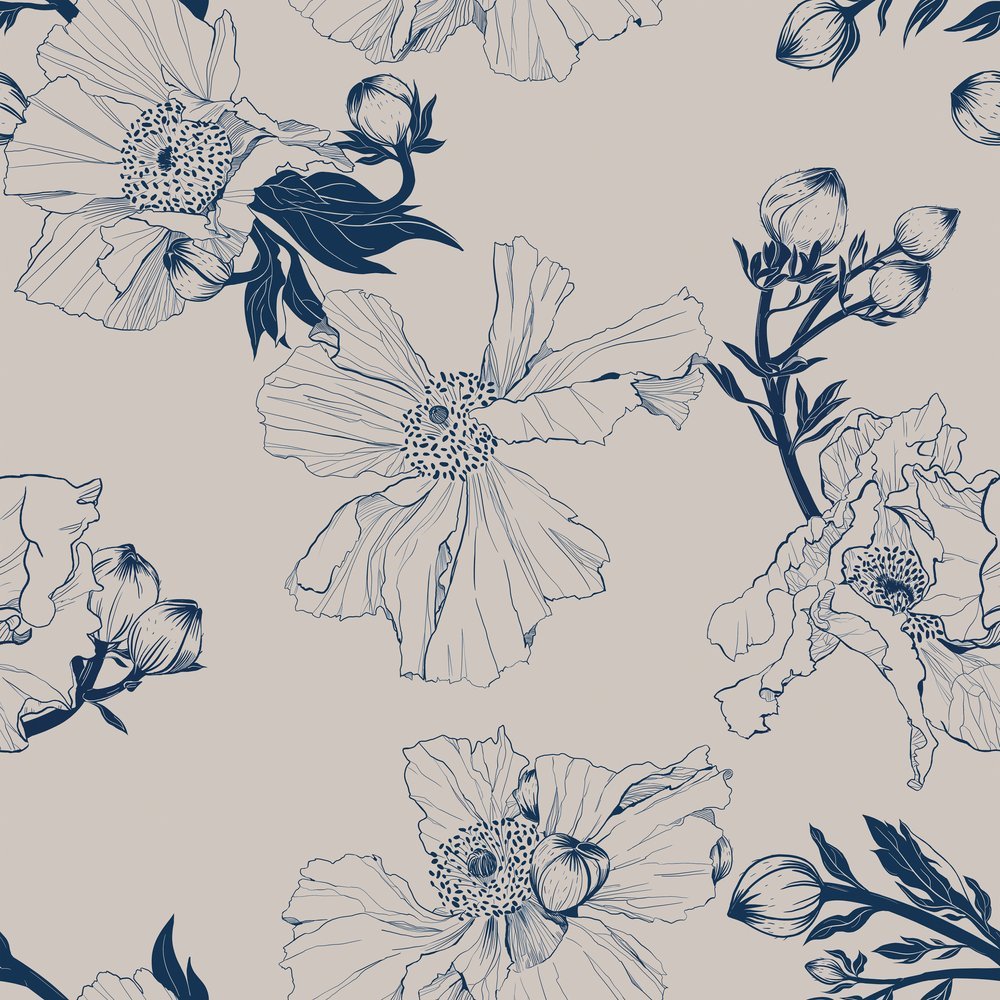
The Softness of Resilience: Introducing Matilija Poppy in Boletus and Shell
Our homes serve as a curated sanctuary, a necessary counterpoint to a fast-moving world. For the discerning eye, interior design is more than an aesthetic pursuit; it is a medium for cultivating composure, grace, and restorative quiet.
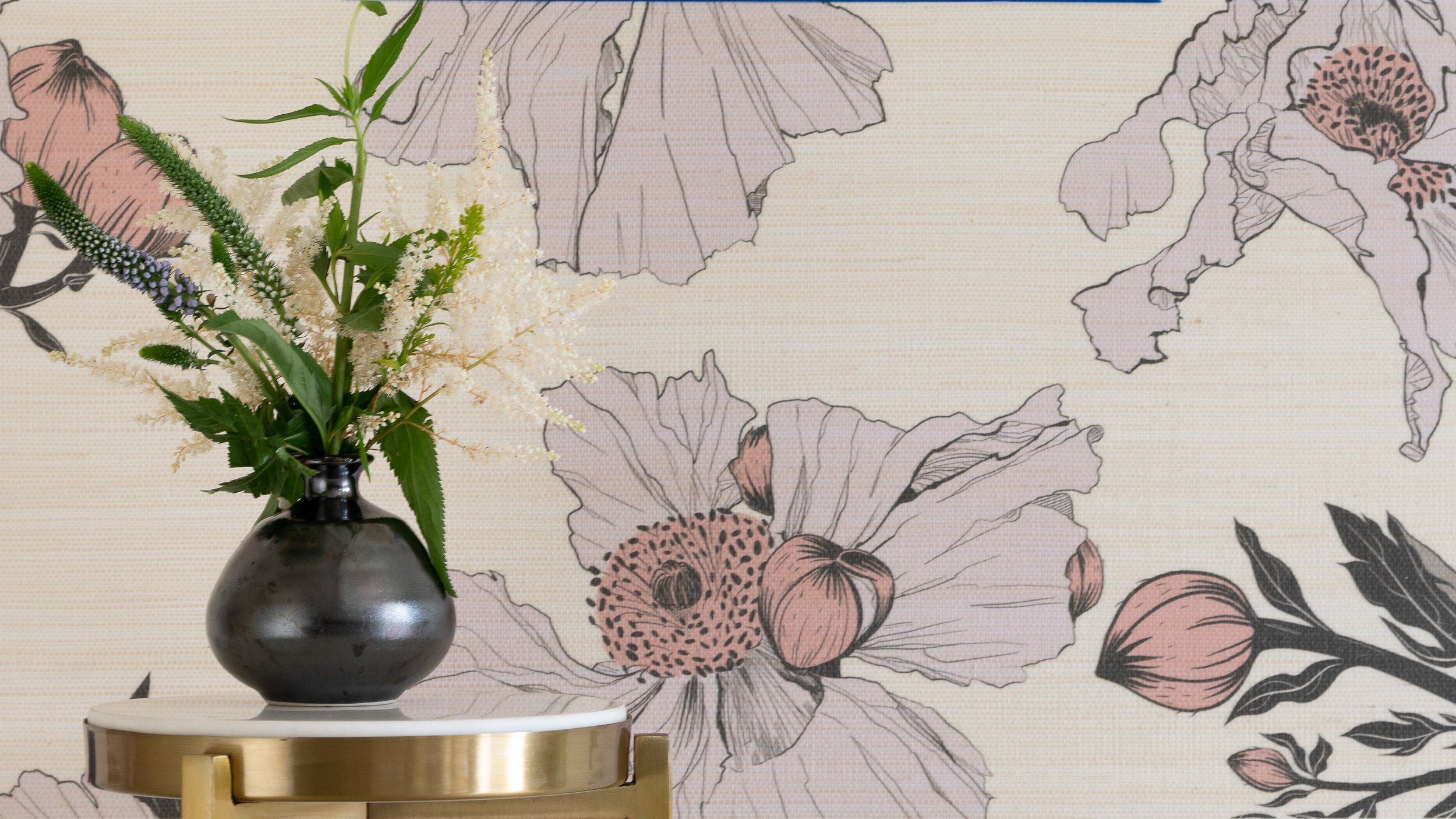
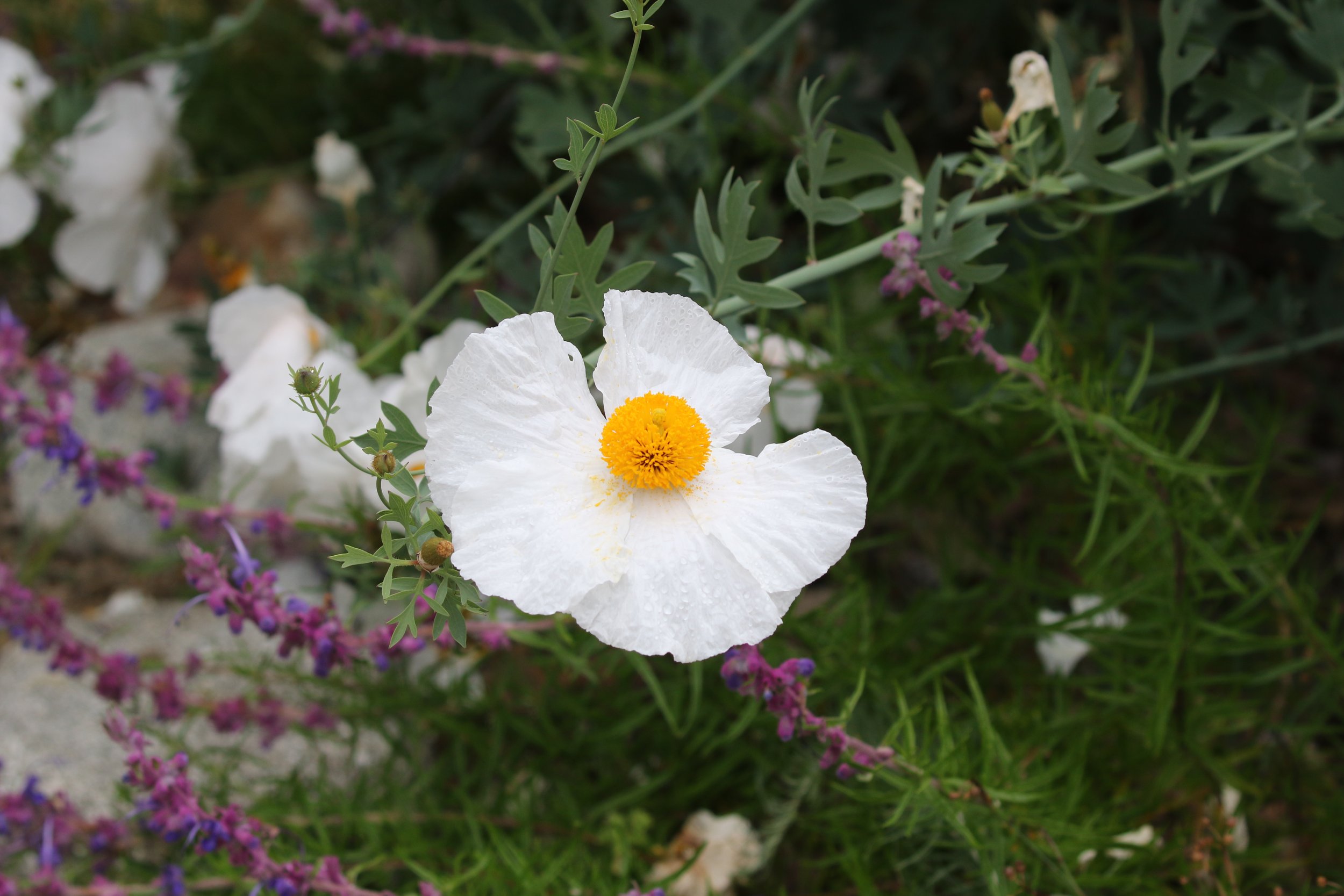
We often look to the California Floristic Province for inspiration, finding that nature’s most resilient inhabitants possess the most delicate beauty. The Matilija Poppy is a testament to this balance. While it is celebrated for its grand, iconic presence in the wild, our two newest colorways, Boletus and Shell, explore the plant’s more subtle, sophisticated mid-tones. These additions are designed to bring effortless tranquility and intentional softness to the interior landscape.

Boletus: Tones of the Forest Floor
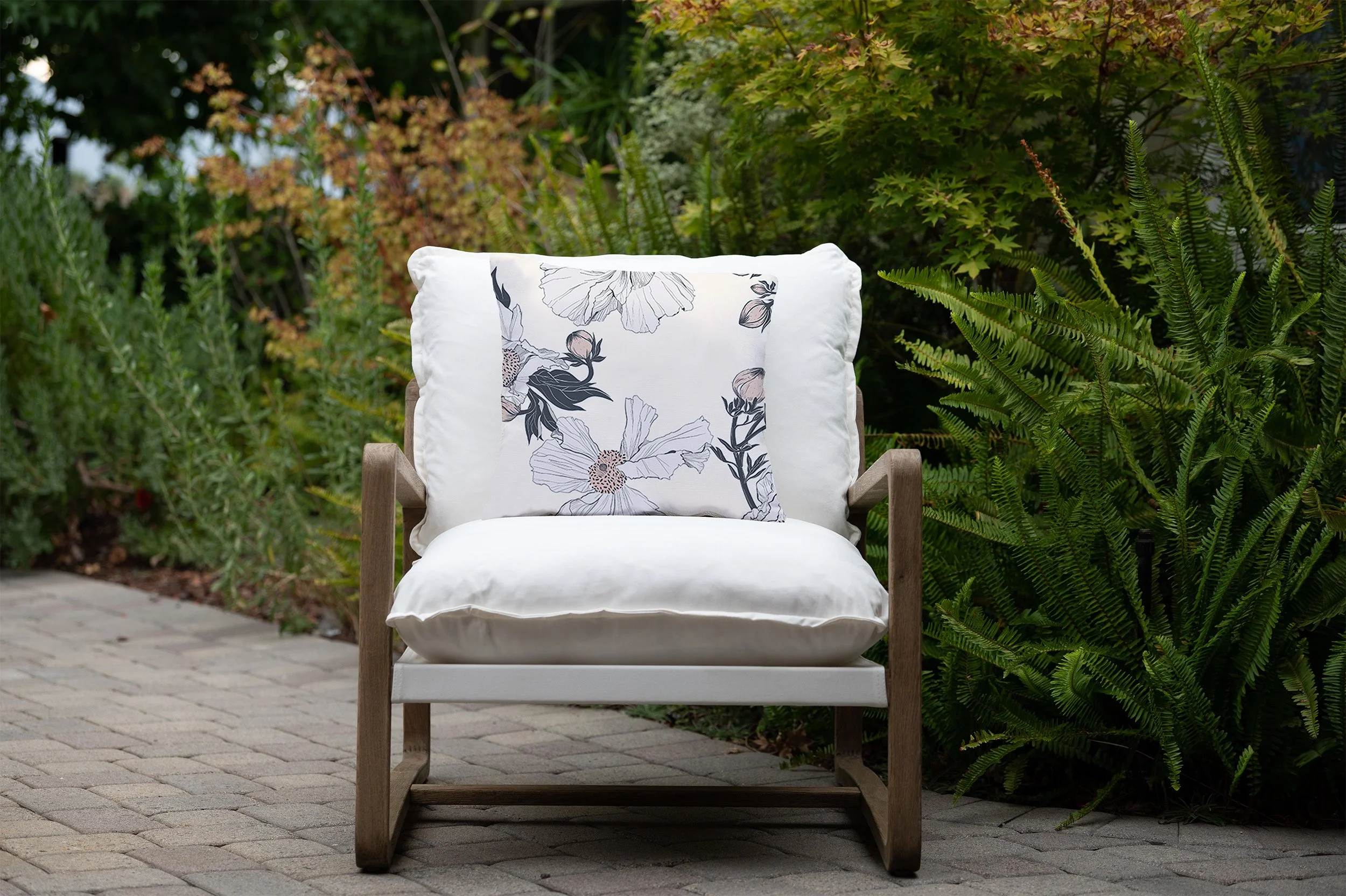
Inspired by the ethereal fungi of the forest floor, the Boletus colorway captures a hue as elusive as it is elegant. It is a singular, sophisticated in-between tone, a shade that gracefully lies between soft sage and muted silver.
The pattern is set against a light, warm neutral foundation, allowing the tonal linework to feel like a visual whisper. Boletus acts as a grounding element, providing composition and clarity. It is a palette that invites the eye to linger and the mind to settle, offering a serene connection to the quiet strength of California’s wildlands.
Shell: A Luminous Evolution
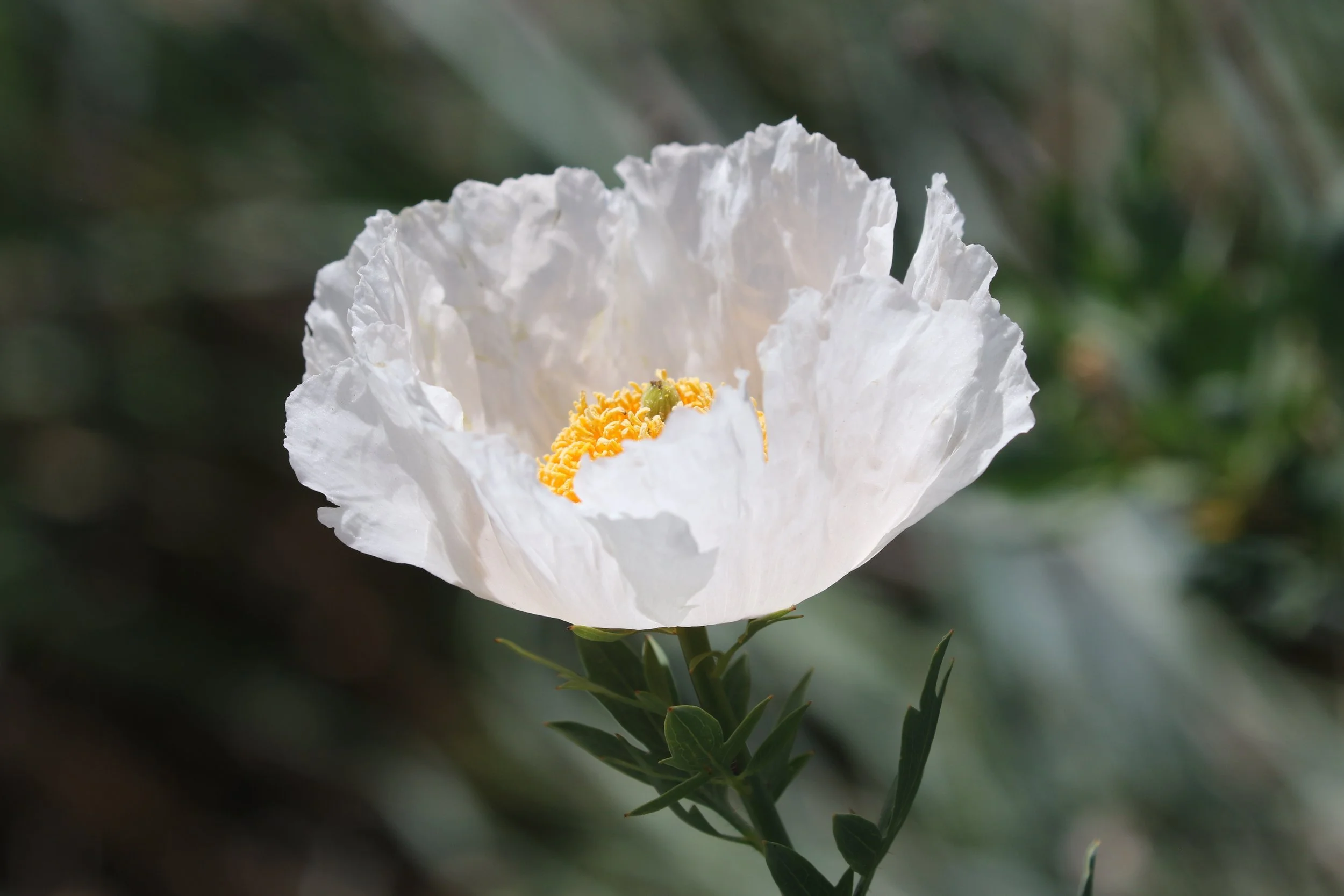
Shell represents a refined evolution of our classic Petal colorway. While Petal offers a crisp, energetic morning light, Shell captures the deep, resonant warmth of a golden afternoon.
The background is rich and sun-steeped, reminiscent of the way light filters through the poppy’s generous, paper-thin petals at high day. This increased saturation creates an enveloping, cohesive environment, making it ideal for intimate spaces.
A Multi-Sensory Collection
The new Kale Tree® colorways are available in:
Belgian Linen: Celebrated for its quality, linen features a classic weave that adds sophisticated texture to drapery and upholstery. Its natural weight and drape bring a sense of history and permanence to the design.
Wallpaper: FSC-certified and PVC-free with an artisanal, unpasted finish. Printed with water-based latex inks, this wallcovering offers a high-end aesthetic that helps transform a room into a complete, immersive sanctuary.
Cultivating an Interior Landscape
Ultimately, a home should be a reflection of our most centered selves. By translating the resilience of the local landscape into a language of softness and sophistication, we create spaces that help support our well-being. Exploring Boletus and Shell offers an opportunity to see how these new expressions of the Matilija Poppy can elevate the spirit of a private sanctuary.
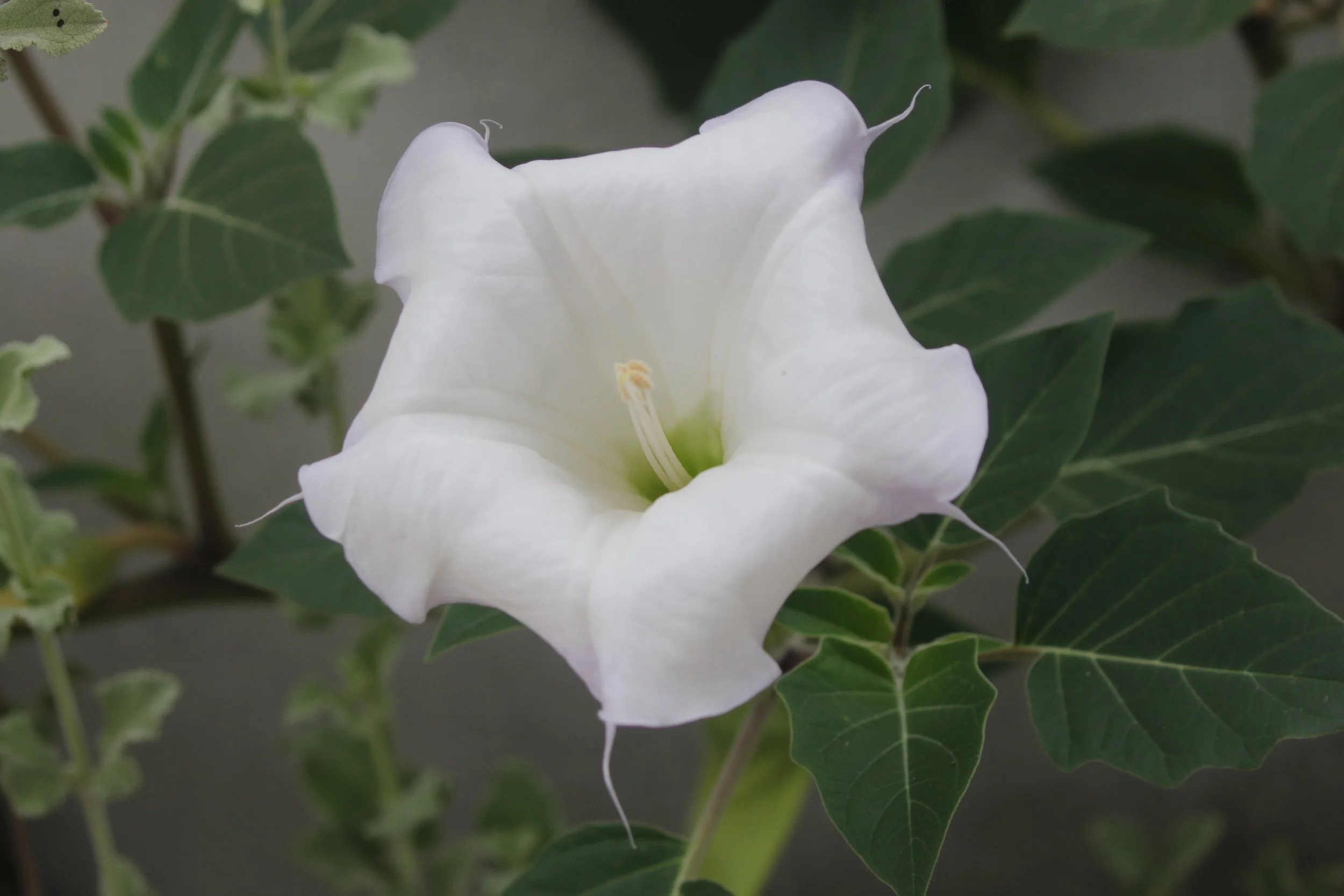
The Night’s Architecture: A Study of California’s Sacred Datura
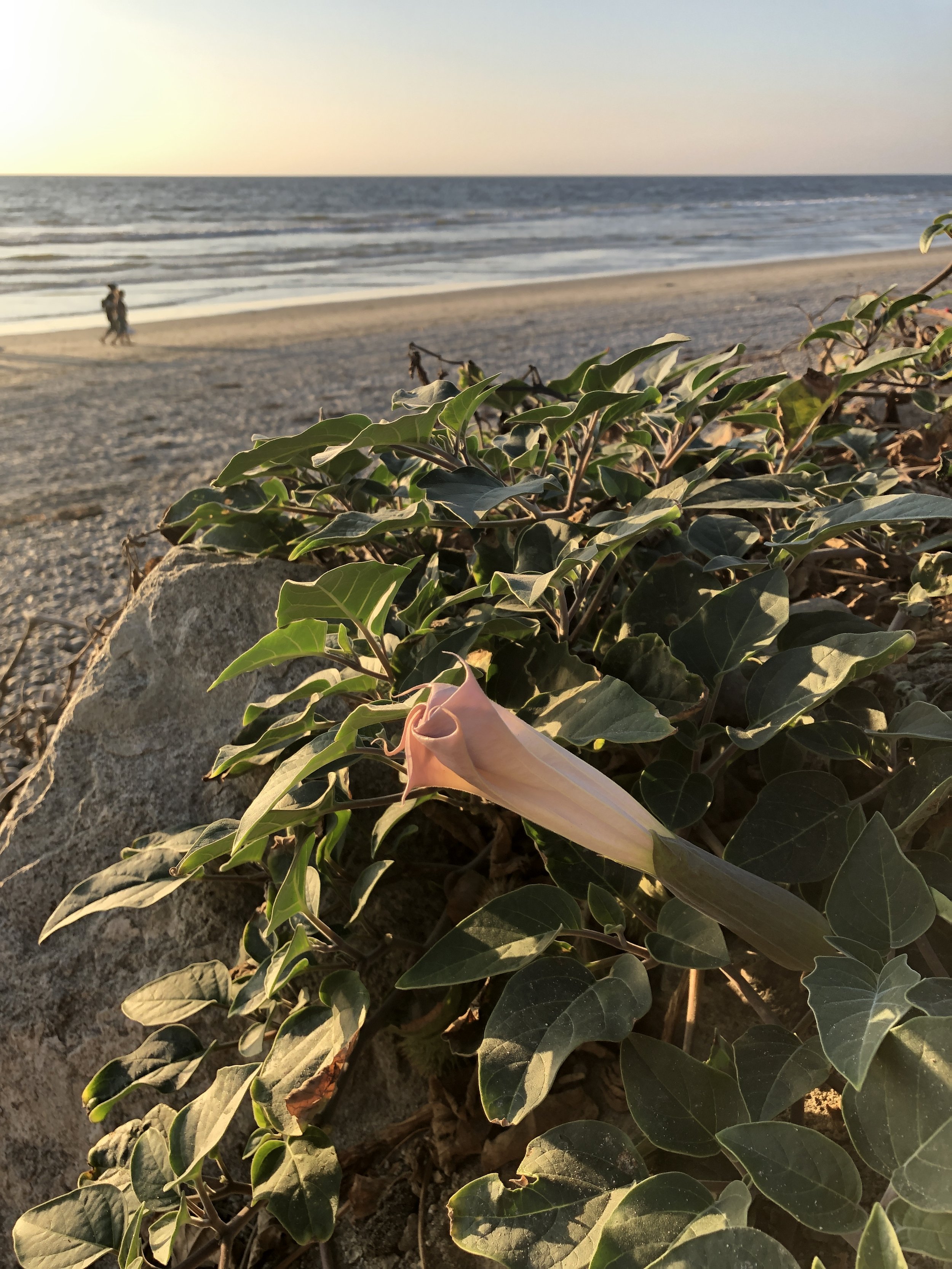
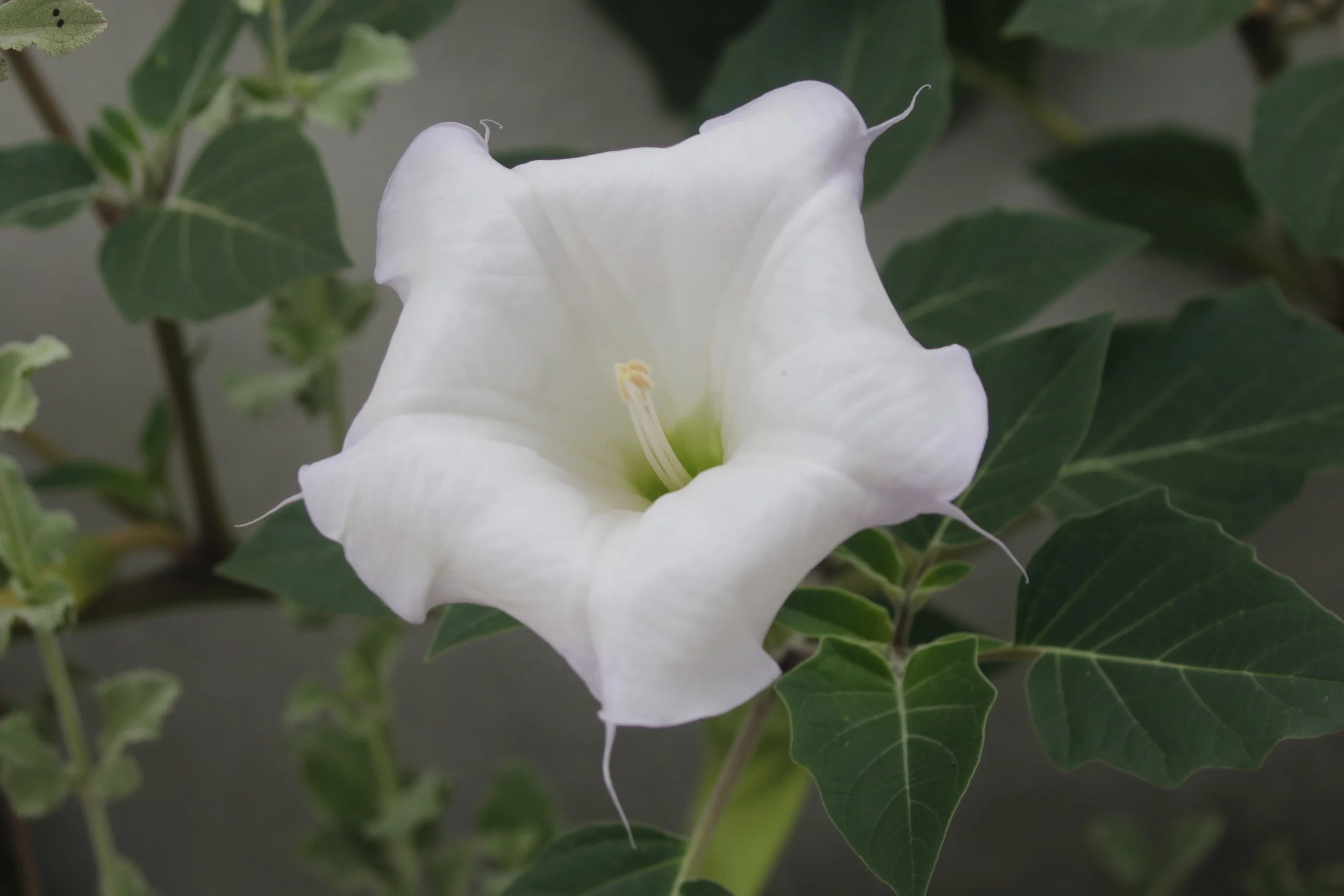
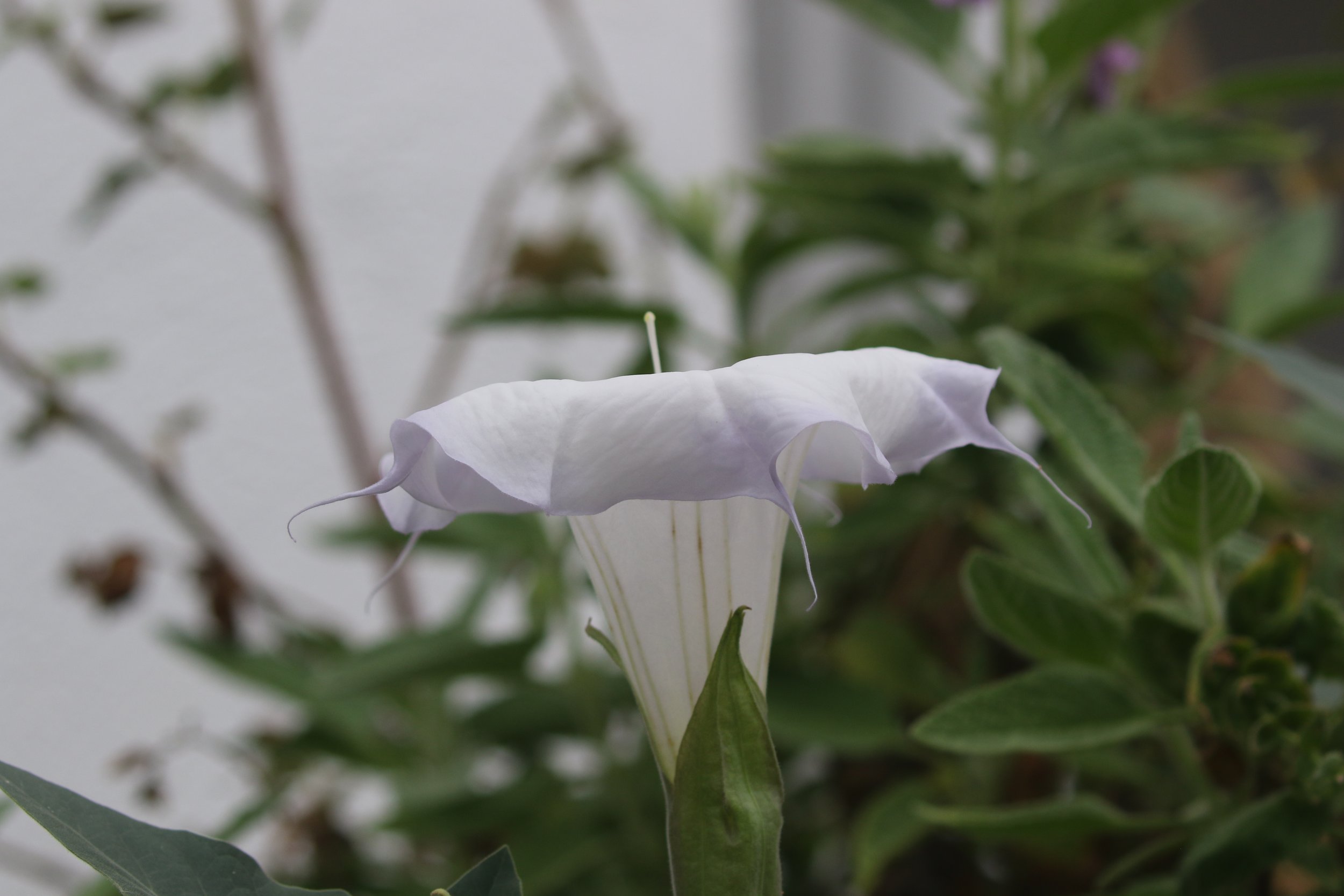
In the high heat of a California afternoon, Datura wrightii looks like a secret hidden in plain sight. Its low-slung, velvety gray foliage hugs the disturbed soil of roadsides and desert washes, appearing almost muted against the vibrant glare of the sun. But as the light fades and the temperature drops, the plant undergoes a structural transformation.
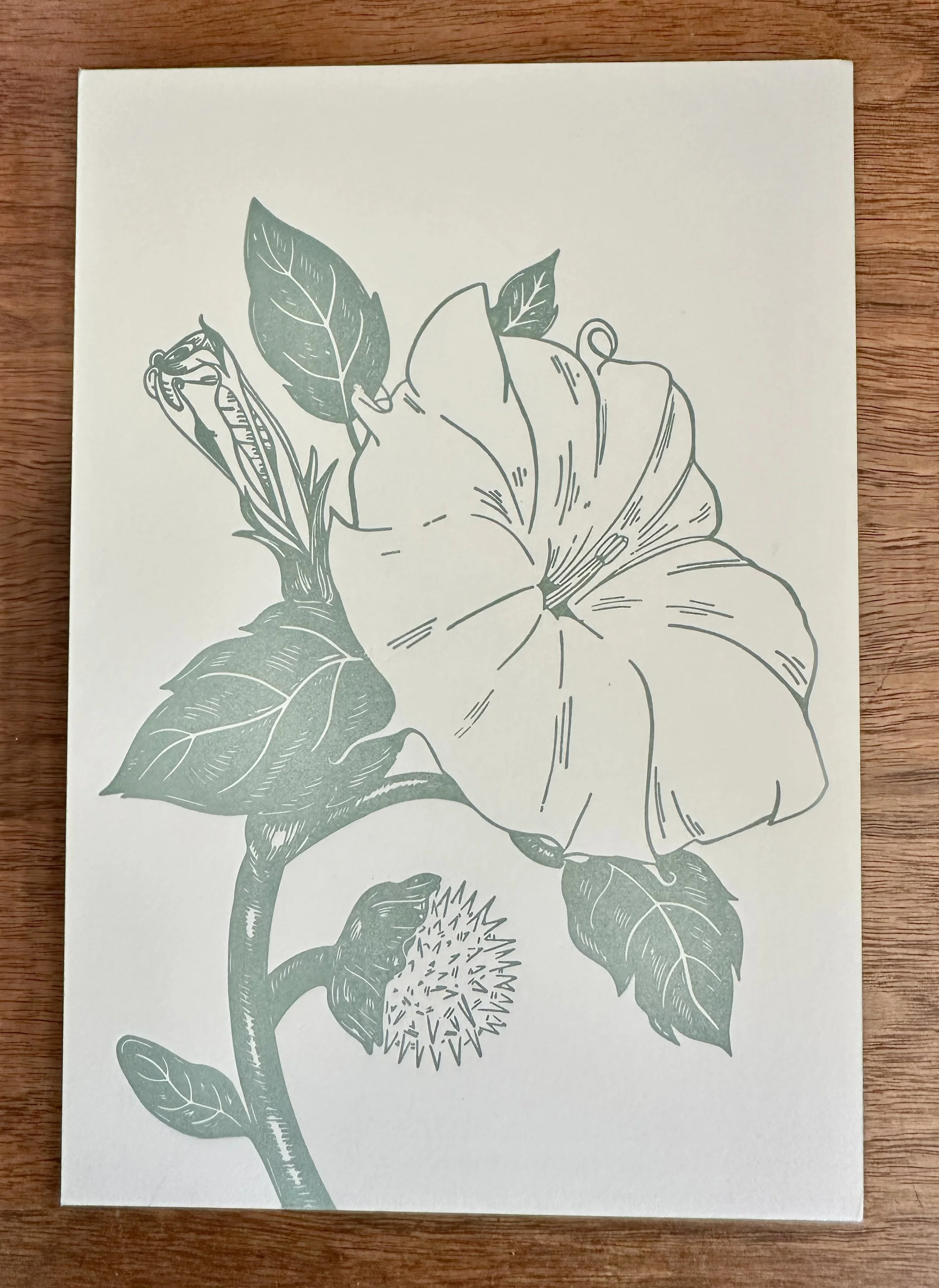
For our Kale Tree® studio, Datura is more than a botanical curiosity; it is a masterclass in organic geometry. We’ve long been drawn to its vespertine nature, the way its massive, pleated buds unfurl with mechanical precision at dusk. What began as a single illustration for a holiday card has become a permanent fixture in our creative vocabulary. We return to its silvered leaves and trumpet-shaped silhouettes not just for their beauty, but for their resilience. In this study, we look past the plant's reputation to explore its role as a cornerstone of the nocturnal ecosystem and a primary muse.
Nocturnal Synchronicity: The Hawkmoth and the Bloom
While much of the California landscape thrives under the sun, Datura wrightii operates on a different clock. As the heat of the day dissipates, the plant begins a coordinated sensory display. The massive white trumpets don't just open, they exhale. They release a heavy, intoxicating fragrance that serves as a GPS signal for the Sphinx Moth, or Hawkmoth (USDA Forest Service).
The relationship between the two is a marvel of biological engineering. To reach the nectar deep within the flower’s throat, the Hawkmoth unfurls a proboscis that matches the flower's depth almost perfectly. As the moth hovers, steady as a hummingbird, it becomes an accidental messenger, brushed with the pollen that will sustain the next generation of Datura. In the quiet of a desert or coastal evening, this interaction is one of the few movements in an otherwise still landscape, a silver-on-silver dance that has become a foundational reference for our studio's tonal palettes.
The Ephemeral Bloom
There is a quiet dignity in the plant’s timing. Each flower is a singular event, opening at sunset and offering its full splendor to the night. By the time the next morning’s sun reaches its peak, the bloom has already begun to retreat. This brief, intense window of beauty ensures the plant’s energy is focused on its nocturnal partners, creating a potent moment of connection that defines the rhythm of the desert night.
Deep Roots: A Legacy of Respect
In California, you cannot discuss Datura without acknowledging its profound cultural significance. For the Chumash and Tongva peoples, the plant, known as Momoy or Manit, is far more than a roadside wildflower. It is a sacred entity, historically integrated into rites of passage and sophisticated medicinal practices (Timbrook, 2007).
This history informs how we view the plant today. It isn't just ornamental; it carries a gravity that demands reverence. It is both beautiful and dangerous, as all parts of the plant are highly toxic if ingested (UC IPM). By respecting its boundaries, we can appreciate its role as a survivor. It thrives where other plants wither, providing a critical nectar source in arid environments and standing as a living link to California’s deep botanical and cultural history.
A Note for the Native Garden: The Rowntree Perspective
The pioneer horticulturist Lester Rowntree often spoke of the necessity of bringing the wild into the garden, provided we respect the plant's true nature (Rowntree, 1939). Of the Sacred Datura, she noted its paradoxical beauty and its ability to look lush and tropical while requiring almost nothing from the gardener.
To introduce this architectural giant into the landscape, there are a few considerations. In the wild, Datura wrightii can spread up to 15 feet. In a garden, it needs room to breathe and expand. It craves full sun and well-draining soil. It is drought-tolerant, often performing better with neglect than with over-care. Do not be alarmed if the plant disappears in winter; it is a perennial that retreats into its hardy root system, waiting for the warmth of spring to push it back through the soil. Finally, because of its high toxicity, it should be planted with care, taking into account its proximity to children and pets.
A Continuous Muse
Our work at the studio is an ongoing dialogue with plants like these, species that refuse to be ignored and offer a structural complexity we find endlessly inspiring. The Sacred Datura reminds us that the most profound beauty often reveals itself only when we are willing to wait for the sun to go down.
Works Cited
Rowntree, Lester. Hardy Californians. Macmillan, 1939.
Timbrook, Jan. Chumash Ethnobotany: Plant Knowledge Among the Chumash People of Southern California. Santa Barbara Museum of Natural History, 2007.
UC IPM. "Sacred Datura." University of California Statewide Integrated Pest Management Program.
USDA Forest Service. "Datura wrightii (Sacred Datura)." U.S. Forest Service Celebrating Wildflowers.
Crow Inspired Interior Design
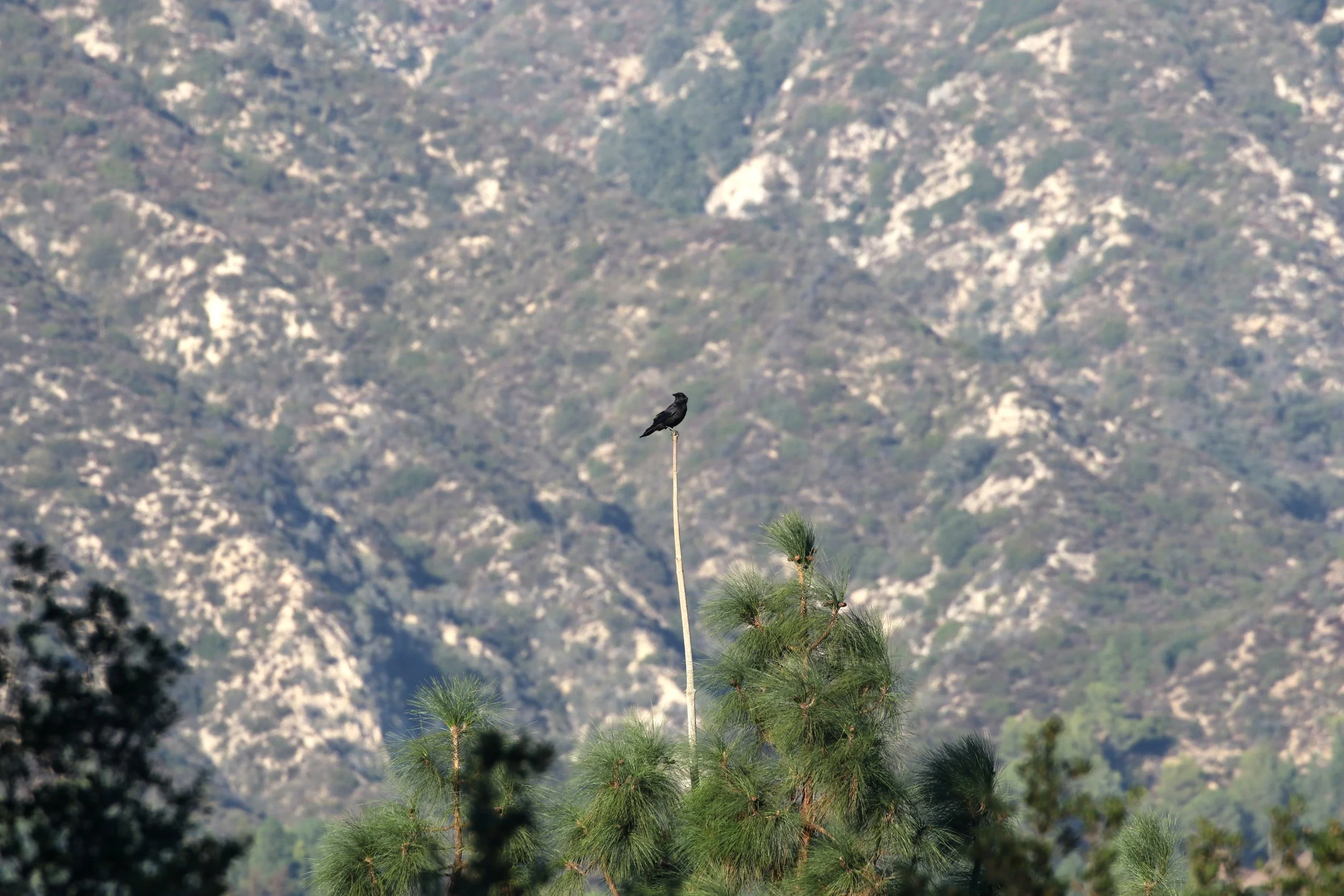
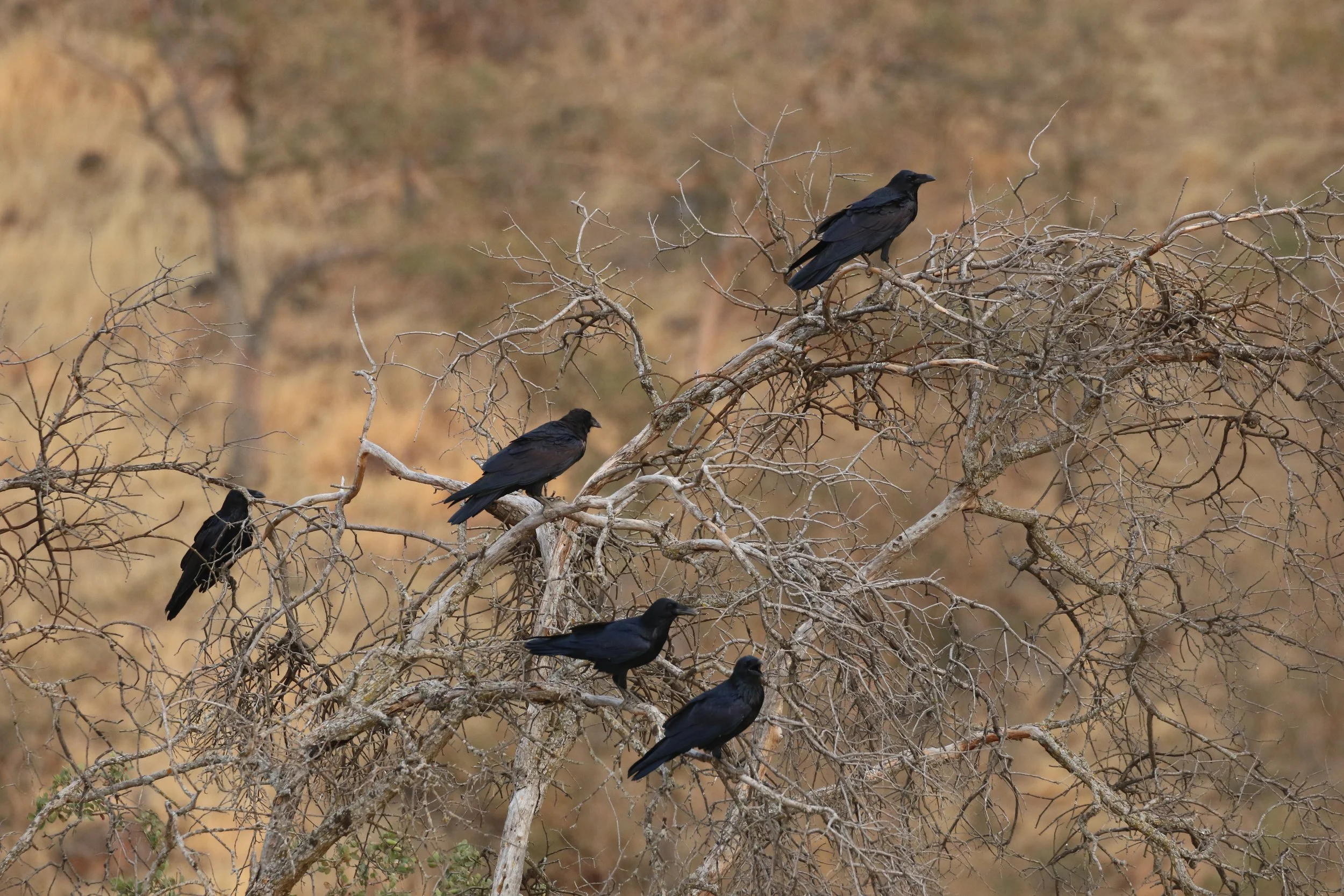
Nature supplies us with endless inspiration for interior design, and a cast of characters with beauty and personality that adds special nuance, especially when considering the bird kingdom. In particular, the crow has an interesting backstory that adds depth to its role as a muse for interior design.
The crow is an often misunderstood bird. It’s mysterious, quietly and intensely intelligent (some experts say it’s as smart as a seven-year-old child, and is the subject of many duplicitous symbols: it can represent doom and gloom, but also new beginnings and hope, depending on the cultural context. It’s also viewed as a trickster, in part because its high intelligence helps it outsmart foes. Even their coloring is varied, depending on light conditions.
All About Crows
Crows have a kind of gothic, ethereal look, with all-black feathers, legs, and beak. At a closer look, though, the crow’s feathers reveal iridescent coloring, with shades of purple, blues, green, and more. Rather than being a true black, light plays across their feathers, casting an almost metallic sheen.
Their eyes are a steely blue, and baby crows have pink coloring around their mouths, called a gape, which helps parents identify them, aids feeding, and marks them as youngsters to other crows.
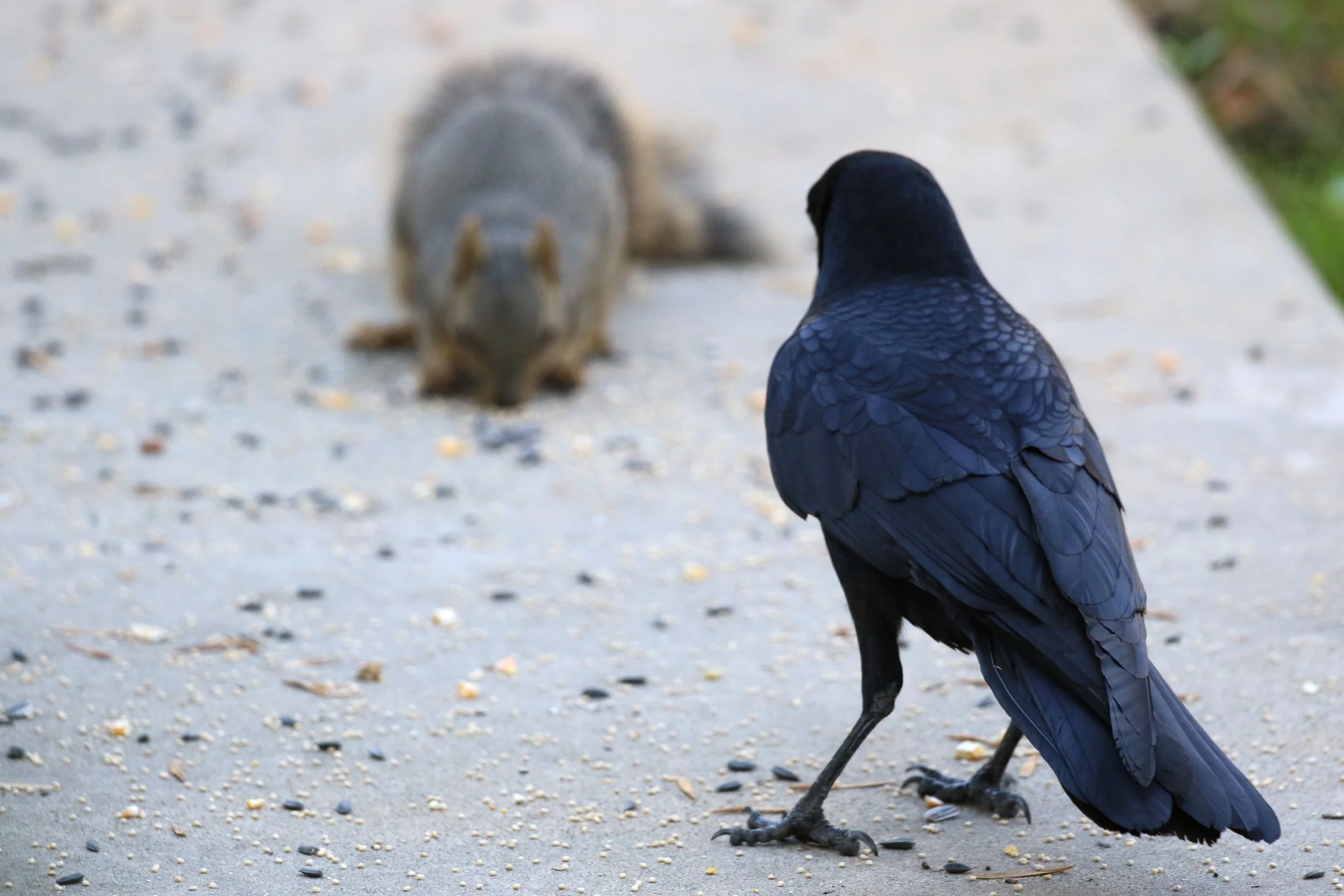
Behaviourally, crows are known for mobbing, where gangs of the birds gather together and dive-bomb and squawk at perceived predators. They might be protecting a nest or territory. This is often effective against larger predators, who often give up and leave, simply because of the number and frenetic behavior of the crows- it’s not worth the predator’s time.
The most common species of crow in the United States is aptly named the American Crow. They are highly communal, often gathering in large roosts of upwards of 100 birds to sleep together for warmth on cold nights.

Cultural and Symbolic Meaning of the Crow
Crows represent many different things across various cultures and folklore, some of which are oppositional. It’s no wonder the crow has such a duplicitous reputation.
In Native American folklore, crows have a deep spiritual connection and are considered messengers from the afterlife, serving as a connection to deceased ancestors.
In Celtic folklore, crows are associated with a warrior goddess who could shape-shift into a crow. She would appear prior to battles and hint at the outcome.
In Greek mythology, crows are associated with Apollo, the god of prophecy, and are seen as symbols of insight. In the Greek myth, Apollo sent a white bird to watch over his lover, who later betrayed him. The white bird delivered this news, and in his fury, Apollo curses the bird, turning the feathers from white to black.
How Crows Can Inspire Interior Design
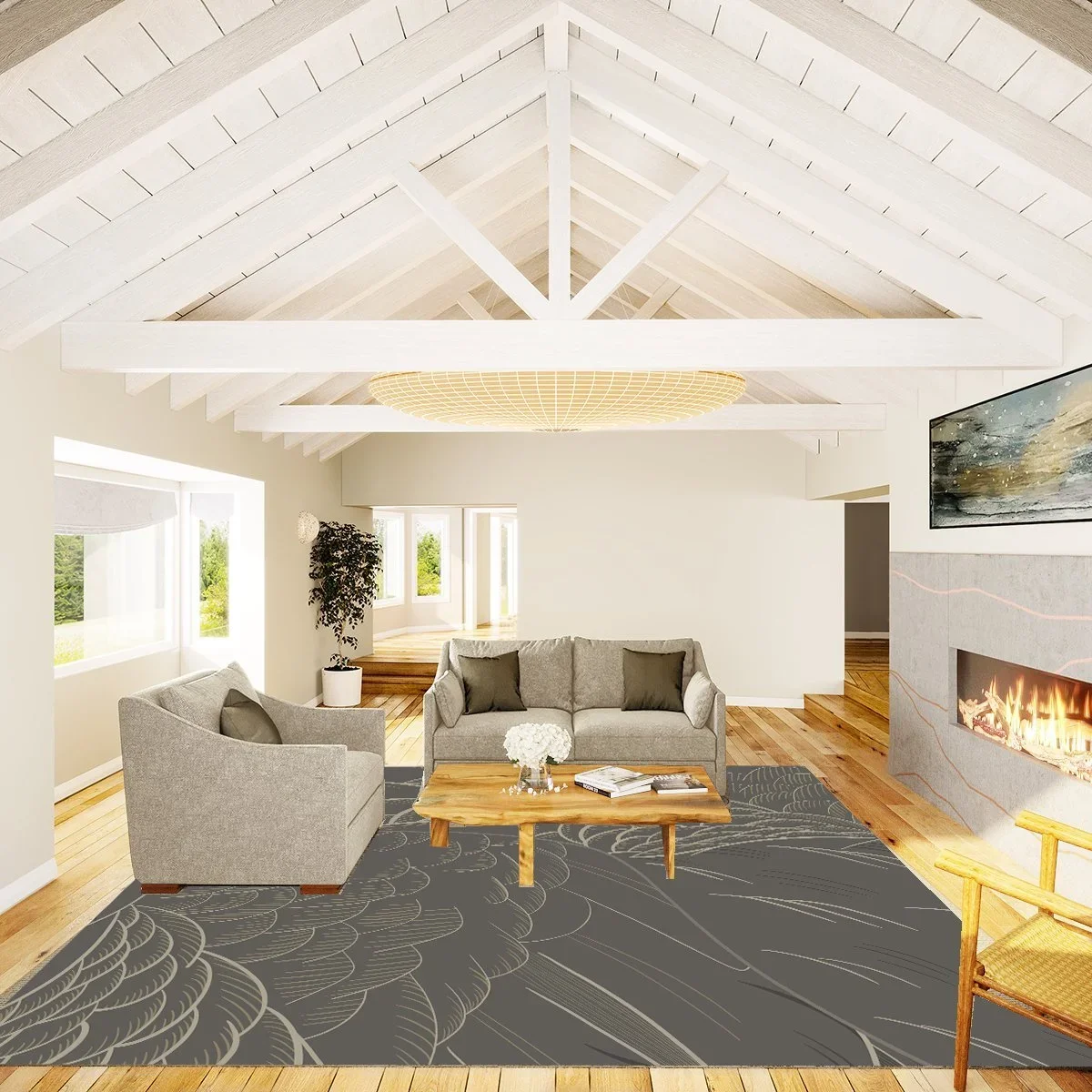
“Given the cultural and scientific context of the crow, along with its physical properties, the crow can be a meaningful aspect of biophilic design, especially as a motif in textiles, wallpaper, or in artwork,” says Sarah Barnard, WELL and LEED-accredited interior designer. Barnard is an expert in biophilic and wellness-focused design. Her projects are nature-inspired and consider the physical and emotional benefits when the built environment meets biophilia.
Beyond using its beauty to distill beautiful patterns and decor, “Considering and replicating some of the behaviors of this intelligent bird can add nuance to interior design,” she says. Here are some ways to use the crow’s qualities to inspire interior design.

Kale Tree® Crow
Look at Color in Different Ways
When choosing colors, consider how light might affect perception. As with the crow’s feathers, light conditions literally alter the colors, creating a totally different experience. Remember things like light sources, surface finishes, and the size of the space.
Design for Community
Crows are community-centric and deeply interconnected, fostering supportive bonds and yielding benefits. Designing with the same intention, including spaces that foster connection, gathering, and socialization, from furnishings that cluster for conversation to kitchen design that encourages gathering.
Pensive and Patient
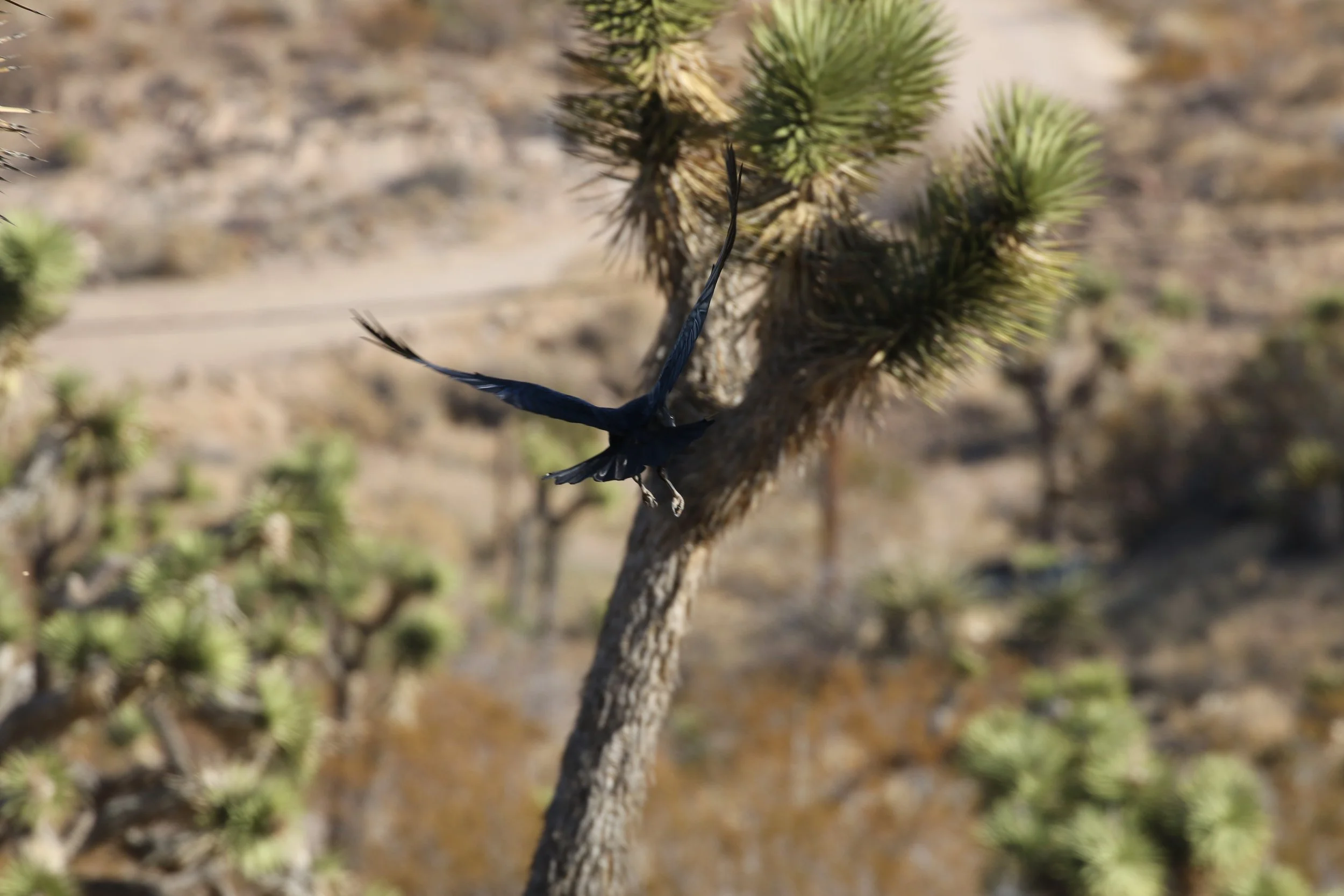
The crow is so smart, in part because of its stop-and-think approach to the world. Granting oneself permission to pause and to create space for patience to observe and consume the surroundings can be grounding. Create space at home dedicated to stillness before action, whether a meditation room, a window seat framed by a view, or a cozy reading nook.
The crow is intelligent, inclusive, and willing to reveal its dark beauty to patient viewers. In a world of digital overwhelm and surface-level impact, the crow is a reminder of the richness of layers, the rewards for patience, and how instincts are centering.
Sources:
https://eugene.wbu.com/american-crow
https://urbannature.blog/2019/11/13/crow-collective
https://www.audubon.org/magazine/meet-bird-brainiacs-american-crow
https://www.centreofexcellence.com/spiritual-meaning-of-a-crow
https://www.learnreligions.com/the-magic-of-crows-and-ravens-2562511
https://birdastic.com/are-crows-bad-omen-symbolism-meaning-explained/#:~:text=Conclusions,you%20choose%20to%20interpret%20them.
https://www.allaboutbirds.org/guide/American_Crow/overview#:~:text=Basic%20Description,rarely%20broken%20up
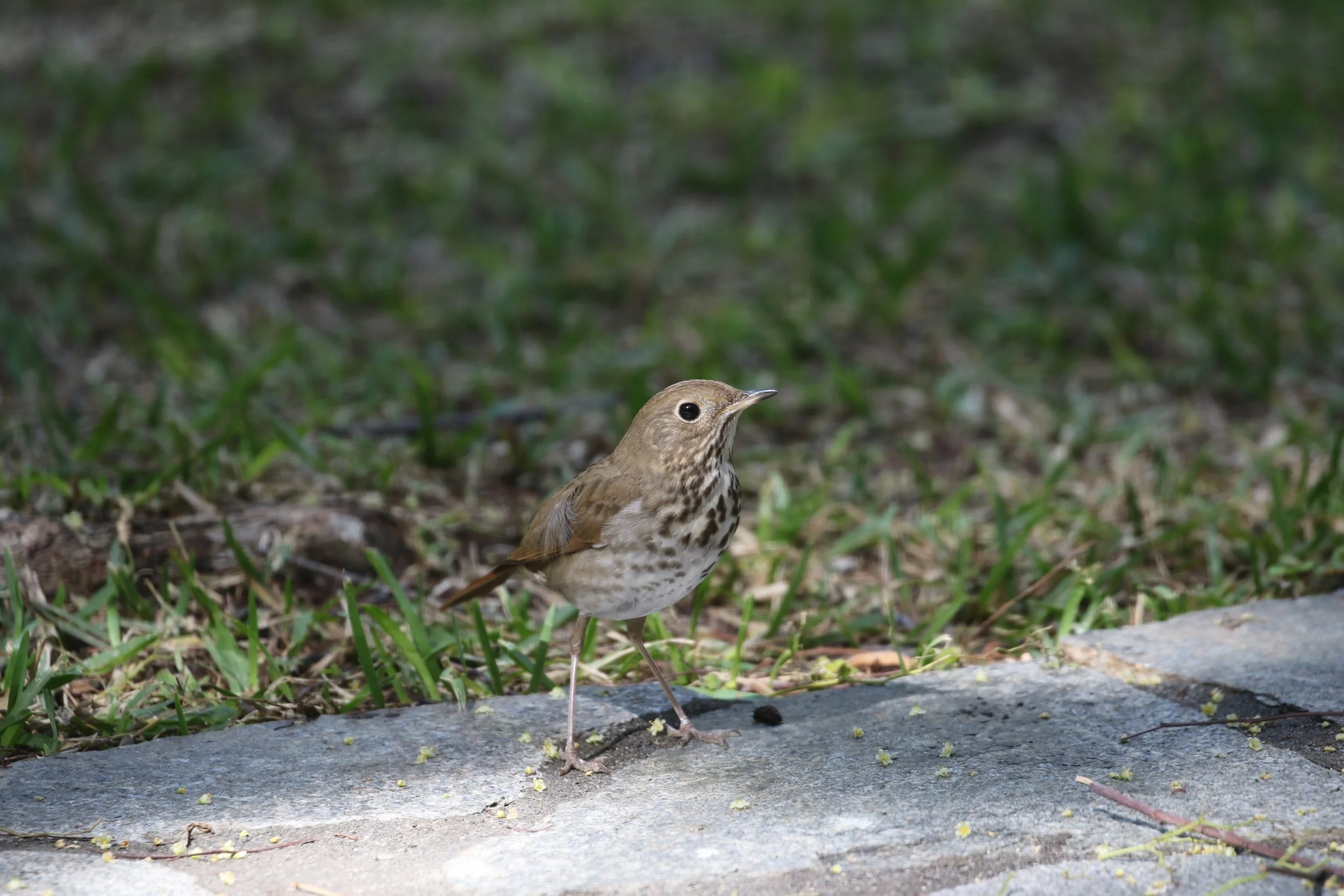
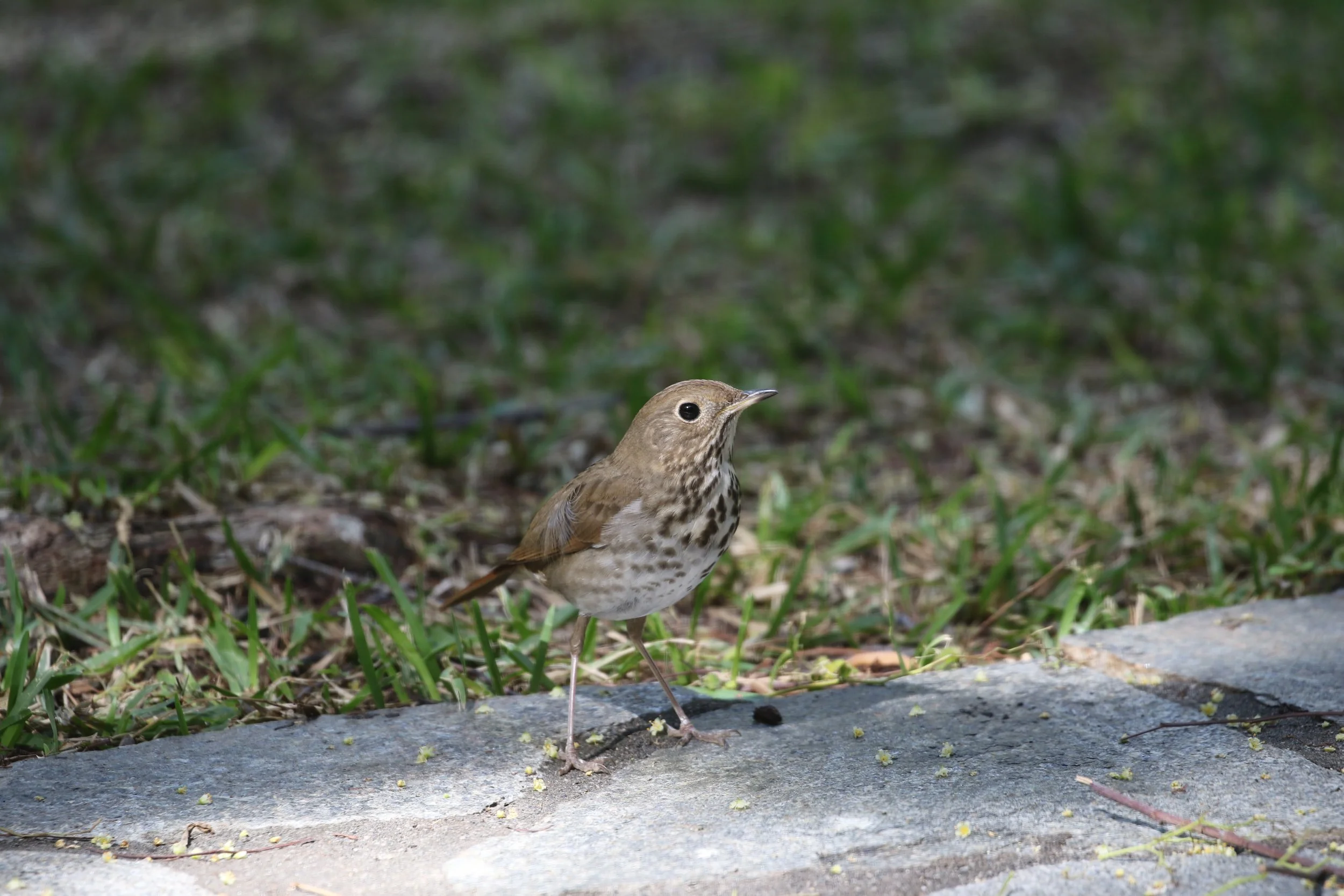
Hermit Thrush: Echoing Nature
While searching far and wide for creative inspiration can yield interesting results in interior design, sometimes the most meaningful inspiration is closer to home, right in the garden. When it comes to nature-inspired design, the backbone principle of biophilic design, where interiors strive to replicate the calm found outdoors, it can be helpful to be patient when observing nature, allowing the beauty to reveal itself organically.
The Hermit Thrush, a small bird with powerful musicality, can offer such inspiration, both in its physical appearance and how its lilting, lovely song is often heard before the bird is seen, dialing into multi-sensory awareness, another principle of biophilic design.
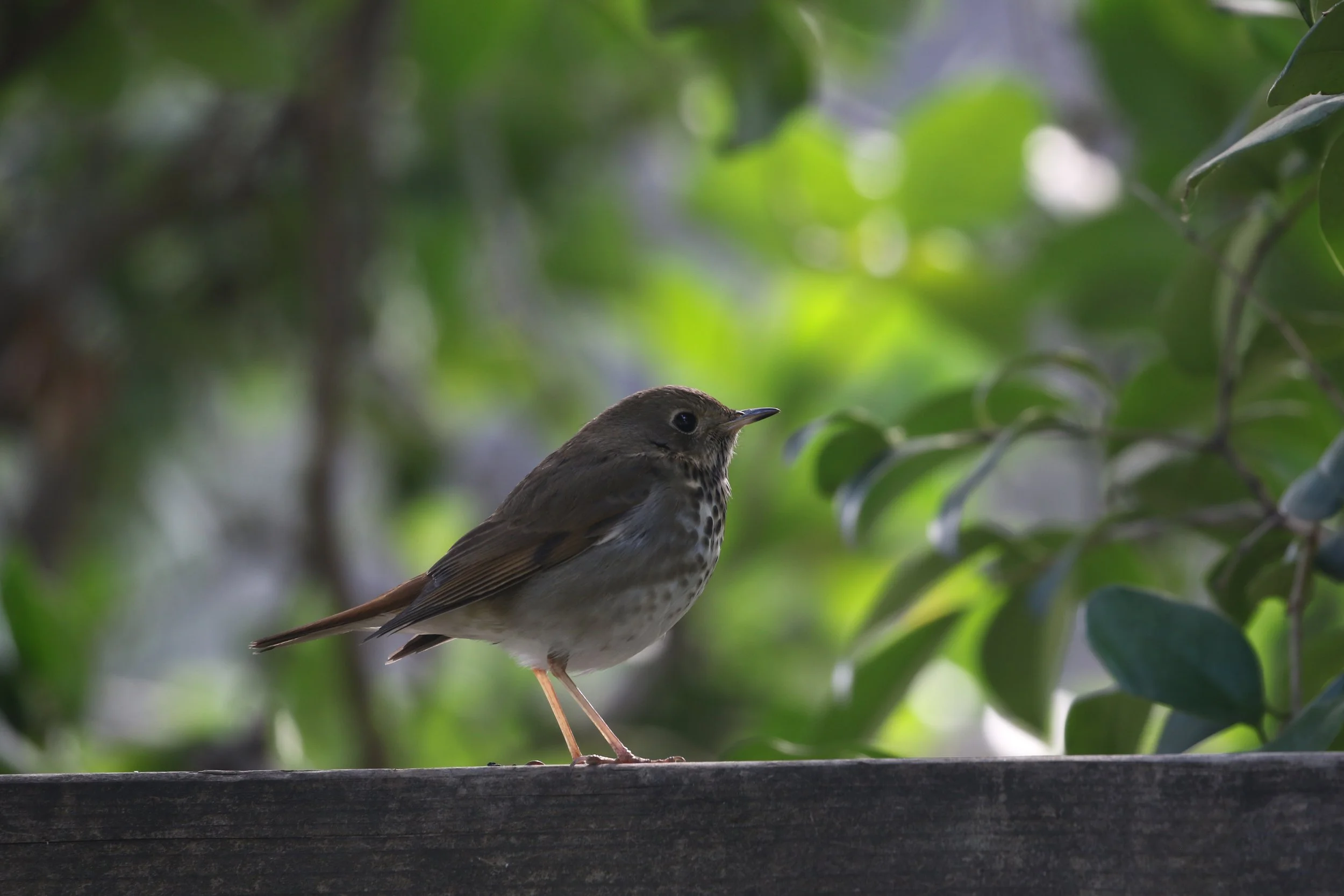
“The Hermit Thrush is one of the most beautiful birds to ever visit my garden,” says WELL and LEED-accredited interior designer Sarah Barnard, “It has long, graceful legs and a round chest with the most elegant patterning,” similar to a California Quail or scaly-breasted munia, also among her favorite birds.
It is a migrating bird, so chance encounters are elevated by the rarity. “The Hermit Thrush is a migrating visitor (to California), and so it's a wonderfully special time when they appear for the first time each year,” says Barnard.
It’s a small bird, generally about six to seven inches high, with a rich brown body and wings that flutter in flight. It likes forested areas primarily, and often lingers in dense underbrush or on the forest floor to forage for food. During feeding, it sometimes uses ‘foot quivering’ where its foot hovers over the ground and shakes grass and plant matter out for insects and other food.
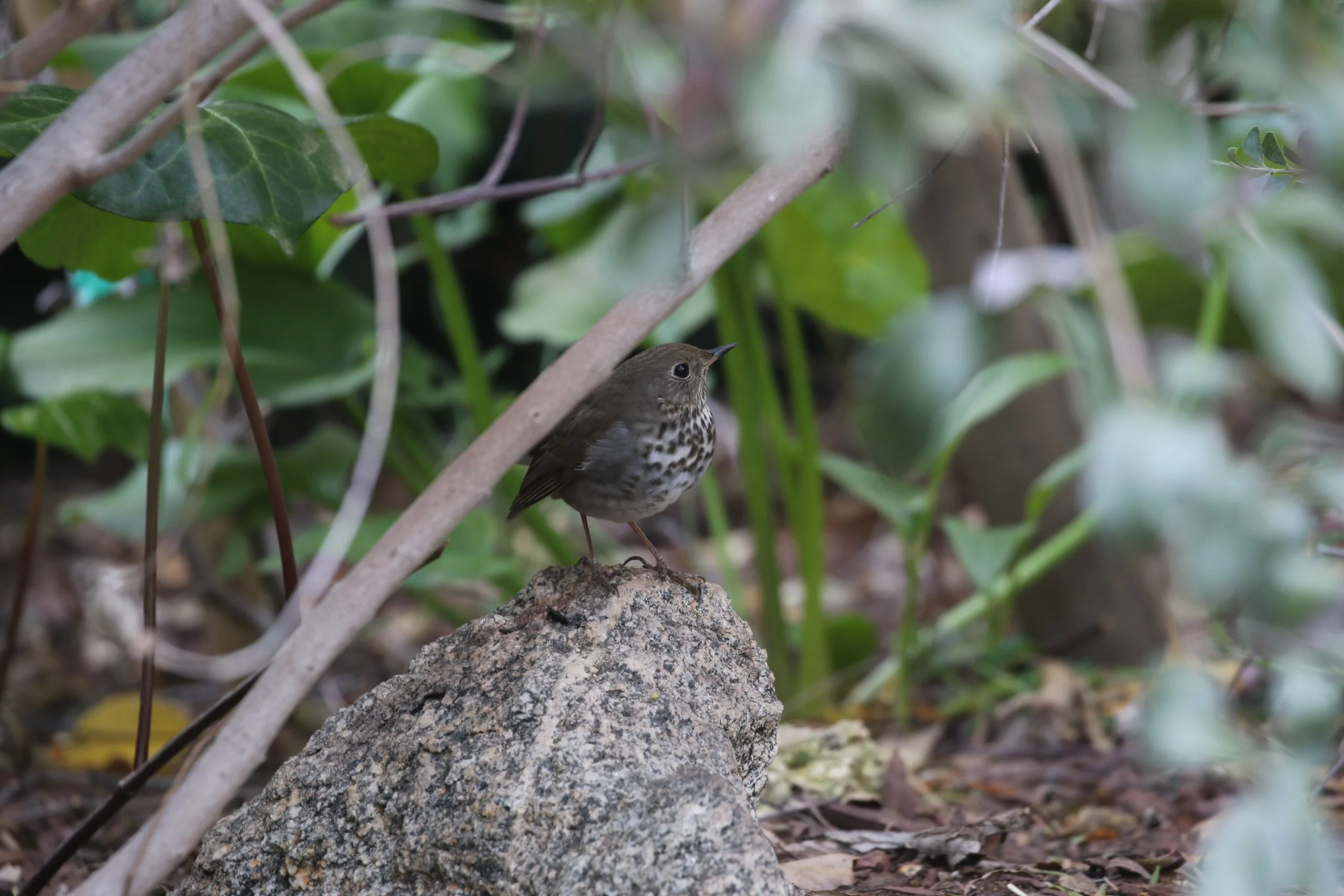
The Hermit Thrush often broadcasts its flute-like song from concealed perches, demonstrating how nature encourages the viewer to be present and to open the senses to experience. It also underscores how subtlety can be more attention-getting than making a commotion.
Symbolically, the hermit thrush represents stillness. Some find the bird spiritual.
Its song is described by experts as haunting, lyrical, and melancholy, tinged with longing, which makes sense in the context of the legend associated with the small bird.
The Legend of The Hermit Thrush
The bird’s backstory, The Sacred Song of the Hermit Thrush, is a Native American legend describing how birds got their songs, with hidden lessons about honesty, often passed from parents and elders to children, during teachable moments.
The story goes that long ago, birds had no songs. The Great Spirit had decided to bestow birds with song and staged a competition among birds to see who would win the gift of song by flying the highest. The Hermit Thrush, tiny compared to many of the other birds, was worried it would not be able to compete. It hid in the feathers of a large eagle, ultimately winning the contest dishonestly. Winning came at an emotional cost, though.
The Hermit Thrush was ashamed and flew deep into the forest to remain hidden in a self-imposed exile, although its song can be heard from a distance: beautiful, introspective, and slightly melancholy, expressing regret.
The legend says that the Hermit Thrush remains there in hiding, but when it sings, the power and beauty of the song is so strong that all other creatures stop to listen.
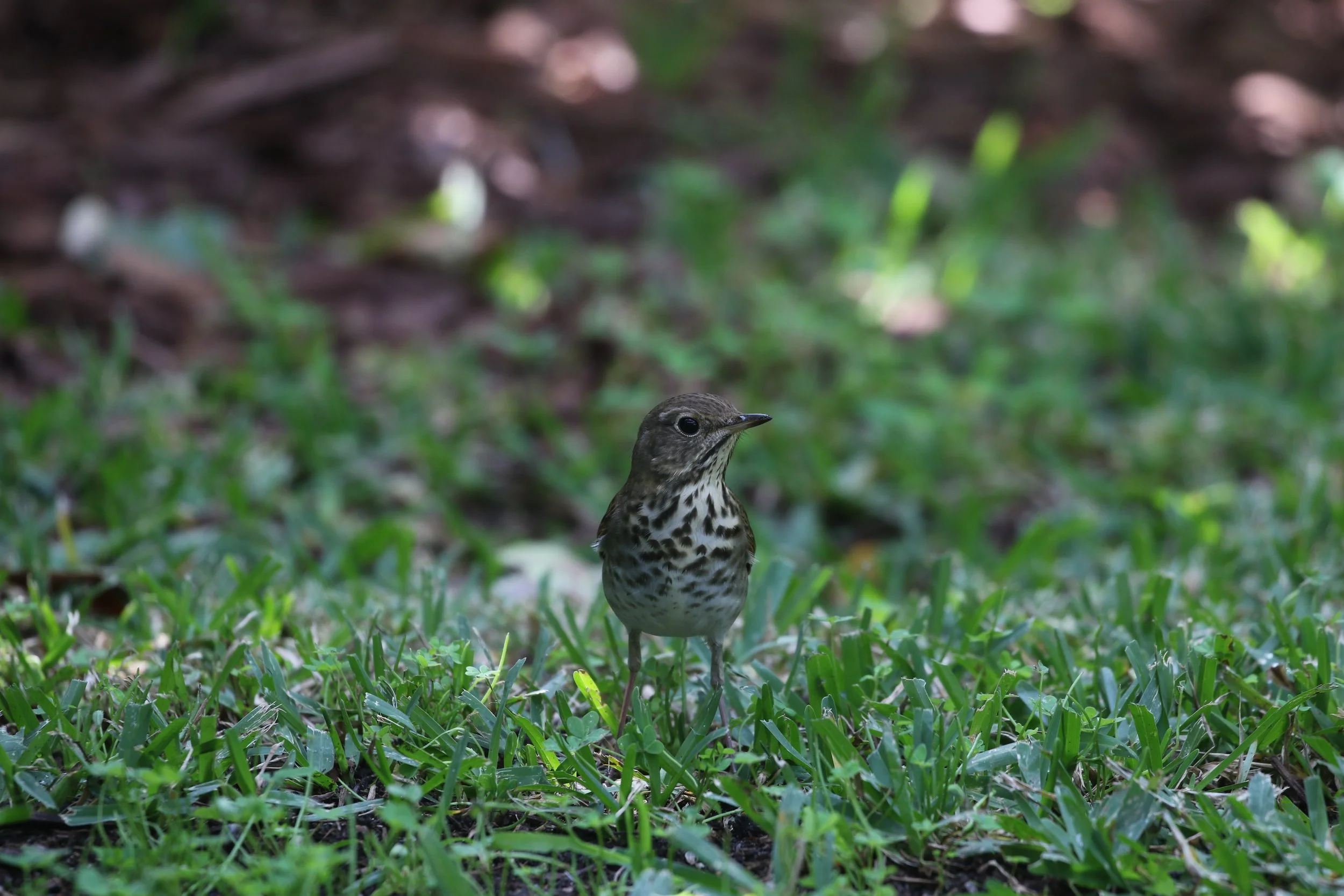
How the Hermit Thrush and Its Behaviors Influence Biophilic Design
The Hermit Thrush can serve as biophilic-influenced inspiration on a couple of levels. First, its rich coloring, elegant details, and textured feathers can be striking when physically replicated or reproduced on patterns, textiles, and other housing goods.
Second, turning inwards and considering some of the behaviors and patient perspectives of the tiny, often hidden, bird, and its nuanced interactions with its natural surroundings can serve as a foundation to try to bring calm.
The Hermit Thrush listens first, before echoing in song into nature. And in today’s digital-first, frenetic world, having the restraint to listen first, speak later is a skill not to be underestimated. Incorporating biophilic design elements, like those inspired by the Hermit Thrush’s habits, can help create a setting in which to be present and intentional.
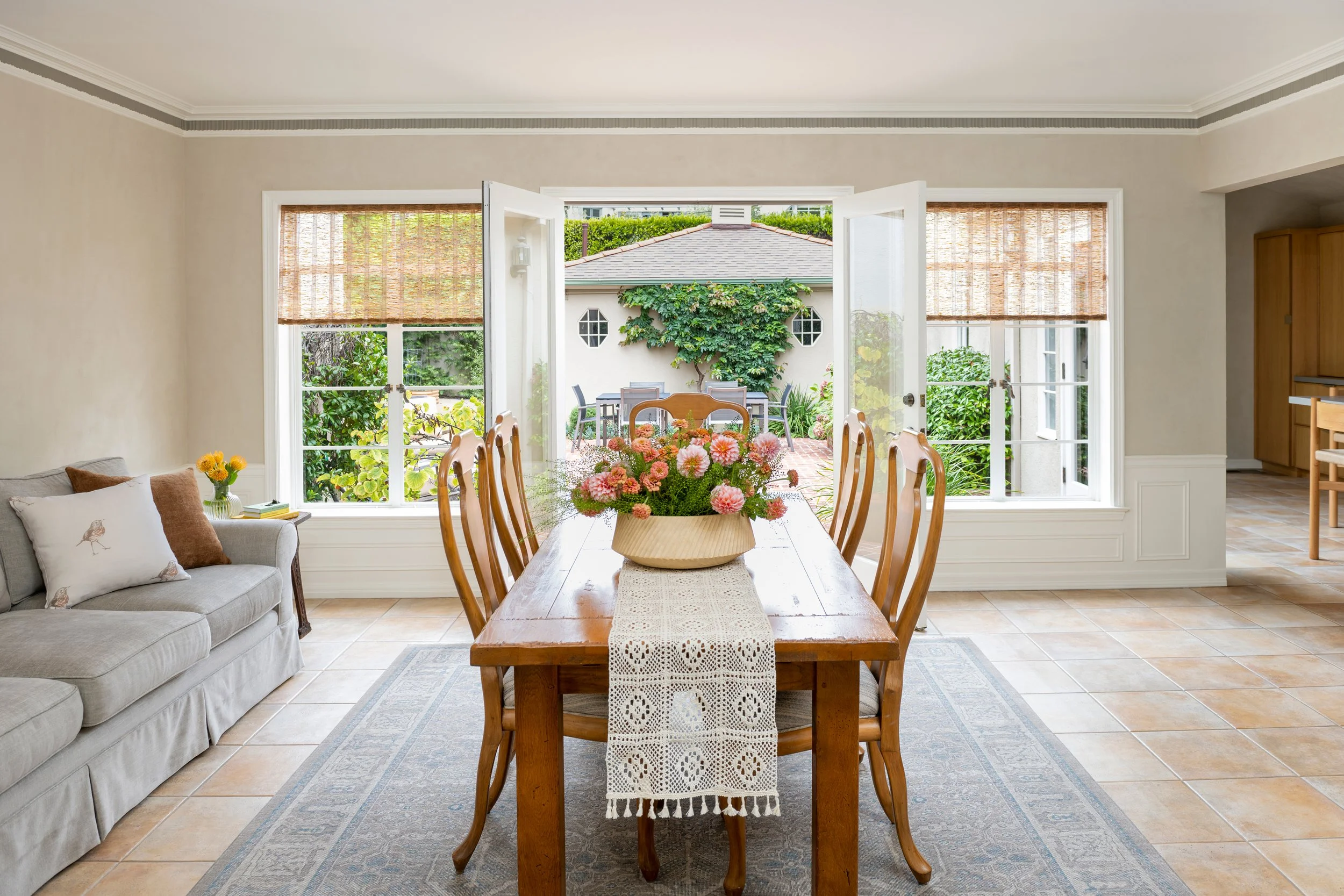
Kale Tree® Hermit Thrush
Here are some examples:
Follow the Cues of Nature
The Hermit Thrush is known for its patience and symbiotic awareness of its surroundings, which ultimately makes its song so powerful and calming. It uses its surroundings to be prominent, rather than competing with them.
In design, an option to replicate this is to follow the cues of nature organically. Instead of creating large focal points, let nature guide the eye and the design, using the path of light throughout the day for visual variety. Make transitions between spaces subtle, and use colors and material selections that mirror those seen in the local landscape, so the inside feels immersed in the outdoors.
Use the Refuge/Prospect Dynamic
Another principle of biophilic design is the refuge/prospect dynamic. The idea is to strike a balance between safety (shelter) and opportunity (in nature, this may include foraging for food, or similar). The Hermit Thrush is known for singing from concealed spaces, so an option to create that sense of safety is to leverage design elements in interior design, such as with a cozy reading nook, nestled in a corner, with a view to the outside, varying ceiling heights, to promote awareness of space, but with concept of shelter overhead, a window seat, or a covered porch.
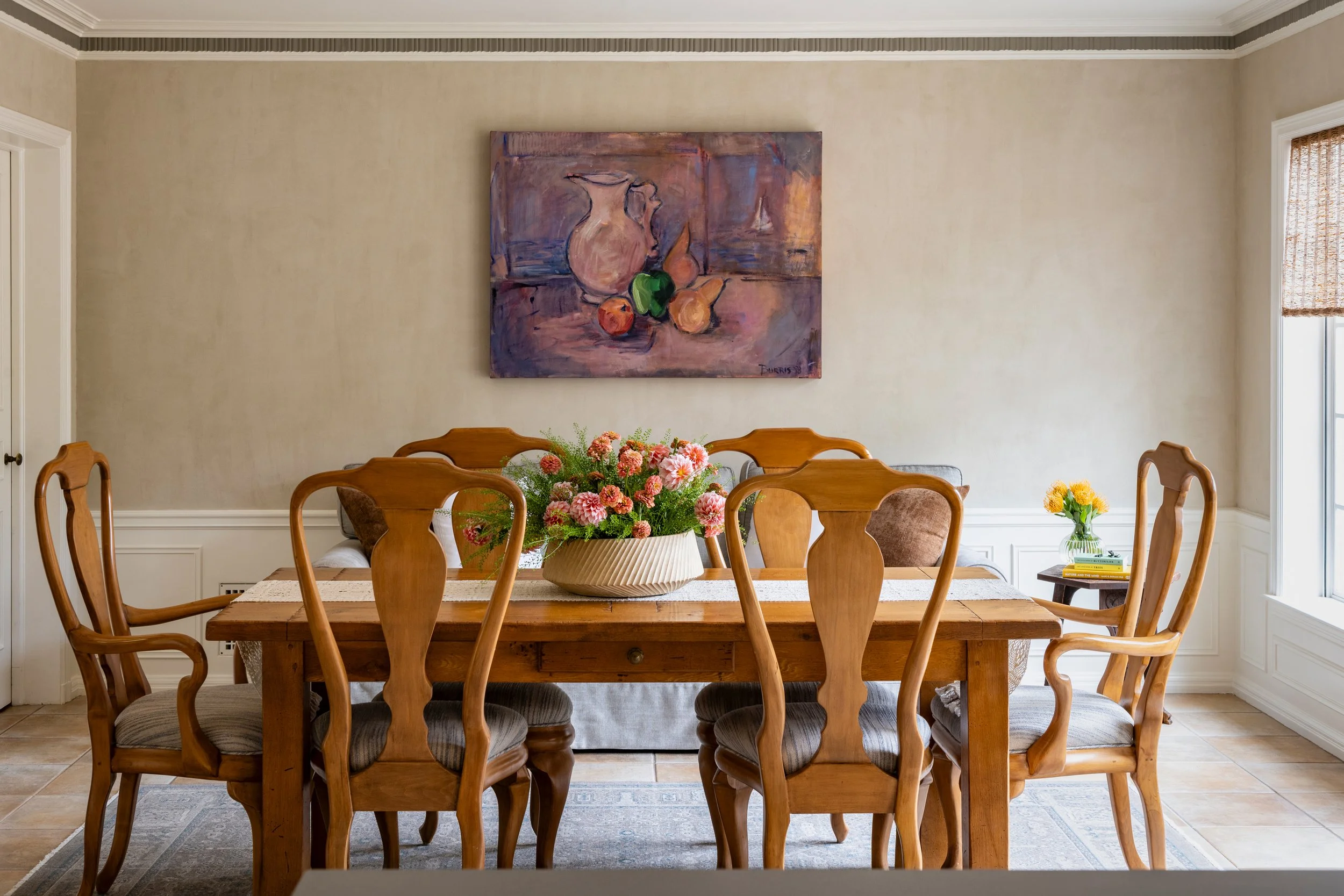
Create Space for Stillness
The Hermit Thrush is known for stillness. Create space at home that can promote stillness, presence, and calm. Use calming color palettes, and embrace a digital-free space, where there are no screens, or screens and other tech are concealed. Consider textiles and other decor that absorb sound to allow for quiet. Comfortable furniture can encourage lingering, while having cues for intention, such as having painting, or journaling materials at hand, can encourage calm.
What all of these design elements, and the habits of the Hermit Thrush demonstrate is that there is inspiration readily available all around; it is often a question of being still, aware, and open to the possibility.
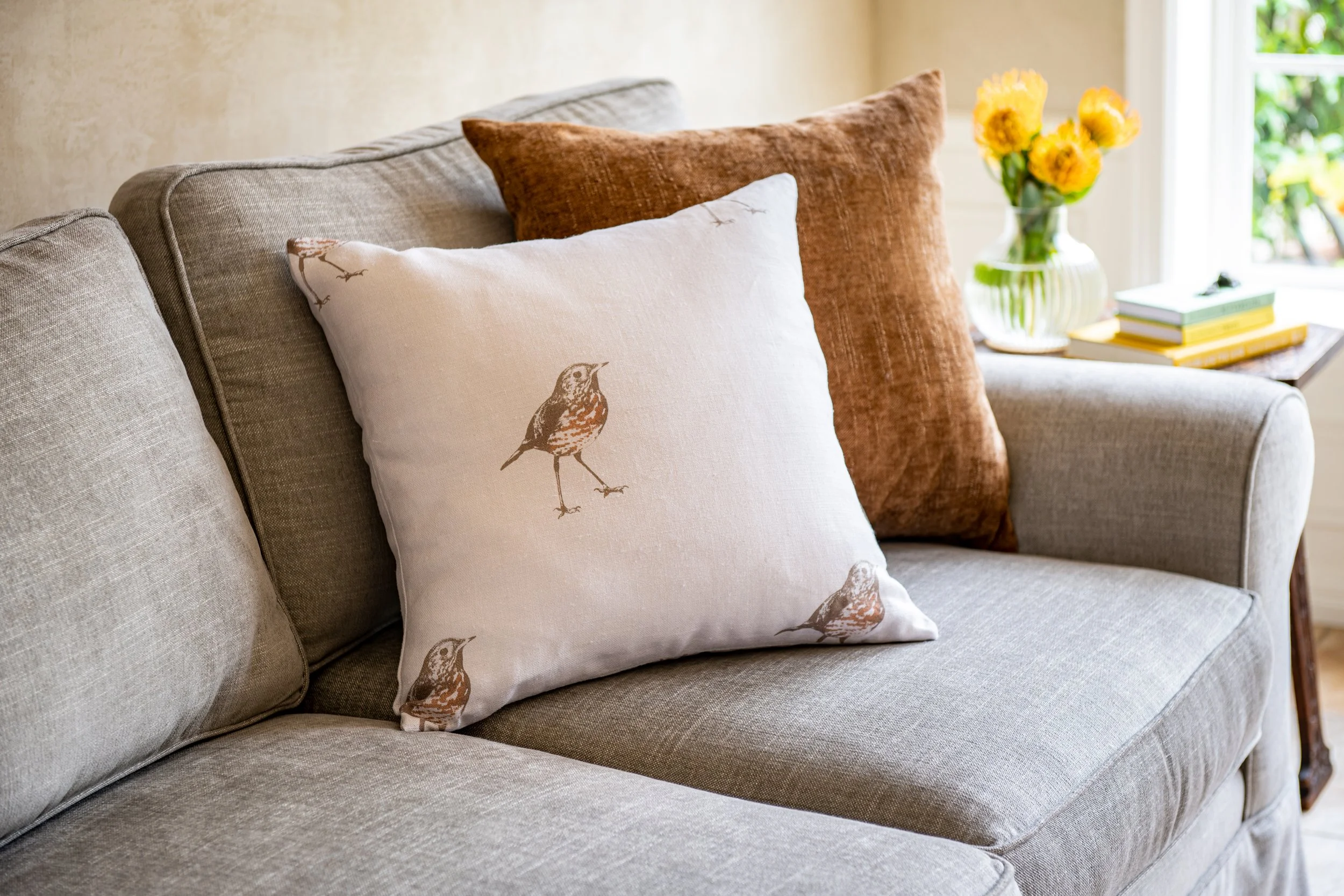
The Hermit Thrush textile in Belgian Linen and organic cotton sateen will be available on the Kale Tree site soon in four colorways! Hermit Thrush is also soon to be available in unpasted wallpaper. For urgent orders, or custom colorways, please contact the studio directly.
Sources:
https://www.allaboutbirds.org/guide/Hermit_Thrush/overview
https://www.audubon.org/field-guide/bird/hermit-thrush
https://www.oneidaindiannation.com/the-legend-of-the-hermit-thrush/
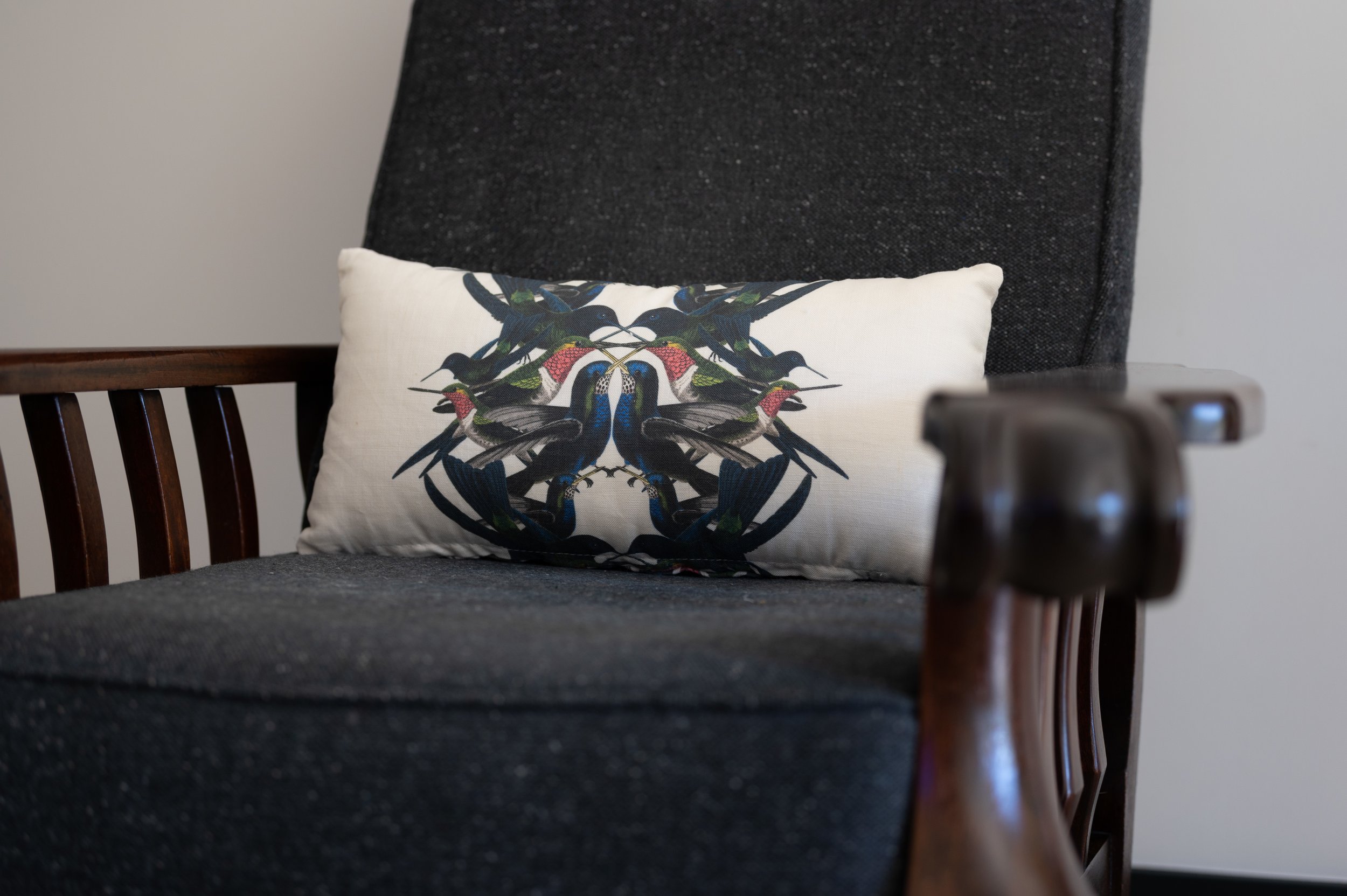
Kale Tree Holiday Gift Guide
Give the gift of Biophilic design this holiday season with some of our favorite nature-inspired goods from Kale Tree.

Matilija Poppy Textile - Natural
The Matilija Poppy, a beautiful and unique California native wildflower, inspires this hand-drawn textile design from Kale Tree. This textile is printed on luxurious Belgian linen, ready to be transformed into an array of customized home goods like pillows, drapery, and bedding that will bring the joy of a Californian super bloom into the home of our gardening enthusiast friends and family.

The hand-drawn pattern of the Kale Tree Tree Moth rug is inspired by moths fluttering at dusk. This pattern seeks to add a quiet beauty to any room, a perfect gift for those who appreciate the subtle beauty of nature's pollinators. Each rug is handmade to order in either Vegan Bamboo Silk or 100% New Zealand Wool for a luxuriously soft feel underfoot. Available in 5 x 8, 8 x 10, or 9 x 12 to suit any home size.

Ginko Indoor Outdoor Light Fixture
The Ginko leaf is a symbol of peace, healing, and longevity that often appeared in the designs of the Art Nouveau and the Arts and Crafts movement. This beautiful Ginkgo indoor/outdoor light fixture made of cast bronze Ginko leaves cradling a milk glass globe is sure to be a treasured gift for those who appreciate the beauty of art and nature.

Give the gift of nature-inspired healing spaces with this eco-friendly wallcovering from Kale Tree, featuring a hand-drawn pattern inspired by Mallow blossoms. Commonly called Abutilon or Flowering Maple, this woody shrub is best loved for its delicate drooping blossoms. Available in 3 colorways (Midnight Forest, Evening Mauve, and Dusty Dawn), we love the soothing color of Dusty Dawn as it evokes the calm of dusk. This wallcovering is also PVC and VOC free, contributing to a healthy home environment.

The Cholla Tote is an excellent option for those looking for something special to include in this year's holiday stocking. This design is based on a pen and ink illustration of a Cholla cactus, native to northern Mexico and the Southwestern United States. Hand-printed on 100% certified organic cotton, this tote makes a beautiful yet practical gift.
This selection of bespoke nature-inspired goods helps connect our home interiors with the beauty and peace of the natural world. Give the gift of a mindful home this holiday season, exclusively available through the Kale Tree online store.
Sarah Barnard, WELL AP + LEED AP, is a leading designer of personalized, sustainable spaces that support mental, physical, and emotional wellbeing. She creates highly personalized, restorative spaces that are deeply connected to art and the preservation of the environment. An advocate for consciousness, inclusivity, and compassion in the creative process, Sarah has appeared in Architectural Digest, Elle Décor, Vogue, HGTV, and many other publications. In 2017 Sarah was honored as a “Ones to Watch” Scholar by the American Society of Interior Designers (ASID).
Crazy Plant Ladies: Radical Naturalists and Environmental Preservation
As a team comprised of plant collectors and nature lovers, many in the Kale Tree studio are no stranger to the phrase "crazy plant lady." Crazy plant lady has been re-contextualized among plant enthusiasts to describe some of the most influential and admirable environmentalists, naturalists, and plant lovers. Many adopt the term as a point of pride. In the design field, "crazy plant ladies" have paved the way for advances in sustainability with far-reaching effects, including an influence on biophilic and eco-friendly interior design practices. To celebrate a few of these historic figures, we hope to share some information and appreciation for a few notable women.

Diana Beresford-Kroeger
Diana Beresford-Kroger is a medical biochemist, botanist, and author, who uses her range of knowledge to educate and promote environmental preservation. Beresford-Kroeger has advocated for and educated around the medicinal benefits of trees and plant life, sharing information on the benefits and effects of various vegetation for health. To fight climate change, she developed a "bioplan" with tree planting at its foundation, aiming for everyone on earth to plant six native trees over six years in their communities.
Her home arboretum boasts a vast collection of various hardy and rare tree specimens. She is known for freely gifting seeds and saplings to help spread and replant these trees, many of which were used for a range of benefits by indigenous communities before being demolished through colonization.

Some of the more unique theories from her work have foundations in the Celtic belief system she was raised with, and many of the medicinal benefits of plants she has studied are rooted in Celtic traditions, which may also contribute to her profound respect and appreciation for trees. One of her more intriguing beliefs, while disputed, is that the healing benefits of trees are released through their aerosols, offering curative properties when inhaled. Beresford-Kroger often touts the healing benefits of time spent in forests, which she in part attributes to these aerosols. While some desire more support for these claims, many of the benefits of time among trees are widely documented. Her all-encompassing perspective, and impressive scientific research, have made her a widely celebrated figure, offering an expansive view of the power of nature.

Lorrie Otto
Lorrie Otto was an environmentalist, speaker, and author. She advocated against the use of pesticides after being alarmed by dead birds near her Milwaukee home, which paved the way for the nationwide ban on DDTA.
Otto was a proponent of natural landscaping and biodiversity, speaking against the water waste of lawns and encouraging people to transform their yard spaces that conserve wildlife and their natural habitats.
Her messaging inspired the organization "Wild Ones," a group that promotes sustainable and environmentally friendly landscaping. Nine people founded the group after they attended one of Otto's lectures. As a result, natural landscaping has seen a progressive increase in popularity, making its way to the rule and not the exception in many personal garden spaces. The widespread normalcy and embrace of natural landscaping and its far-reaching positive effects on the environment may often be attributed to Otto's advocacy efforts.

Beatrix Farrand
Beatrix Farrand was a founding member of the American Society of Landscape architects and the only woman in the original group. In addition to being the first female landscape architect in America, her renowned landscapes appeared in private residences, the White House, and a range of parks, botanic gardens, and campuses.
She advocated for the importance of nature to improve personal well-fare and spoke about the value of public garden spaces. Her work was known for considering the relationship between natural and built spaces, using landscaping techniques to improve aesthetics in architecture. In addition, she was known for her engineering ability, creating intricately designed gardens and often focused on native plantings. Farrand's visionary approach and widely celebrated landscapes helped pave the way for many women in the field.

While countless women have contributed to environmental preservation through their love of nature, these are a few who greatly inspire our studio. Their innovative approach to preserving, celebrating, and sharing nature encourages out-of-the-box thinking and emphasizes the importance of education. A common understanding between these and most "crazy plant ladies" is that we are participating members of our natural environments. Nature is something to be shared, cherished, and preserved. We hope to carry these themes in our studio and share our passion for nature throughout our designs.
Kale Tree + Healthy Home Decor

Butterfly Dreams Bed by Kale Tree.
Inspired by nature, fueled by community, and made with love. At Kale Tree, we aim to uplift the global community through nature-inspired home design. The source of our namesake is a beautiful, dark green shrub with kale-like curly leaves, known as Polyscias guilfoylei. This kale-like tree is resilient and hardy despite its delicate appearance. Like many of us, it takes time to grow but needs little coddling to succeed. The beauty, versatility, and self-sufficiency of this leafy evergreen aptly represents Kale Tree and our mission to promote health and well-being by strengthening our connection to nature, inside and out.

Megalograpga moth. Photo by Sarah Barnard.
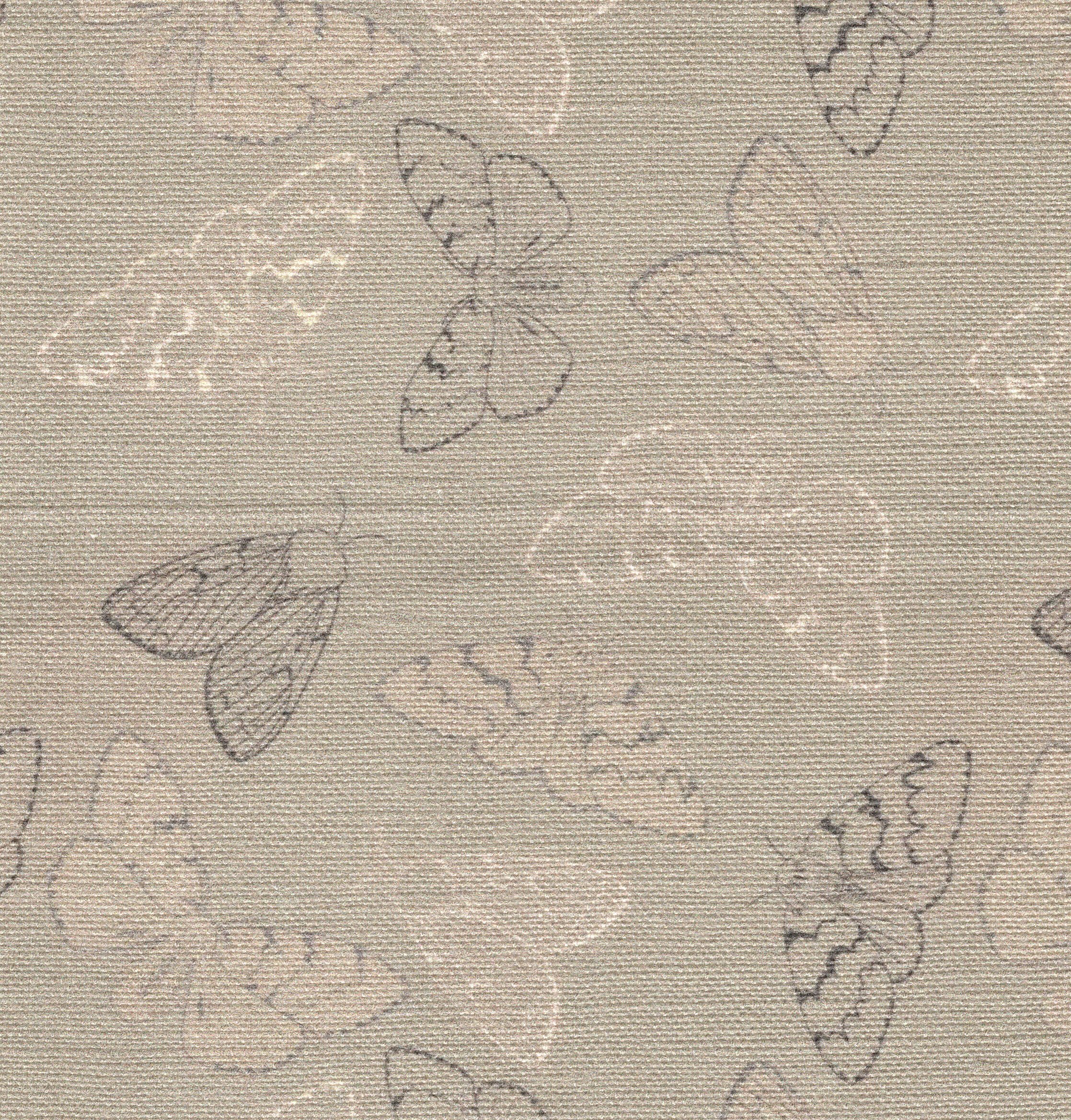
Moth Textile by Kale Tree.
Based in Southern California, we believe that our home should reflect what calms and inspires us. We find endless inspiration from the surrounding mountains, beaches, and desert landscapes. Whether it's the California native Matilija Poppy or a coastal Mangrove Tree, we extend our love of nature through thoughtful biophilic home design.

Matilija Poppy. Photo by Sarah Barnard.
Kale Tree is comprised of nature-loving creatives who value community and personal wellness with a shared commitment to conscious, sustainable home design. Founded by WELL- and LEED-accredited interior designer and naturalist Sarah Barnard, Kale Tree aspires to improve accessibility to ethically produced, eco-friendly home decor while making the conscious effort to promote wellness through socially and environmentally responsible home design.
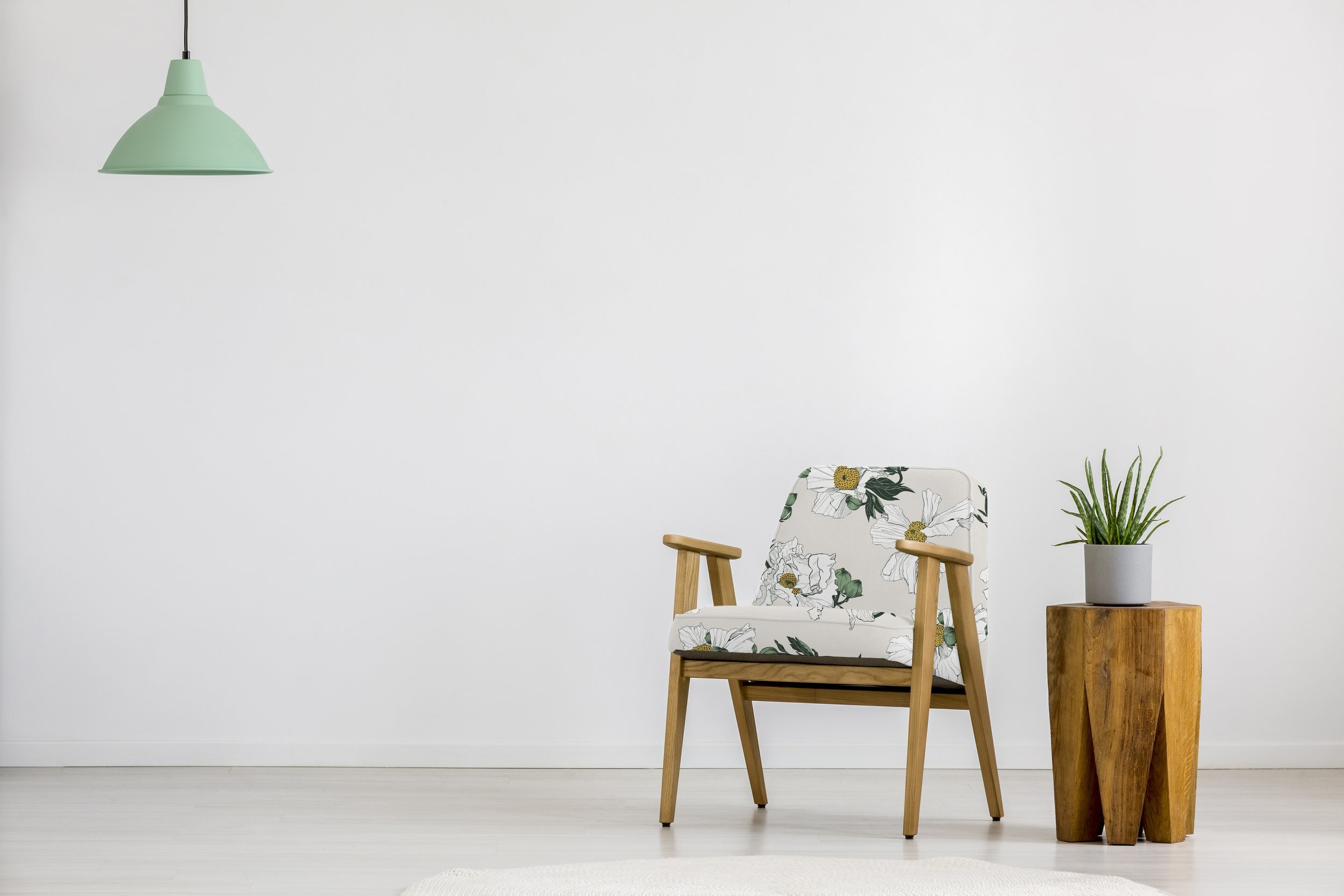
Matilija Poppy Textile - Natural by Kale Tree.
We believe that individual wellness is directly connected to nature. Biophilic home decor has the potential to evoke similar mood-boosting effects to spending time outdoors. Our studio understands the importance of uplifting the well-being of each other and places equal value on lasting environmental health. Working from a cosmopolitical standpoint, we aim to uplift our community through closeness to nature by designing our products with conscious intent, considering the environment at every stage of our production process.

Mallow Textile in Dusty Dawn by Kale Tree.
Natural and Organic Fibers
Natural fibers provide a unique tactile experience and biodegrade more naturally over time. Kale Tree offers products made from natural and organic materials, including textiles made from Belgian Linen, New Zealand Wool rugs, and furniture made from sustainable hardwoods.

Mangrove Rug by Kale Tree.
Vegan Choices
As naturalists and animal lovers, we understand the importance of choosing products that align with your values. All of our area rugs are available in Bamboo Silk, a vegan fiber with a soft sheen derived from bamboo plants. Our textiles and wallpapers are made from cruelty-free plant-derived materials.

Mallow Wallcovering in Midnight Forest by Kale Tree.
FSC certified Hardwoods
Our furniture is handcrafted in Los Angeles from Forest Stewardship Council (FSC) hardwoods. FSC certification ensures that the hardwoods we use are sourced in an environmentally responsible manner to help support sustainable forest management.
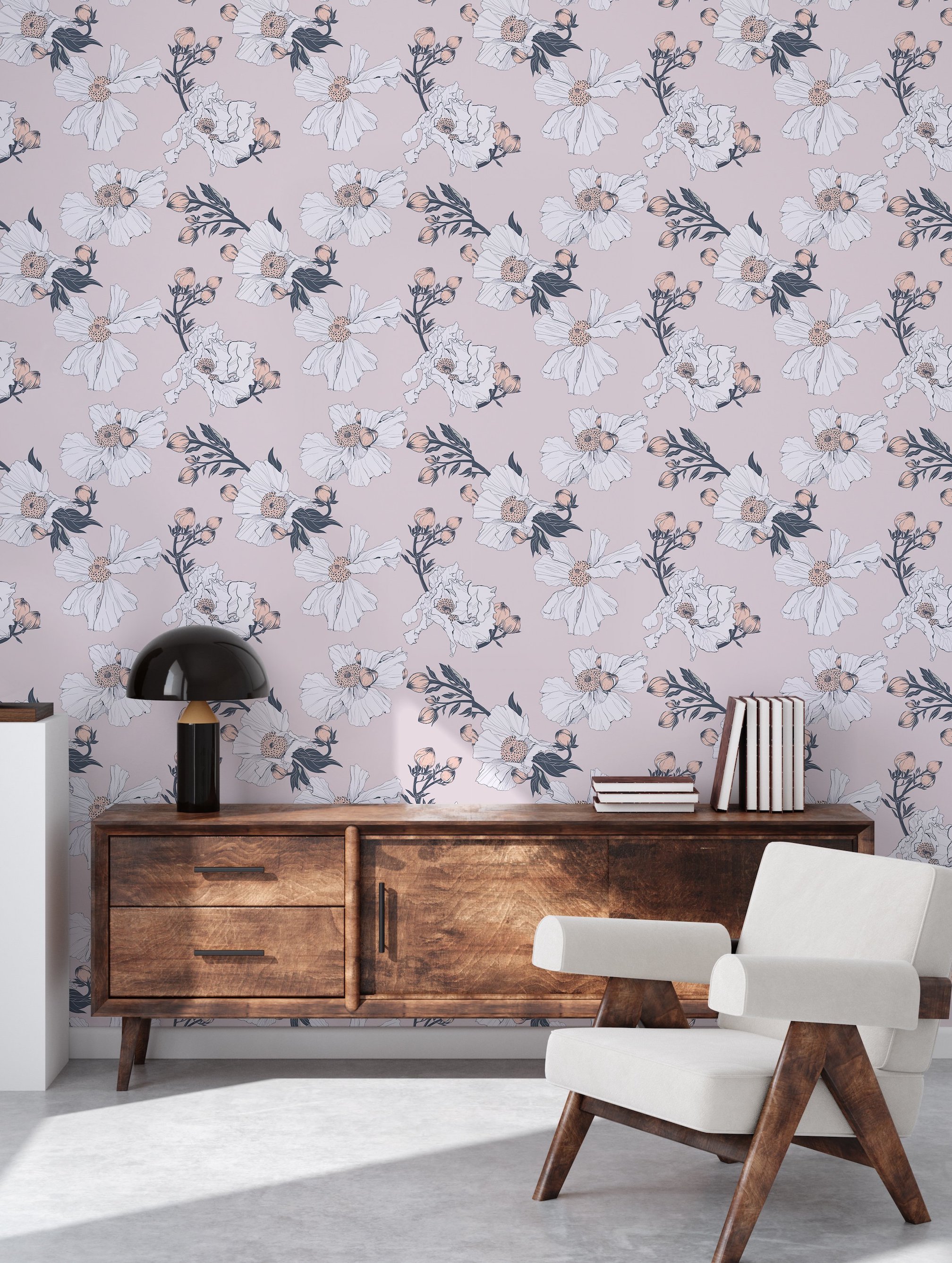
Matilija Poppy Wallpaper - Putty by Kale Tree.
Greenguard Gold Certified
We believe that a healthy home is a happy home. Kale Tree's PVC-free, low-VOC wallcoverings help maintain healthy indoor air quality and are Greenguard Gold Certified.

California native Lupine and Salvia. Photo by Sarah Barnard.
Kale tree works closely with a team of like-minded artists, designers, and artisans from diverse backgrounds to create healthful, ethically produced goods inspired by the intersection of art, design, and nature. All goods are made with love and designed with the intent to bring beauty, health, and joy to you and your home.

Matilija Poppies: A Fried Egg(less) Dream
There is really nothing on flower earth quite like the Matilija Poppy. While, yes, there are other wonderful poppies that are full of ruffle-y delight—- this one is no typical clump of California poppies.

There is really nothing on flower earth quite like the Matilija Poppy. While, yes, there are other wonderful poppies that are full of ruffle-y delight—- this one is no typical clump of California poppies. When well established, this glory of blooms and buds can grow to 8 feet tall with endless flowers, each nearly 5 inches across!

I’ve always admired this plant on walks around Los Angeles neighborhoods, seeing it wild and free taking over suburban gardens. I’ve planted it in my garden primarily on sunny slopes and found that perhaps because of Southern California’s incredible summer heat, it does surprisingly well in areas partly shaded by trees.

I purchased my 4-inch and 1-gallon starter plants from La Crescenta Nursery in the Oakmont neighborhood of Glendale, Theodore Payne Foundation in Sun Valley and Hahamonga Native Plant nursery in Pasadena, CA.

The Matilija Poppy or Romneya coulteri is known for stabilizing slopes because of its creeping root stalks or rhizomes. It’s also known for being challenging to remove so consider your planting location carefully.

Initially, I incorrectly assumed that Matilija was a Spanish word, resulting in a long-time mispronunciation!

In fact, Matilija comes from the word "Mat'ilha", a Chumash village once located in what is now referred to as Ventura and Santa Barbara County. Currently in development is the Santa Ynez Chumash Museum and Cultural Center “being built to celebrate Chumash heritage, share the tribe’s history, and educate visitors about the rich culture of the first people of the area. The Santa Ynez Chumash Museum and Cultural Center will also advance the legacy of the Chumash environmental stewardship and keep ancient sustainability traditions alive by seeking to become one of the first LEED-certified tribal museums in the United States.”
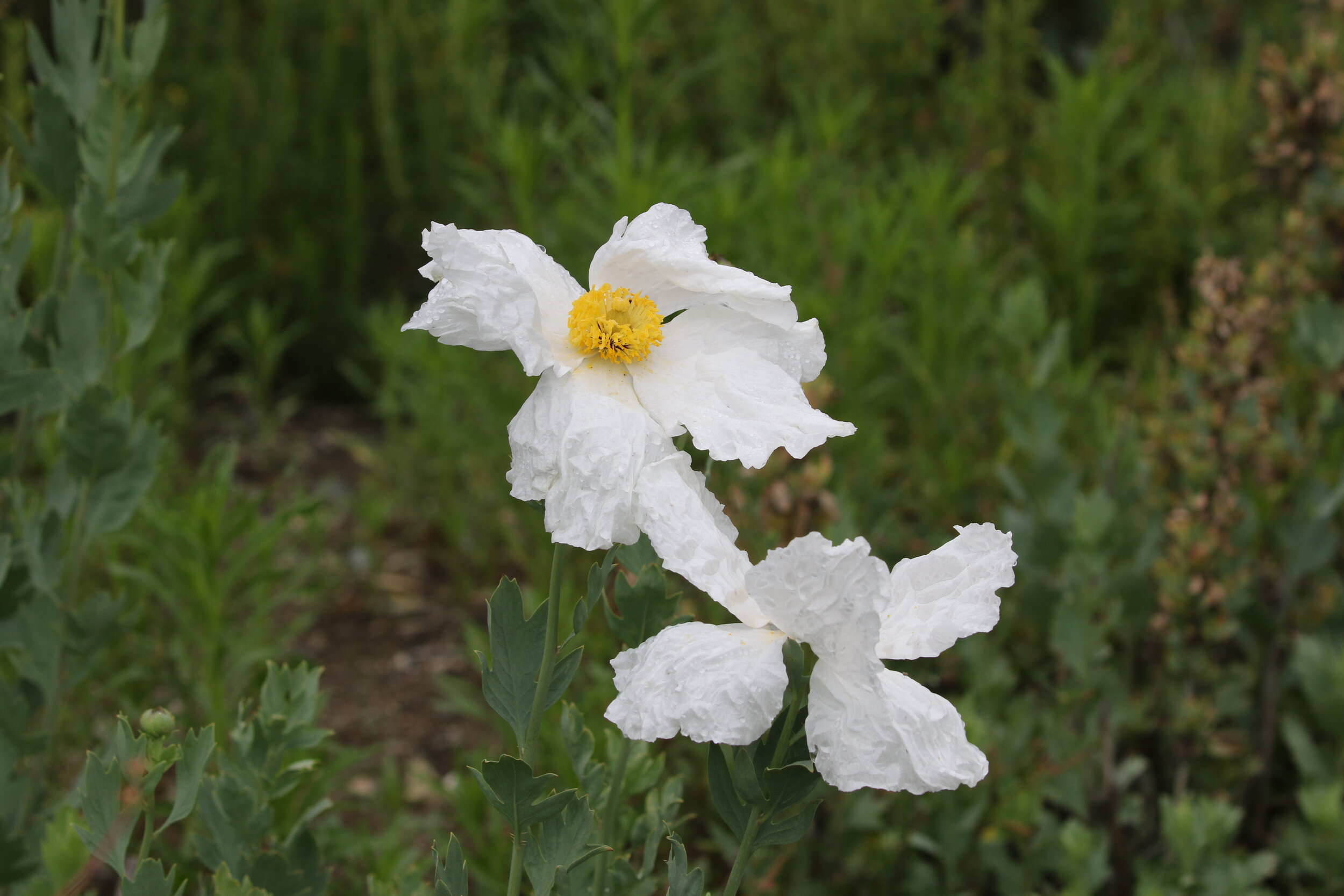
I enjoy photographing the giant white flowers and golden pom-pom centers almost as much as I enjoy growing them.

They shape shift through the season, their distinctive silver grey leaves remaining long after the flowers have gone.

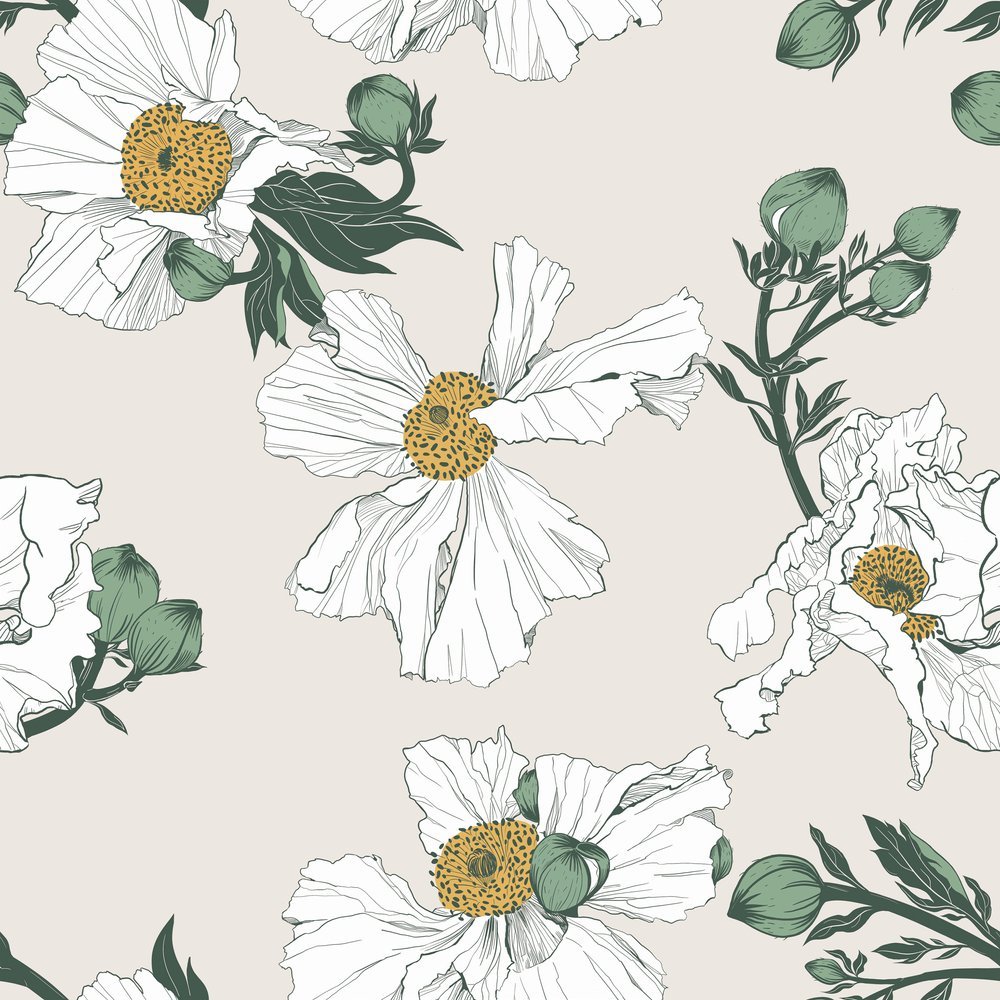
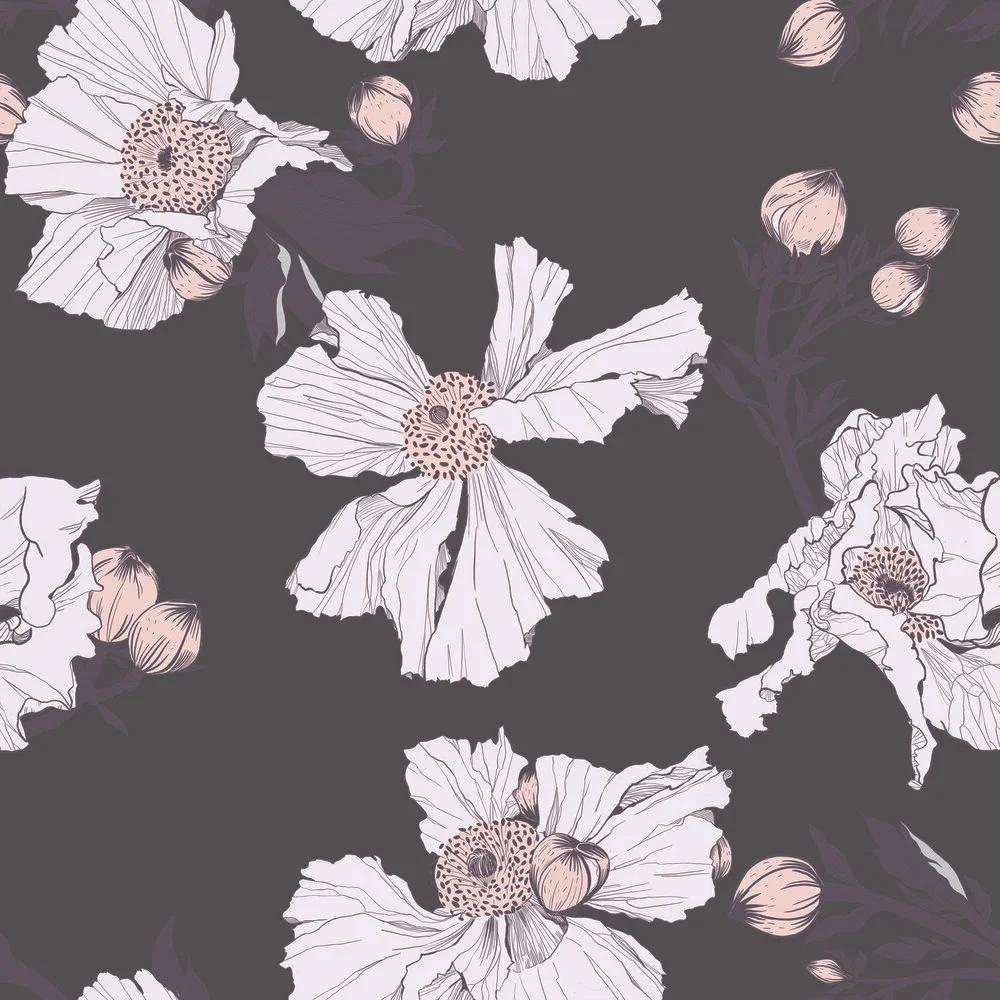
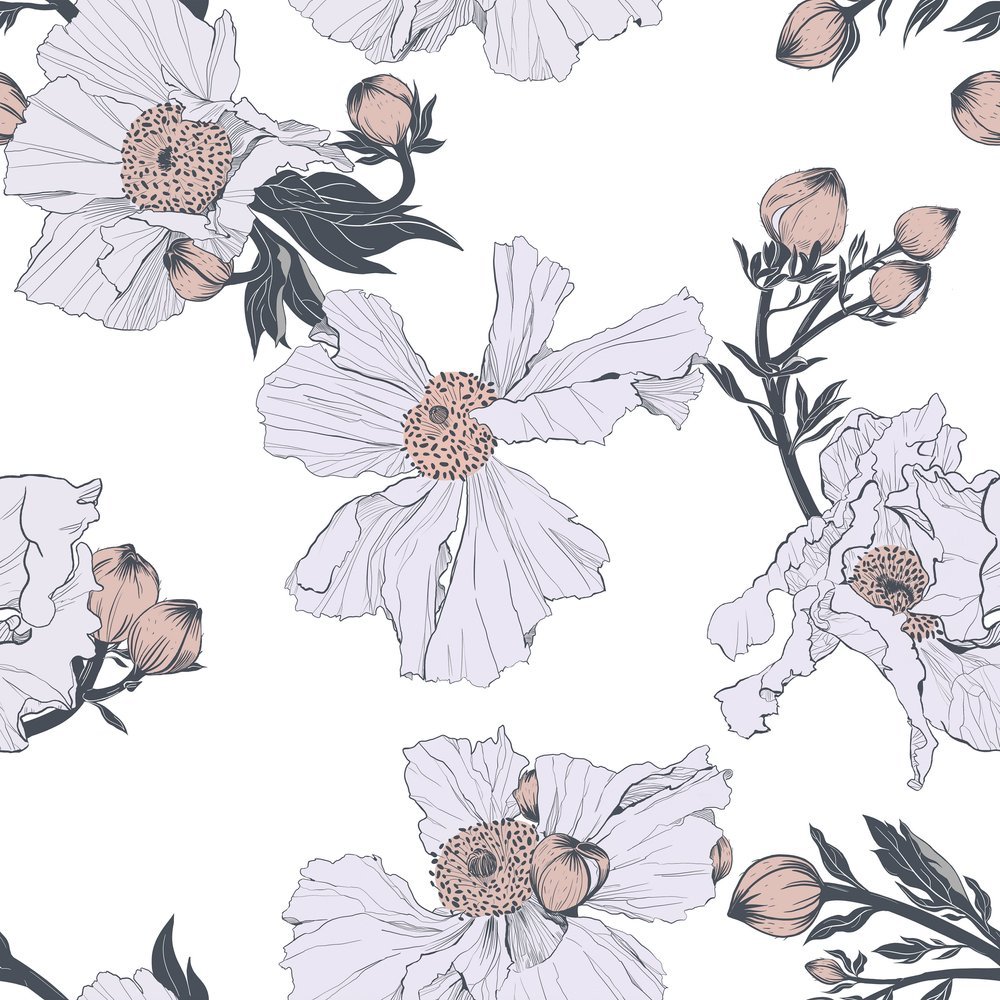
Our team has been developing a special collection of textiles, wallpapers and area rugs inspired by the beauty of the Matilija Poppy. Soon to be released in five colorways; natural, midnight, petal, putty and bluestone.

Sarah Barnard is a WELL and LEED accredited designer and creator of environments that support mental, physical and emotional wellbeing. She creates highly personalized, restorative spaces that are deeply connected to art and the preservation of the environment. An advocate for consciousness, inclusivity, and compassion in the creative process, Sarah's work has been recognized by Architectural Digest, Elle Décor, Real Simple, HGTV and many other publications. In 2017 Sarah was recognized as a "Ones to Watch" Scholar by the American Society of Interior Designers (ASID).